
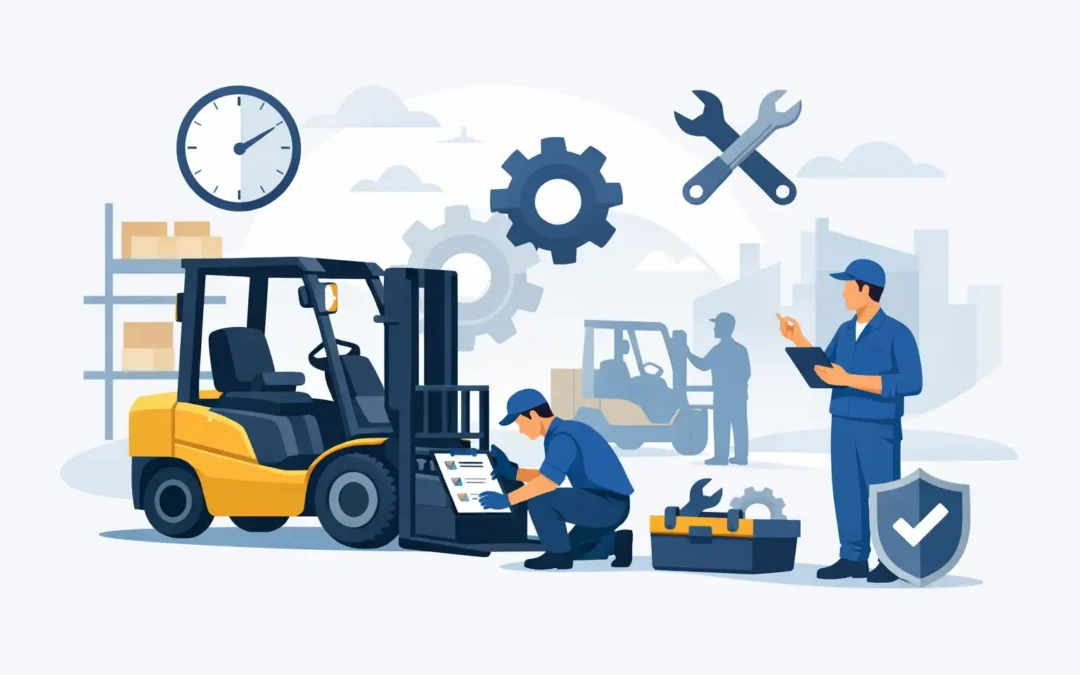
A forklift that quits in the middle of a truck unload does more than create a repair bill. It backs up labor, delays shipments, puts operators on standby, and turns a normal shift into a scramble. That is where forklift service agreement benefits become real: planned maintenance and priority support help keep small equipment problems from becoming expensive operational problems.
For fleet managers and operations teams, a service agreement is not paperwork for paperwork’s sake. It is a working plan for keeping the equipment your people depend on available, safe, and cost-controlled. The right agreement gives you a technician who knows your fleet, a maintenance schedule that fits actual usage, and fewer surprise failures during busy periods.
What a Forklift Service Agreement Actually Does
A forklift service agreement sets the terms for ongoing inspection, preventive maintenance, and repair support. The exact coverage varies. Some plans focus on scheduled maintenance, while others include labor, travel, emergency response, or specified wear items. The details matter, especially for a fleet that runs multiple shifts or includes electric forklifts, scissor lifts, or boom lifts.
The practical goal is simple: find wear, damage, fluid issues, battery problems, hydraulic leaks, brake concerns, and electrical faults before they put a machine out of service. A technician documents what was checked, identifies repairs that cannot wait, and helps you plan the work that can be scheduled around production.
That is a better position than waiting until a truck is at the dock and a lift will not raise, travel, or charge.
Less Downtime Starts With Earlier Repairs
Most equipment failures give warnings. A mast may move slowly. A charger may run hot. A hydraulic hose may show seepage. An electric forklift may lose run time faster than usual, throw an intermittent fault code, or have a connector starting to overheat. When those warnings are caught on a service visit, the repair is usually less disruptive and easier to schedule.
Without a maintenance plan, those issues often stay on the back burner because the machine is still technically running. Then the failure happens at the worst possible time. Emergency service may still get you moving quickly, but the lost labor and missed production time have already hit the operation.
A service agreement cannot prevent every breakdown. Forklifts work in rough conditions, and accidental damage, operator impacts, and failed components can happen without warning. What it does is reduce avoidable downtime by creating a regular inspection cycle and making repair needs visible before they become urgent.
Priority Support Matters When the Schedule Is Tight
When a lift is down, you do not need to explain your situation to a call center and wait for a callback. You need a qualified technician who can assess the problem and get the repair moving. An established service relationship makes that process faster because the service provider already knows your equipment, location, and maintenance history.
For companies with a lean fleet, that response time can make a major difference. If one of three forklifts is down, the remaining machines have to carry the load. That adds stress to the fleet and puts more pressure on operators to move faster. Fast field service helps stop one breakdown from creating a larger operational problem.
Better Budget Control Than Run-to-Failure Repairs
Repair costs are easier to manage when they are planned. A service agreement creates a known maintenance cadence and helps separate immediate repairs from work that can be scheduled. That gives maintenance supervisors and business owners a clearer view of what the fleet needs over the next month or quarter.
Run-to-failure maintenance does the opposite. Costs arrive all at once, often with overtime, rush parts, expedited freight, and lost productivity attached. The invoice may be larger, but the bigger expense is usually the disruption around it.
A good agreement should not hide costs behind vague language. Ask what is included in the scheduled visit, how labor is billed for repairs, whether travel is included, what response time you can expect, and how parts are approved. Fair rates and clear approvals matter just as much as the maintenance checklist.
There is a trade-off. A service agreement is an ongoing expense, and a very small fleet with light, predictable use may not need the same level of coverage as a high-volume distribution center. But even smaller operations benefit when they have one dependable service contact instead of starting from zero every time equipment fails.
Safer Equipment Is Easier to Keep Productive
Forklift maintenance is not only about avoiding a breakdown. It is also about catching conditions that can put operators, pedestrians, product, and facility infrastructure at risk. Brakes, steering, tires, forks, chains, lift cylinders, warning devices, and safety interlocks all need attention before a defect becomes a serious incident.
Electric forklifts require particular attention because problems are not always obvious from the outside. Battery condition, charging practices, cable connections, contactors, controllers, and onboard diagnostics can all affect performance and safety. A technician experienced with electric lift equipment can identify patterns that a general repair approach may miss.
Scheduled service also supports the operator’s daily inspection process. Operators should still report defects before each shift. A service agreement does not replace those checks. It gives your team a dependable path for correcting what they find and tracking recurring issues across the fleet.
The Best Agreements Fit the Way Your Fleet Works
A forklift that runs one shift in a clean warehouse does not need the same maintenance schedule as a lift moving heavy loads around the clock. Usage hours, load weights, operating surface, temperature, dust, cold storage conditions, battery type, and operator turnover all affect service needs.
That is why a one-size-fits-all maintenance interval is not always the best answer. Your agreement should be built around how the equipment is actually used. A fleet with electric reach trucks may need close attention to batteries, chargers, and electrical systems. A contractor using rough-terrain equipment or aerial lifts may need service timed around jobsites and transport schedules.
Ask the service provider how they determine maintenance intervals and what they inspect at each visit. The answer should be specific. “We will look it over” is not a service plan. You should know whether the technician will inspect safety systems, hydraulic components, tires, forks, battery and charger condition, fluid levels, and any fault codes or operating concerns reported by your team.
What to Look for Before You Sign
The best forklift service agreement benefits come from a provider that can act quickly and communicate plainly. Look for a technician-led service company that has experience with your equipment type, particularly if electric forklifts are a major part of your fleet. Specialized knowledge saves time during diagnosis and helps avoid replacing the wrong parts.
Make sure the agreement clearly addresses response expectations, planned maintenance frequency, labor rates, travel charges, parts approval, service reports, and what happens when a repair is urgent. You should also ask whether the provider can service your scissor lifts and boom lifts if those machines are part of your operation. Fewer service contacts can simplify scheduling, provided the technician has the right expertise.
CSC Forklift Repair works with commercial operations that need fast, practical support for forklifts and lift equipment, with particular experience in electric equipment. The goal is straightforward: get the machine diagnosed correctly, repaired efficiently, and returned to service without wasting your time or budget.
A Service Agreement Should Make Your Next Breakdown Smaller
No maintenance plan can change the fact that equipment wears out. It can, however, make the next repair more predictable, faster to address, and less likely to stop the whole operation. That is the value of having a service plan before the equipment is sitting still.
If your fleet is already showing repeat issues, missed maintenance, battery trouble, or frequent emergency calls, do not wait for the next shift to expose the gap. Talk directly with a qualified technician about a service agreement that matches your equipment, workload, and response needs.