
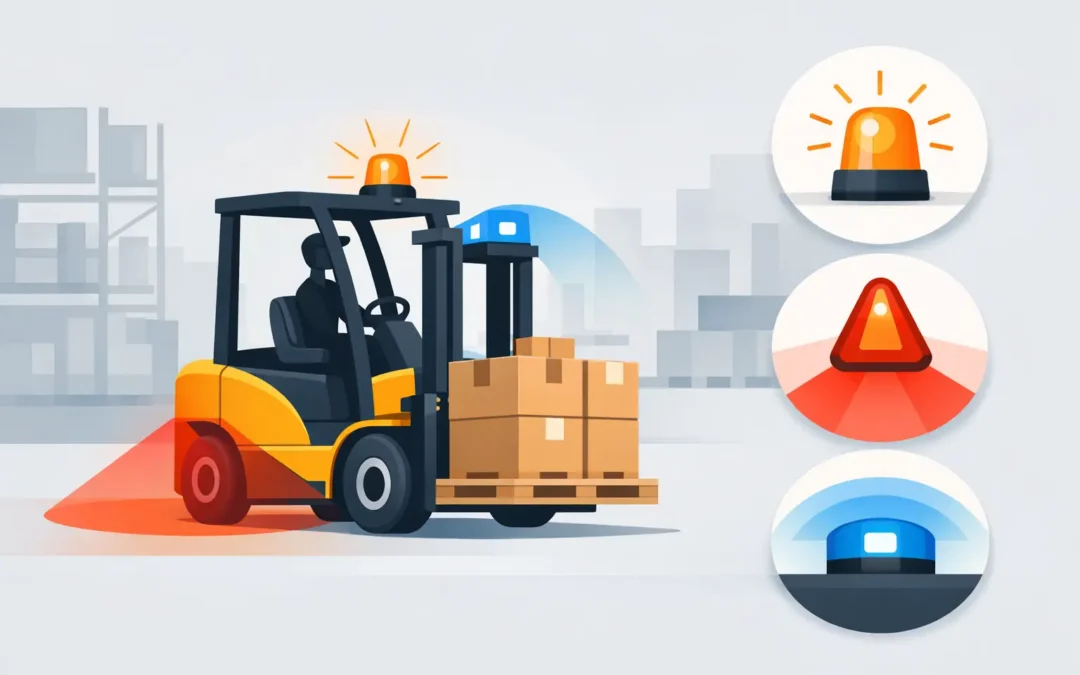
A warning light is not a suggestion when your forklift is carrying product, working in a tight aisle, or loading a truck against a deadline. Understanding forklift warning lights meaning helps your team make the right call fast: keep working, take the truck out of service, or get a technician involved before the problem becomes a full shutdown.
The exact symbol, color, and response can vary by manufacturer and model. A light on a Toyota electric reach truck may not behave exactly like one on a Crown, Hyster, Yale, Raymond, Clark, or propane counterbalance forklift. The operator’s manual and fault code display are the final authority. Still, the rules below will help operations and maintenance teams separate routine alerts from conditions that should stop the truck immediately.
Forklift Warning Lights Meaning: Start With the Color
Most forklift dashboards use a simple priority system. Red usually means stop. Amber or yellow means caution or service needed. Green and blue typically confirm that a system or function is active. That is a useful first read, but color alone is not enough. A red parking brake light can be normal when the truck is parked. A red oil-pressure light with the engine running is not.
Treat every warning light in context. Note whether the truck is running, lifting, traveling, charging, or parked. Then check for reduced performance, alarms, heat, leaks, unusual smells, steering changes, or hydraulic issues. The light is often only the first symptom.
Red lights: Stop and protect the equipment
A red warning light often indicates a condition that can damage the forklift or create an immediate safety risk. In most cases, park the truck in a safe area, lower the forks fully, set the parking brake, turn it off, and tag it out until the issue is checked.
Common red conditions include:
- Low engine oil pressure. Shut down an internal combustion forklift immediately. Running with low oil pressure can destroy an engine quickly.
- High coolant temperature or engine overheat. Stop the truck and allow it to cool. Do not remove a hot radiator cap. Check coolant level and obvious leaks only after the machine is safely cooled.
- Brake system warning. If the brake warning stays on while operating, or braking feels weak or inconsistent, remove the forklift from service. Do not keep using it because the truck still moves.
- Battery or charging-system fault. On an internal combustion forklift, this can mean the alternator is not charging. On an electric forklift, a battery, connector, or electrical-system fault may trigger a red indicator or fault message.
- Hydraulic oil temperature or critical hydraulic fault. Slow lifting, noisy hydraulics, a visible leak, or a hot oil warning can turn into loss of lift function or component damage.
Some red lights are function indicators rather than faults. The seat belt reminder, parking brake indicator, and certain interlock lights can be red by design. Check the symbol and operating conditions before assuming a major failure. But if the truck has a red master warning light plus an alarm, fault code, or reduced operation, take it seriously.
Amber or yellow lights: Service soon, not someday
Amber lights are where minor repair calls often become avoidable downtime. The forklift may still operate, but it is telling you that a system is outside normal range, maintenance is due, or a fault has been stored.
An amber check-engine light on a propane or diesel forklift can point to an emissions, fuel, ignition, sensor, or engine-management issue. If the truck runs normally and no red warning is present, record the code and schedule service promptly. If it is misfiring, losing power, producing excessive smoke, or smelling strongly of fuel, park it. Continued operation can make a small repair more expensive.
An amber maintenance light may simply mean the truck has reached a scheduled service interval. Do not clear it and forget it. Scheduled maintenance catches worn brakes, chains, tires, hoses, electrical connections, and fluid issues before they stop a shift.
On electric forklifts, amber warnings often relate to battery state of charge, battery temperature, motor temperature, controller communication, traction, lift function, or a loose battery connection. A truck that suddenly enters reduced-speed mode is protecting itself. Pushing it through the shift can stress the drive system or leave it stranded in an aisle.
Green and blue lights: Usually normal, still worth understanding
Green and blue indicators generally show that a function is active. Examples include headlights, directional signals, work lights, travel mode, or a battery charging status. These lights are usually not repair issues by themselves.
They can still explain an operating complaint. A travel-mode indicator may show that the forklift is in creep mode. A charging light may show the battery is connected but not actually charging at the expected rate. If a normal-status light appears with a loss of function, check the display for a separate fault code and verify the correct operating mode.
The Warning Lights That Matter Most on Electric Forklifts
Electric forklifts are efficient and dependable, but their warning systems can be more detailed than those on older internal combustion trucks. The dashboard may show a master warning, a battery symbol, a wrench symbol, a turtle or reduced-performance icon, and a numeric or alphanumeric fault code. Those details matter.
A low battery indicator is not always a simple charge reminder. If the battery is dropping unusually fast, heating up, failing to charge, or causing the truck to slow down early in the shift, the issue could involve battery condition, watering, cable connections, charger output, a battery-management system, or the forklift itself.
Never keep operating an electric forklift with damaged battery cables, melted connectors, a burning smell, excessive heat, electrolyte leakage, or a battery that is swelling. Park it safely and get qualified service. Battery and high-voltage work is not a shortcut repair.
A controller or communication fault can also appear intermittently. The truck may reset after being keyed off, then fail again under load. That does not mean the problem fixed itself. Record the fault code, the time it occurred, battery charge level, and what the operator was doing. That information cuts diagnostic time and helps a technician find the real cause.
Do Not Guess at Fault Codes
The symbol gets your attention. The code tells the story. When a warning light comes on, take a clear photo of the display before cycling the key or disconnecting the battery. Write down the forklift make, model, serial number, hour meter reading, and any code shown.
Also note the operating symptom. Does the truck drive but not lift? Does it lift but not travel? Is steering intermittent? Does the warning appear only after 30 minutes of work, on an incline, or when the battery is below half charge? A good service call starts with those details, not just a report that the forklift has a light on.
Avoid clearing codes without diagnosing the cause. Clearing a code may remove useful information and can delay repair. It may also allow an operator to put an unsafe truck back into service.
What Operators Should Do When a Light Comes On
Your operators do not need to diagnose every system. They do need a clear response standard. If there is a red fault, brake concern, overheating condition, active leak, burning smell, sparks, smoke, loss of steering, loss of lift control, or unusual movement, stop operating the forklift. Secure it and notify supervision.
For an amber warning with normal operation, have the operator report it before the end of the shift, document the code, and follow your maintenance process. The right response depends on the fault and the equipment’s behavior. A planned service call is cheaper than a truck failing during a busy loading window.
Do not bypass interlocks, tape over lights, jump safety switches, or keep running a forklift that is in limp mode just to finish a load. Those workarounds create bigger repair bills and put people at risk.
When to Call for Forklift Repair
Call for service when a warning repeats, the forklift has reduced performance, a code will not clear after a verified normal restart, or the truck is showing any red fault not clearly tied to a normal parked condition. Call immediately for battery heat, electrical odor, hydraulic leaks, brake concerns, overheating, or any loss of controlled movement.
At CSC Forklift Repair, the goal is simple: get the right technician on the problem fast, especially when electric forklift faults are cutting into production. Have the model, serial number, fault code, and symptoms ready. That gives the technician a running start and keeps your crew from losing more time than necessary.
A dashboard light is often the earliest and least expensive chance to fix a problem. Respond while it is still a warning, not after it becomes a forklift sitting dead in the middle of your operation.