
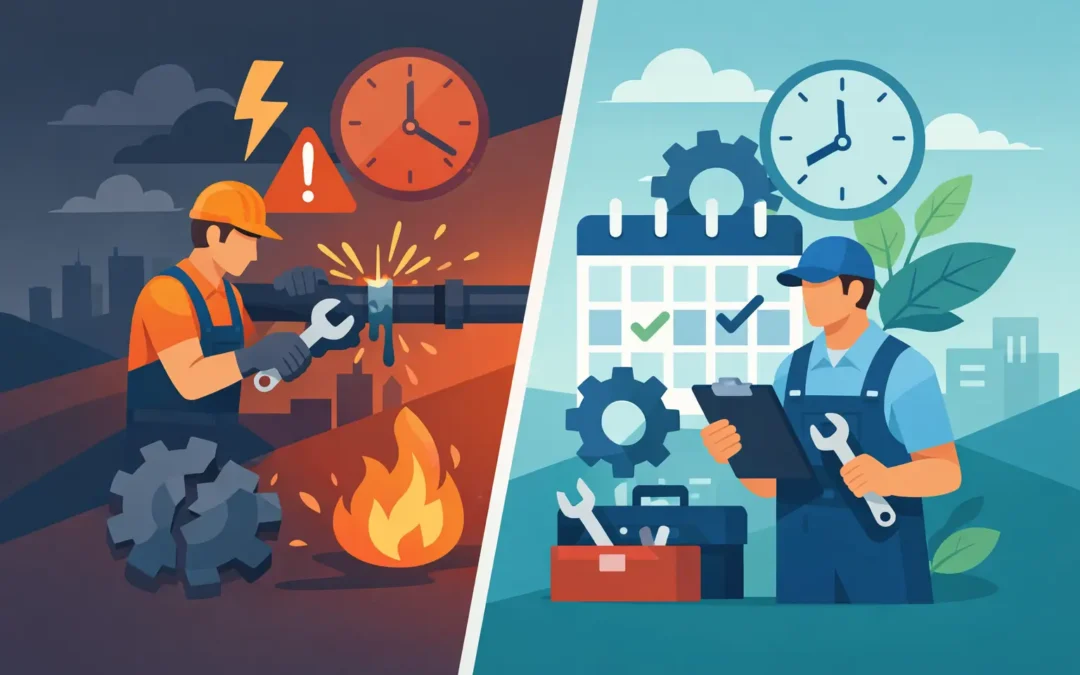
A forklift quits with a loaded pallet in the aisle. A scissor lift will not raise when the crew is waiting. That is when the difference between emergency repair vs scheduled maintenance stops being a budget discussion and becomes an operations problem. One gets a failed machine moving again. The other helps prevent the failure that puts your shift, shipment, or jobsite behind.
Both are necessary. The real question is whether your fleet is relying on emergency calls because breakdowns are unavoidable, or because warning signs and routine service are being pushed aside until the equipment has no choice but to stop.
Emergency Repair vs Scheduled Maintenance: The Real Difference
Emergency repair is reactive. Something has already failed, the equipment is down or unsafe to operate, and you need a technician who can diagnose the problem and make the right repair quickly. The priority is restoring safe operation with as little disruption as possible.
Scheduled maintenance is proactive. It is planned service based on operating hours, equipment condition, manufacturer requirements, and how hard the machine works in your facility or on your site. The goal is to find wear, leaks, electrical issues, battery problems, and adjustment needs before they become a no-start condition or a safety event.
That does not mean scheduled maintenance eliminates every emergency. A hydraulic hose can fail without much warning. A tire can be damaged by debris. An electrical component can quit unexpectedly. But regular inspections catch many of the failures that turn a manageable repair into a costly interruption.
When an emergency repair call is the right move
Take a truck or lift out of service immediately if it has a safety-related failure: braking problems, steering issues, damaged forks, unstable mast movement, hydraulic leaks, warning alarms, charging faults, or a machine that will not lift, travel, or lower correctly. Trying to finish the shift with compromised equipment can put operators and nearby workers at risk.
Emergency service also makes sense when a single machine creates a bottleneck. A down reach truck in a narrow-aisle warehouse, a failed electric forklift at a loading dock, or an inoperable boom lift on an active job can hold up far more than one task. Labor gets redirected, trucks wait, schedules slip, and supervisors spend the day building workarounds.
The right emergency technician does more than swap a part and leave. They identify the cause. On electric forklifts, that may mean checking battery condition, connectors, wiring, contactors, chargers, control systems, drive motors, and fault codes. Replacing a component without finding the underlying issue can turn a quick repair into a repeat call.
Why Emergency Repairs Cost More Than the Invoice
The repair invoice is only one part of an emergency. The bigger cost is usually downtime.
When equipment fails in the middle of a shift, you may be paying operators who cannot perform their normal work, overtime to catch up, rental costs, delayed outbound orders, or contractor crew time while a lift sits dead. If the failed unit is a key piece of a small fleet, the impact grows fast. One truck down can overload the rest of the fleet and create more wear across every available machine.
Emergency repairs can also be more expensive because the failure has progressed. A small hydraulic seep becomes a major leak. Loose electrical connections create heat and damage. A worn load wheel affects bearings, drive components, and handling. A battery that has not been properly watered, charged, or inspected can create performance problems that appear to be a more complicated truck issue.
Fast repair service is still worth it when the equipment is down. Waiting days for service is rarely cheaper when production is stalled. But the best emergency repair budget is one reserved for true surprises, not predictable wear.
What Scheduled Maintenance Should Catch
A useful maintenance program is not just a checklist completed for paperwork. It should match the equipment and the work environment. A forklift operating one clean indoor shift has different service needs than a truck running multiple shifts around dock dust, freezer conditions, ramps, or uneven pavement.
For electric forklifts, routine service should pay close attention to battery health, charging practices, cable condition, connectors, electrical connections, battery restraint systems, fault history, brakes, steering, tires, load wheels, mast components, chains, rollers, and hydraulic systems. Electric equipment often looks simpler because there is no engine to service, but it depends on electrical and battery systems being maintained correctly.
Aerial equipment needs the same practical attention. Scissor lifts and boom lifts should be inspected for hydraulic leaks, hose wear, batteries, chargers, controls, emergency lowering functions, tires, guardrails, structural damage, and platform operation. A lift that is slow, noisy, drifting, or intermittently unresponsive is giving you a reason to inspect it before it fails at the wrong time.
Operators play a major role here. Daily pre-shift inspections are not a substitute for professional maintenance, but they are the first line of defense. A good operator report can catch a new noise, sluggish travel, a damaged tire, a charger issue, or a leak before the next shift inherits a bigger problem.
How to Decide Where to Spend Your Maintenance Budget
If budget pressure is forcing a choice between repair calls and planned service, start with the machines that can hurt your operation most when they fail. High-use forklifts, older units, equipment with recurring faults, and the only lift capable of a critical job should get attention first.
Look at your repair history. If the same truck keeps generating calls for charging issues, electrical faults, hydraulic leaks, steering problems, or mast concerns, do not treat each event as separate bad luck. Ask what is driving the pattern. It may be a service gap, an operating practice, an incorrect battery or charger setup, a damaged travel surface, or a repair that addressed the symptom but not the cause.
Also consider utilization. A lightly used backup forklift may not need the same service interval as a machine that runs all day, every day. On the other hand, backup equipment that sits unattended can develop its own problems, especially battery-related issues. Maintenance should be based on condition and use, not a one-size-fits-all calendar.
Avoid the false choice
Some managers see maintenance as an expense and emergency repair as an unavoidable event. That is the wrong comparison. Planned maintenance is controlled downtime. Emergency repair is uncontrolled downtime.
You will still need both. The practical goal is to reduce surprises, shorten repair time when surprises happen, and keep enough history on each unit to make sound repair-or-replace decisions. A technician who knows your fleet can spot recurring trouble faster and recommend work based on what will actually protect uptime.
Build a Plan That Works on the Floor
Keep the process simple enough that it gets followed. Track each machine by serial number, operating hours, repair history, and recurring issues. Set planned service intervals that reflect actual use. Make sure operators know which problems require immediate shutdown rather than a note at the end of the shift.
Do not wait for a complete fleet failure to call for help. If a forklift has intermittent electrical faults, weak lift performance, brake concerns, charger issues, or an unexplained leak, schedule an inspection while you still have options. A planned visit gives you more control over timing, parts, and labor than a breakdown in the middle of a deadline.
When a machine does go down, clear the area, take it out of service, and give the technician useful details: the make and model, whether it is electric or internal combustion, the fault code if shown, what the operator was doing when it failed, and any recent repairs or changes. That information can speed diagnosis from the first call.
CSC Forklift Repair focuses on getting forklifts and lift equipment diagnosed correctly and back to work fast, especially electric units that require real electrical troubleshooting. Speak directly with a technician when downtime cannot wait.
Your equipment does not need to be perfect to stay productive. It needs problems caught early, repairs handled correctly, and a service response that treats a down machine like the operational issue it is.