
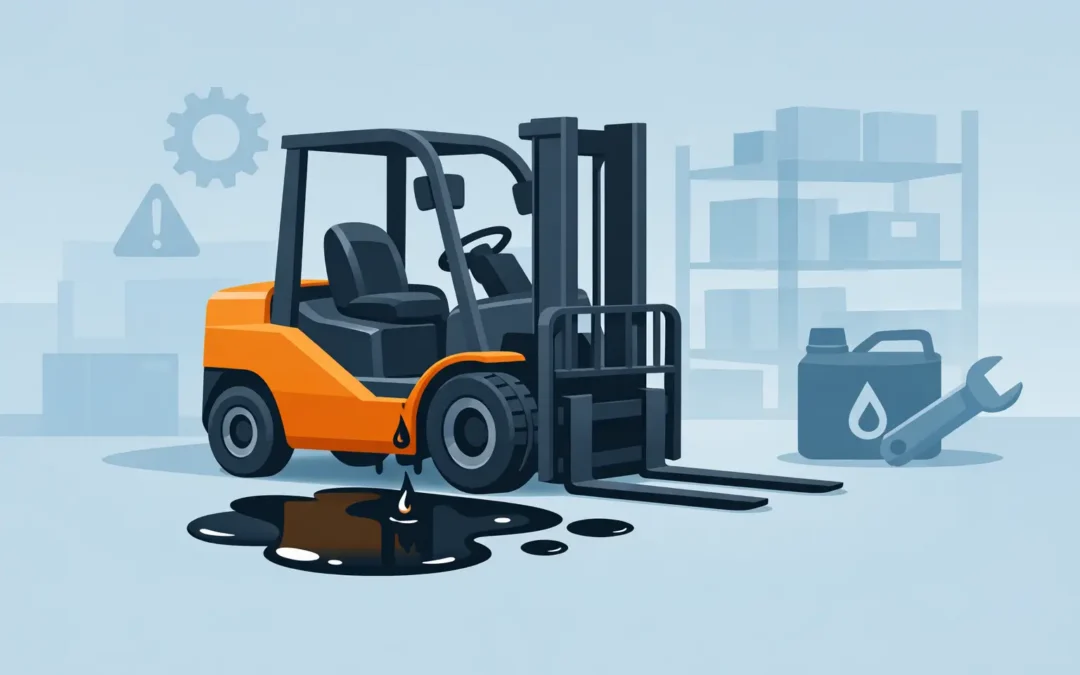
A puddle under a forklift is never just a housekeeping problem. If you are asking, “why is my forklift leaking oil,” the real question is how quickly that leak can turn into a safety issue, a damaged component, or an out-of-service truck during a busy shift. The answer depends on where the fluid is coming from, what type of forklift you run, and whether the leak happens at rest, while lifting, or only under load.
Forklifts use several fluids, and not every leak is the same. Hydraulic oil is the most common concern because it directly affects lifting, tilting, steering, and other functions. Internal-combustion forklifts can also leak engine oil, transmission fluid, coolant, or fuel. Electric forklifts do not have engine oil, but they still rely on hydraulic systems, reduction gears, steering components, and brakes that can develop leaks.
Do not keep running the truck until the reservoir is empty. A small external leak can be the first sign of a hose failure, worn cylinder seal, damaged fitting, or internal component problem. Getting the source identified early is usually cheaper than replacing a pump, cylinder, or damaged load-handling component later.
Why Is My Forklift Leaking Oil? Start With the Location
The location of the puddle gives a technician a useful first clue. Park the forklift on clean, level concrete if it can be safely moved, then look underneath after it has been sitting for several minutes. Cardboard placed beneath the truck can help show the drip point without putting anyone under the machine.
Fluid around the mast, lift chains, or front of the truck often points to a hydraulic cylinder, hose, fitting, or valve issue. A wet lift cylinder rod may indicate failed rod seals. Oil running down the cylinder barrel can also come from a loose hydraulic connection above it. On a reach truck or electric stand-up forklift, inspect visible hose routing around the mast and carriage carefully. Repeated flexing can wear a hose against a bracket or mast channel.
A leak near the steer axle may come from a steering cylinder, hydraulic line, or steering control unit. Fluid near the drive axle can be more complicated. On an internal-combustion forklift, it may be engine, transmission, or differential oil. On an electric forklift, it could be hydraulic fluid or gear oil from the drive unit. The fluid color, smell, and thickness help narrow it down, but do not rely on color alone. Oil darkens with age and contamination.
If the leak is below the center of the truck, inspect the hydraulic tank area, return lines, pump connections, and filter housing. A damaged reservoir, loose drain plug, cracked filter seal, or worn O-ring can produce a slow leak that gets worse when the hydraulic system warms up.
The Most Common Forklift Oil Leak Causes
Hydraulic hose damage is one of the most frequent causes. Forklift hoses work under high pressure and live in a rough environment. They can rub against moving mast parts, crack from age, get cut by debris, or fail at the crimped fitting. A hose may only leak when you raise the forks, tilt the mast, or turn the steering wheel because that is when pressure builds.
Cylinder seal failure is another common issue. Lift, tilt, and steering cylinders use seals to keep hydraulic oil contained while the rod moves. Over time, heat, contaminated oil, side loading, rust on the rod, and normal wear can damage those seals. A cylinder that is wet at the rod end, drips during operation, or allows the forks to drift down may need to be resealed or replaced.
Loose fittings and failing O-rings can create leaks that look minor but should not be ignored. Vibration, temperature changes, and previous repairs can allow fittings to loosen. The fix is not always as simple as tightening a connection. An overtightened fitting can damage threads or crush a seal. The correct repair depends on the fitting type, its condition, and the system pressure.
Hydraulic pumps and control valves can leak externally at shaft seals, covers, plugs, or valve sections. These repairs require proper diagnosis. Replacing a pump because of a wet area near the pump is expensive and may not solve the problem if a line above it is dripping down.
On propane, gas, or diesel forklifts, engine oil leaks often come from valve cover gaskets, oil pan gaskets, front or rear crankshaft seals, oil filters, and breather systems. Transmission and differential leaks may appear near axle seals, drain plugs, or housings. These fluids can affect drivability and braking if they reach the wrong components.
What To Do Before You Put the Forklift Back in Service
First, do not touch a pressurized hydraulic leak with your hand. Hydraulic fluid can penetrate skin through a pinhole leak, causing a severe injury that needs immediate medical care. Keep hands, face, and bare skin away from suspected leaks while the system is operating.
Before using the forklift again, take these practical steps:
- Tag the truck out of service if the leak is active, fluid levels are low, lift or steering performance has changed, or oil has reached tires, brakes, or the operator area.
- Clean the outside of the suspected area only after shutting the forklift down and relieving pressure according to the manufacturer’s procedure. A clean surface makes the true source easier to find.
- Check the hydraulic fluid level and use only the manufacturer-specified fluid if topping off is necessary. Mixing fluids can damage seals and reduce system performance.
- Document when the leak appears: while parked, during lifting, at full mast height, while tilting, or when steering. That information speeds up diagnosis.
Do not crawl under a raised forklift, carriage, or mast to chase a leak. Lower the forks fully, shut the equipment down, and use approved blocking procedures when service requires work beneath a raised component. A forklift that appears stable can move unexpectedly if hydraulic pressure drops.
When a Small Leak Becomes a Major Repair
A slow seep may allow a forklift to keep working temporarily, but the operating risk depends on the location. A minor leak at a tank fitting is different from a damaged lift hose or a cylinder losing pressure under a raised load. The problem gets more urgent when fluid levels keep dropping, the mast drifts, steering feels inconsistent, the lift pump becomes noisy, or oil is spreading across travel lanes.
Low hydraulic fluid causes more than weak lifting. It can introduce air into the system, create pump noise, raise operating temperatures, and accelerate wear on pumps and valves. Contaminants can enter through damaged seals or low fluid levels as well. What began as a hose leak can turn into a wider hydraulic system repair.
Oil on tires is another reason to act fast. Reduced traction affects braking, turns, ramp travel, and load stability. Oil on warehouse floors creates slip hazards for pedestrians and can spread through the facility on forklift tires. On a jobsite, a leak can also create environmental cleanup concerns.
Electric Forklift Leaks Need the Right Diagnosis
Electric forklifts are often assumed to be simpler because there is no engine oil, but they still have critical hydraulic and mechanical systems. A leaking electric truck may have a failed lift hose, tilt cylinder seal, steering line, hydraulic pump seal, or drive axle seal. In some cases, fluid near the battery compartment is not an oil leak at all. It could be water intrusion, battery electrolyte, or another issue that requires a different response.
That distinction matters. Never assume fluid around a battery is harmless. Avoid contact, keep ignition sources away, and have the truck inspected by a technician familiar with electric lift equipment. Electric forklifts require service practices that protect both the hydraulic system and the high-voltage electrical components.
CSC Forklift Repair provides direct technician-led support for forklift hydraulic leaks, electric forklift repairs, and lift equipment issues that cannot wait through a long service queue. The goal is straightforward: find the real source, repair it correctly, and get your equipment back to work without wasting money on guesswork.
Stop the Leak Before It Stops the Shift
A forklift leak rarely improves on its own. If the truck is dripping, losing hydraulic power, leaving oil near the mast, or contaminating the floor, take it out of service and get the source checked before the next load turns a repair call into an incident. Fast action protects the operator, the load, and the rest of the shift.