
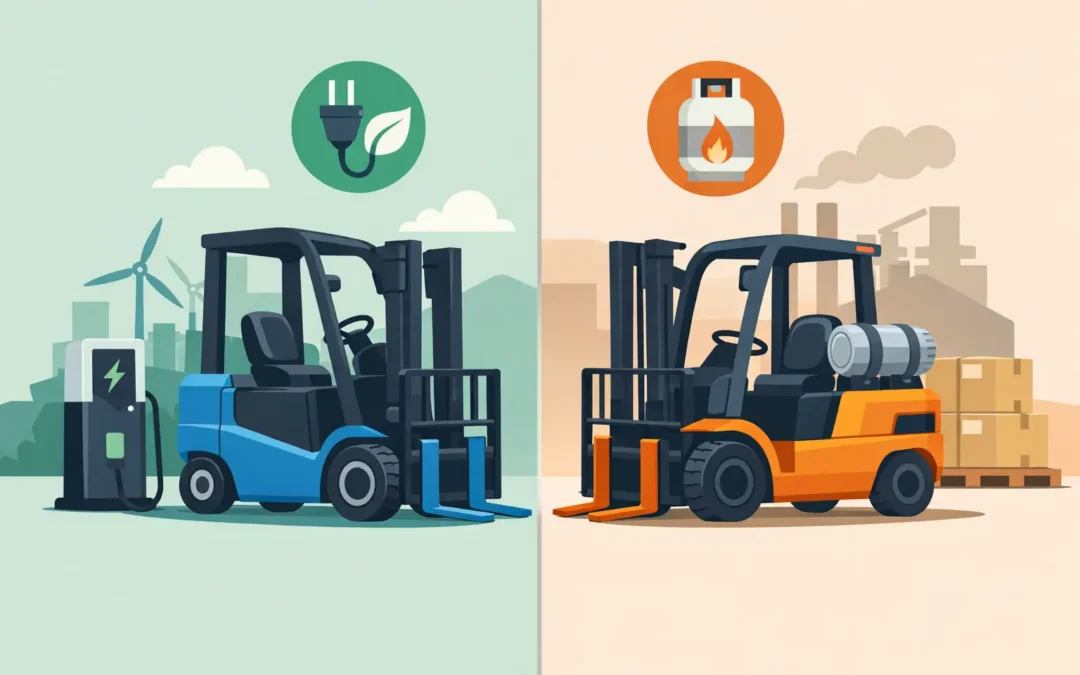
If you’re weighing electric forklift vs propane forklift, the real question is not which one is better on paper. It’s which one keeps your operation moving with less downtime, lower operating cost, and fewer service headaches.
For some fleets, propane still makes sense. For a growing number of warehouses, manufacturing plants, and mixed indoor operations, electric is the smarter long-term play. But this decision depends on your shifts, your load profile, your ventilation, your technicians, and how expensive downtime is when a truck goes down.
Electric Forklift vs Propane Forklift: What Actually Changes Day to Day
On a spec sheet, both can lift pallets and move product. On the floor, they create very different maintenance patterns, fuel or charging routines, and operator experiences.
A propane forklift gives you fast refueling and strong performance in outdoor or heavier-duty use. You swap a tank and keep going. That matters if you run long shifts with little room for charging downtime.
An electric forklift changes the equation. It runs quieter, produces no exhaust at the point of use, and usually has fewer mechanical systems to fail. There is no engine oil, no spark plugs, no radiator, and no emissions-related troubleshooting. For indoor operations, that alone can be a major advantage.
The catch is that electric performance depends on battery condition, charging discipline, and the quality of the truck’s electrical system. If a battery is neglected or the charger setup is poor, an electric fleet can create its own kind of downtime. The difference is that many of those issues are preventable with the right service support.
Operating Cost Is Where the Gap Gets Real
Most equipment managers start with purchase price. That matters, but it rarely tells the full story.
Propane forklifts often look attractive upfront, especially in applications where the truck runs hard and replacement cycles are short. But fuel cost adds up, and engine-driven machines come with more routine service items. Filters, fluids, ignition components, cooling system issues, and engine wear all become part of the maintenance budget.
Electric forklifts typically cost less to operate over time. Electricity is usually cheaper and more stable than propane on a per-hour basis. Maintenance costs are often lower too, because the drivetrain is simpler. You still have wear items like tires, brakes, hydraulic components, contactors, sensors, and batteries, but you generally avoid a lot of engine-related service.
That does not mean every electric truck is automatically cheaper. If your battery room setup is poor, if operators ignore charging best practices, or if the fleet is undersized for your workload, costs can rise fast. Battery replacement is not cheap. Neither is productivity lost to avoidable charging delays. The lower operating cost is real, but only when the fleet is managed properly.
Indoor Air, Noise, and Operator Comfort
This is where electric forklifts usually pull ahead.
In an indoor warehouse, air quality is not a side issue. It affects workers, product areas, and ventilation costs. Propane forklifts produce emissions, even when tuned correctly. In a tight facility or one with food, packaging, or sensitive materials, that can become a problem fast.
Electric forklifts run clean at the point of operation. They are also quieter, which operators notice immediately. Less noise can improve communication on the floor and reduce fatigue over a long shift. If you have operators moving in and out of trailers, aisles, and staging areas all day, that difference matters more than many buyers expect.
Propane still has a place in outdoor yards, rougher environments, and jobs where ventilation is not a concern. But for indoor-heavy use, electric has a clear advantage.
Maintenance: Simpler Does Not Mean Maintenance-Free
A lot of buyers hear that electric forklifts need less maintenance and translate that into almost no maintenance. That is a mistake.
Electric trucks usually have fewer systems to service than propane units, but they still need regular attention. Battery health has to be monitored. Cables, connectors, and charging systems need inspection. Drive motors, hydraulic pumps, controllers, and safety systems all need proper diagnostics when performance changes.
The upside is that electric issues can often be diagnosed quickly by a technician who knows the equipment. The downside is that not every repair company is strong on electric systems. That is where fleets get stuck waiting while someone guesses through a fault code.
Propane forklifts are familiar to a lot of mechanics, but they bring a longer list of recurring maintenance items. Fuel system problems, overheating, hard starts, idle issues, and exhaust-related concerns are common. As trucks age, those problems tend to stack up rather than appear one at a time.
If your priority is lower routine maintenance and cleaner operation, electric usually wins. If your priority is simple refueling in a demanding outdoor schedule, propane may still fit better.
Performance Under Load and Across Shifts
This is where the answer becomes more application-specific.
Propane forklifts have long been favored for consistent performance over long runs, especially where a truck needs to stay active across multiple shifts. Refueling is quick. There is no wait for charging, and no reduction in runtime because someone forgot battery rotation.
Electric forklifts have improved a lot, especially with modern battery systems and better truck design. For many warehouse and distribution applications, they perform extremely well. Torque delivery is strong, control is smooth, and operators often prefer how they handle.
Still, if you are running nonstop, lifting heavy all day, or operating in conditions where charging logistics are weak, propane can remain the safer choice. Electric can absolutely handle demanding work, but only if the battery system and fleet plan match the job.
That is the key point. A good electric fleet is designed around the operation. A bad one is just a truck dropped into a facility without enough thought about charging windows, battery condition, or technician support.
Electric Forklift vs Propane Forklift for Repairs and Uptime
When equipment fails, the best fuel type on paper means nothing. Uptime is what counts.
Electric forklifts often have an edge because they have fewer mechanical wear systems. But when they do fail, you need a technician who understands electrical diagnostics, not just basic forklift repair. Speed matters too. Waiting a day or two for someone to trace an electrical issue is expensive if that truck is tied to production.
Propane forklifts may be easier for general shops to work on, but engine and fuel issues can become recurring interruptions. The repair may be straightforward, yet the truck keeps coming back for related problems. That pattern drains budgets and frustrates operators.
For operations that rely heavily on electric units, working with a service company that specializes in electric forklift repair is not a small detail. It can be the difference between one service call and a week of trial-and-error downtime. CSC Forklift Repair is built around that reality – faster response, experienced technicians, and practical repairs that get equipment back in service.
Which One Makes More Sense for Your Operation?
If your forklifts spend most of their time indoors, if air quality matters, if you want lower ongoing maintenance, and if you are serious about reducing operating cost, electric is usually the stronger choice.
If your trucks work outdoors, run long hours with little charging opportunity, or need quick refueling across hard-use shifts, propane may still be the better fit.
There is also a middle ground. Some fleets use electric for warehouse work and propane for yard or outdoor applications. That setup can make sense, but only if you are ready to manage two different maintenance and support models.
The right answer usually comes down to four things: where the truck runs, how long it runs, how much weight it moves, and how quickly you can get it serviced when something goes wrong.
A forklift is not just a capital purchase. It is a daily operating asset. If the wrong choice creates more downtime, harder maintenance, or higher operating cost, the sticker price stops mattering pretty quickly.
Before you decide, look past the brochure. Think about your building, your shifts, your operators, and your service support. The forklift that looks cheaper upfront is not always the one that keeps your floor productive. The forklift that fits your operation and can be repaired fast usually pays for itself where it counts – in uptime.