
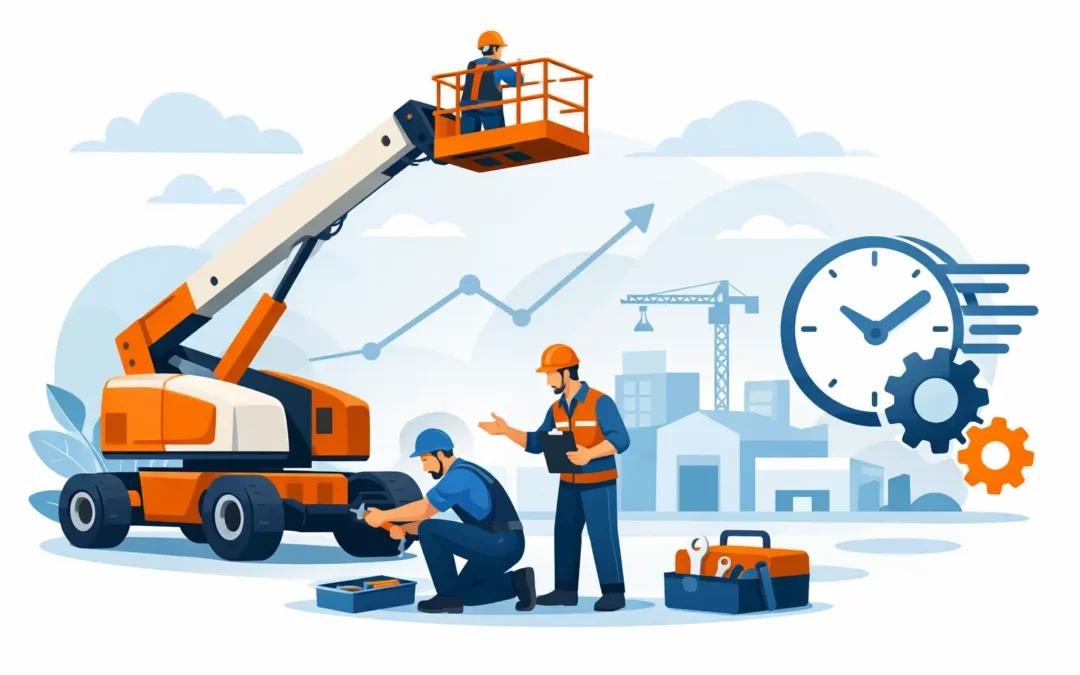
When a boom lift goes down, the problem is never just the machine. Crews stop. Schedules slip. Rentals get extended. Jobs that should move forward start costing more by the hour. That is why boom lift repair service needs to be fast, accurate, and handled by technicians who know lift equipment well enough to fix the real issue the first time.
For most operations, speed matters just as much as workmanship. A slow repair process can be almost as expensive as a bad repair. If your lift is sitting on a jobsite or tied up at a facility, you need direct answers, clear pricing, and a technician who can get to the point fast.
What good boom lift repair service actually looks like
A proper repair call starts with diagnosis, not guessing. Boom lifts can fail for a lot of reasons, and the symptoms are not always as straightforward as they look. A machine that will not raise may have an electrical fault, a control issue, a battery problem, a hydraulic problem, or a safety interlock preventing operation. Replacing parts before the fault is confirmed wastes time and money.
Good service means the technician understands how the machine systems work together. On electric boom lifts, that includes batteries, chargers, controllers, contactors, sensors, drive systems, and platform controls. On engine-powered units, the problem may involve fuel delivery, ignition, hydraulic pressure, or emissions-related shutdowns. In both cases, the repair needs to address the cause, not just clear the symptom.
It also means showing up prepared. A field technician who works on lift equipment every day knows the common failure points, brings the right test equipment, and can make practical decisions on-site. That is how downtime gets cut.
Common boom lift failures that should be handled quickly
Some breakdowns are obvious. A hose bursts, a drive motor stops responding, or the platform controls go dead. Others start smaller and become expensive because they get ignored for too long. Intermittent faults, weak battery performance, slow hydraulic functions, erratic steering, and recurring charger issues are all signs the machine needs attention before it becomes a full outage.
Safety-related issues also need immediate service. If tilt alarms trigger without reason, emergency lowering does not work correctly, or the machine is bypassing expected safety behavior, that is not something to push off until next week. Boom lifts are high-reach machines used in environments where failure can put people and property at risk.
A strong repair team treats these calls with the right level of urgency. Not every issue is catastrophic, but many become costly when response is delayed.
Electrical problems are often misread
This is especially true on electric lifts. Low voltage, damaged wiring, failed relays, poor connections, and bad control inputs can create symptoms that look like larger component failure. That is one reason specialist experience matters. The wrong diagnosis can turn a manageable repair into a parts bill you did not need.
Hydraulic issues need more than a quick patch
Leaks, drift, weak lift performance, and jerky operation may point to hoses, seals, valves, pumps, or cylinders. A quick patch might get the machine moving, but if contamination, pressure imbalance, or internal wear is not addressed, the problem usually returns.
Why field service matters for boom lift repairs
For many customers, hauling a boom lift to a shop is the worst option. It adds transport cost, scheduling delay, and extra downtime before the repair even starts. Field service is often the faster and more practical approach, especially for construction sites, warehouses, industrial plants, and multi-unit fleets.
The value of on-site service is not just convenience. It changes the timeline. A technician who comes to your site can inspect the machine in its actual working conditions, talk directly with the operator or supervisor, verify the complaint, and often complete the repair in one visit. That saves hours, and sometimes days.
There are cases where a shop repair makes sense. Major structural damage, extensive hydraulic tear-down, or a machine that needs deeper component rebuilding may be better handled off-site. But a lot of boom lift failures can and should be diagnosed and repaired in the field.
What to expect from a serious boom lift repair service provider
You should not have to fight through a sales chain just to report a down unit. When equipment is out of service, direct access matters. The best service relationships start with a straight conversation about the machine, the failure, the urgency, and the likely repair path.
A serious provider will ask the right questions up front. What model is it? Electric or engine-powered? What functions are failing? Is it completely down or partially operational? Are there alarm codes? Has any work already been done? Those details help the technician arrive ready to work, not ready to start guessing.
You should also expect realistic communication. Not every repair is a one-hour fix, and no honest technician should promise that every machine can be back up immediately. Sometimes parts availability, hidden damage, or multiple failures change the timeline. What matters is whether the service team identifies that quickly, communicates clearly, and moves the repair forward without wasting your time.
Fast service is only valuable if the repair holds
A rushed repair that fails again next week is not cheap. It is just delayed cost. The right boom lift repair service balances speed with workmanship.
That means using correct testing procedures, verifying safety functions after the repair, and checking whether the failure was isolated or part of a larger maintenance issue. If a lift has recurring electrical faults because of damaged harness routing, replacing one failed connector will not solve much. If battery condition is poor across the pack, swapping one component may only buy a little time.
There is always a trade-off between immediate return to service and long-term reliability. Sometimes a temporary repair is the right move to finish a shift or complete a job safely. Sometimes stopping and doing the full repair is the smarter financial decision. A good technician will tell you the difference plainly.
Cost matters, but so does the cost of waiting
Most equipment managers are under pressure to control repair spend. That is normal. But the cheapest line item on paper is not always the lowest actual cost.
If a provider takes too long to respond, misdiagnoses the issue, or sends someone without the right lift experience, your downtime keeps growing. Labor sits idle. Deliveries get delayed. Crews get reassigned. Rental replacements start looking necessary. Those costs add up fast.
Fair pricing matters. So does getting the machine repaired by someone who knows boom lifts and can do the work efficiently. Faster service, better workmanship, and a cleaner diagnosis often save more money than chasing the lowest hourly rate.
Preventing the next breakdown after the current one
Most boom lift failures do not happen without warning. Weak batteries, worn hoses, loose electrical connections, charging issues, neglected inspections, and deferred maintenance all build toward downtime. Once the immediate repair is done, it makes sense to look at the machine honestly.
If the unit is part of a fleet, recurring failures may point to a maintenance gap rather than a one-time event. If it is a single machine that gets used hard every day, a regular inspection plan can prevent emergency calls and keep repair costs more predictable. That is especially true with electric equipment, where battery condition and electrical health have a major impact on performance.
A repair company worth keeping will not just fix the breakdown. They will tell you what they are seeing, what is likely to fail next, and what can wait versus what should not.
Choosing a boom lift repair service under pressure
Most people do not go looking for service when everything is running fine. They search when a machine is already down, a crew is waiting, and the clock is burning money. In that moment, a few things matter more than anything else.
You need a provider that answers fast. You need technicians with actual boom lift experience, not general equipment familiarity. You need straightforward pricing and a realistic repair plan. And you need confidence that the machine will be safe and dependable when it goes back to work.
That is where a specialist stands apart. CSC Forklift Repair works on electric lift equipment with the urgency these calls demand, because downtime is expensive and excuses do not help. If your boom lift is down, the next step should be simple: talk to a technician, get the problem diagnosed, and get the machine moving again.
The best time to find a reliable repair partner is before the next breakdown, but the second-best time is right when the machine stops and you need somebody who knows what they are doing.