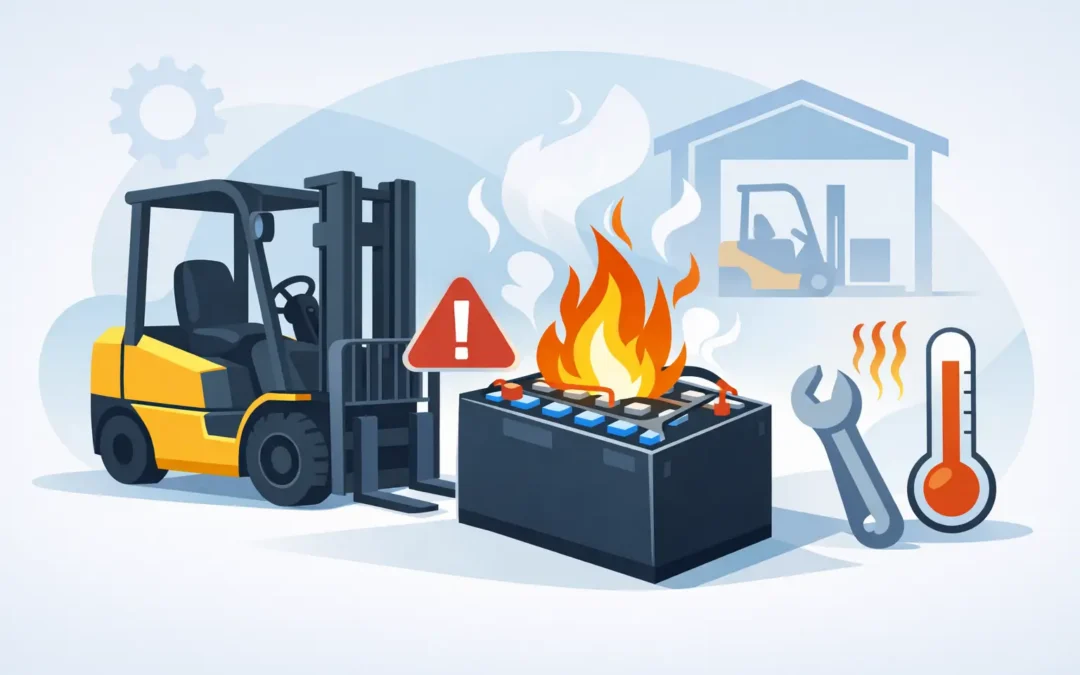
A forklift battery that is hot, smells like sulfur, or starts venting heavily is not a minor maintenance issue. It can shut down a shift, damage expensive electrical components, and create a real safety problem in the charging area. If you are asking why forklift battery overheats, the answer is usually found in the charging setup, battery condition, connections, or the way the truck is being used.
The fastest way to protect uptime is to stop treating heat as normal. Batteries do warm during work and charging. Excessive heat is different. It shortens battery life fast, reduces run time, and can turn a repairable issue into a battery replacement.
Why a Forklift Battery Overheats
Most electric forklift battery overheating problems involve flooded lead-acid batteries, although lithium-ion packs can also overheat for different reasons. The battery type matters, but the operating rule is the same: a battery generating more heat than it can safely shed needs attention before it damages itself or the truck.
The charger is overcharging the battery
Overcharging is one of the most common causes. A charger that runs too long, delivers the wrong voltage, has a failed control circuit, or is programmed for the wrong battery capacity can force excess current into the battery after it is effectively full. That energy becomes heat, aggressive gassing, and water loss.
This often happens after a charger replacement or a battery swap. A charger may physically connect and appear to work, but still be a poor electrical match for the battery’s voltage, amp-hour rating, or chemistry. Opportunity charging can also create problems when it is done without a plan. Frequent partial charging is not automatically harmful, but the charger profile and battery application have to support it.
If the battery gets unusually hot near the end of every charge cycle, the charger should be tested before the battery is blamed.
Low water levels expose the plates
Flooded lead-acid batteries need the proper electrolyte level to keep internal plates covered and cool. When water levels fall, the exposed area of the plates cannot function normally. Internal resistance rises, charging becomes less efficient, and heat builds quickly.
Low water is often the result of chronic overcharging, missed maintenance, or both. Adding water may be necessary, but it will not fix the reason the battery lost water in the first place. Overfilling is also a mistake. It can cause electrolyte to overflow during charging, creating corrosion and safety hazards around the battery compartment.
Watering procedures depend on battery design and condition. In general, levels should be checked on a regular maintenance schedule, with distilled water used where required. A technician should inspect batteries with dry cells, visible plate exposure, acid overflow, or repeated water loss.
Bad cables and connections create resistance
Heat does not always start inside the battery. Loose terminals, corroded connectors, damaged cables, and worn battery contacts create electrical resistance. Resistance turns current flow into heat. In a high-amperage forklift system, that heat can become severe.
Look for discolored connectors, melted insulation, burnt smells, green or white corrosion, and terminals that are hot after operation. A cable issue can cause slow travel, poor lifting performance, intermittent shutdowns, and a battery that appears to be the problem when the real fault is in the connection.
Do not keep tightening or replacing parts at random. A proper voltage-drop test under load can identify where resistance is occurring. That saves time and prevents a repeat breakdown.
The battery has a weak cell or internal damage
A battery can show normal voltage at rest and still fail when the forklift is working. A weak or shorted cell, sulfation, plate damage, or internal contamination can force the remaining cells to work harder. The result is uneven charging, reduced capacity, excessive gassing, and heat.
Age matters here. As a lead-acid battery wears out, it loses capacity and may heat up faster under the same workload. But age alone is not a diagnosis. One damaged cell can make a relatively newer battery perform poorly, while a well-maintained older battery may still be serviceable.
Specific-gravity testing, load testing, and cell-by-cell temperature checks help separate a bad battery from a charger or truck-side electrical problem. Replacing a battery before testing the system can waste money. Continuing to run a battery with a failing cell can cost even more.
The forklift is working harder than the battery can handle
Long travel distances, ramp work, cold-storage use, heavy loads, frequent lifting, and back-to-back shifts all increase battery demand. A battery that is correctly sized for light warehouse work may run hot in a high-cycle operation.
Ambient temperature adds another layer. Heat in the facility, poor airflow in the charging room, and parking trucks tightly together while charging make it harder for batteries to cool. A battery that is already stressed by workload may cross into unsafe temperature ranges when charging begins.
This does not always mean the battery is defective. It may mean the fleet needs a different charging schedule, additional batteries, a higher-capacity battery, or an application review. The right answer depends on the duty cycle, battery age, and truck requirements.
A truck electrical fault is pulling too much current
A failing motor, controller issue, dragging brake, hydraulic problem, or damaged wiring can make an electric forklift draw more current than normal. The operator may notice shorter run time, weak acceleration, or a truck that feels sluggish before the battery becomes obviously hot.
This is why battery complaints should not be isolated from forklift diagnostics. If the truck is drawing excessive current, even a healthy battery will run hotter and discharge faster. Replacing the battery without finding the draw problem only delays the next service call.
Warning Signs That Need Immediate Action
A warm battery during normal use is expected. A battery that is too hot to safely handle, vents heavily, swells, leaks, or smells strongly of rotten eggs needs to be taken out of service. The rotten-egg odor is associated with hydrogen sulfide and is a serious warning sign, particularly in poorly ventilated areas.
Pay attention to these operating changes as well:
- Charging time suddenly becomes longer or the charger never reaches a normal finish cycle.
- The forklift loses run time, power, or lifting performance earlier than usual.
- Battery cables, plugs, or terminals become hot, discolored, or damaged.
- Electrolyte boils over, water use increases, or corrosion keeps returning.
Battery temperature limits vary by manufacturer, battery type, and charging system. Do not rely on a single universal number. If readings are above the battery manufacturer’s allowed range, or the temperature is rising quickly during charge, stop and investigate.
What to Do When a Forklift Battery Gets Too Hot
First, stop using the forklift and stop the charge cycle if it is safe to do so. Move people away from the area, keep sparks and open flames out of the charging space, and make sure the area is ventilated. Do not lean over a gassing battery or attempt a quick fix while it is hot.
Next, check for obvious conditions without touching damaged components: overflowing electrolyte, loose or burnt connectors, cable damage, charger alarms, or a battery case that is swollen or cracked. Do not add water to a severely hot, actively gassing battery unless the manufacturer procedure specifically calls for it. Let the battery cool and have it evaluated.
The repair should address the cause, not just the symptom. That may mean correcting charger output, replacing cables or connectors, servicing the battery, repairing a truck-side draw issue, or recommending battery replacement when testing confirms internal failure. The right repair is often cheaper than repeated lost shifts and emergency battery failures.
Prevent Overheating Before It Stops the Shift
A consistent battery maintenance program catches most overheating causes early. That means regular watering and cleaning for flooded batteries, charger inspections, connector checks, battery temperature monitoring where the workload demands it, and planned testing as batteries age.
Operations should also review how trucks are used. If a forklift is routinely exhausted before the shift ends, operators are relying on extended charging, or the same truck is assigned the hardest work every day, the battery system may no longer fit the operation. Changing the schedule or equipment plan can reduce both repair costs and downtime.
When a hot battery is holding up production, speak directly with a technician who understands electric forklifts. CSC Forklift Repair can diagnose the battery, charger, and truck as one system, then focus the repair where it will get the truck back to work safely. A quick inspection now is better than a damaged battery, a stalled dock, and an unplanned replacement later.
Forklift or Lift Down Right Now?
Talk directly to an experienced technician, not a call center. Mobile repair for electric, LP and diesel forklifts, scissor lifts and boom lifts across the Sacramento area.
📞 Call (916) 827-0510