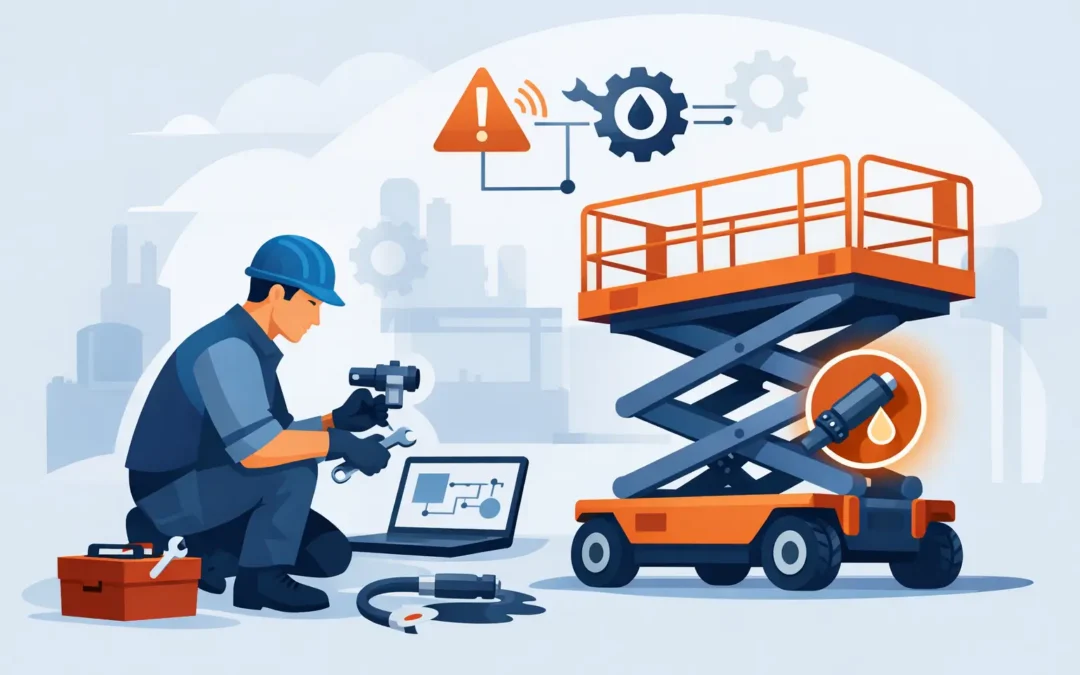
A scissor lift that will not raise, creeps down, or moves painfully slow is not just an equipment problem. It can stop a loading lane, delay a jobsite crew, and put people around the machine at risk. Scissor lift hydraulic troubleshooting starts with the symptom, but it has to end with a verified repair – not a guess, a topped-off reservoir, or another lost shift.
Before inspecting anything, park the lift on level ground, lower the platform fully if possible, remove the key, and follow your site lockout procedures. Never work beneath an elevated platform unless it is supported by the manufacturer-approved maintenance prop or mechanical safety device. Hydraulic pressure can remain trapped even after the machine is shut off.
Scissor Lift Hydraulic Troubleshooting Starts With the Failure Pattern
The fastest diagnosis comes from identifying exactly what the lift does when a function is commanded. Does the motor run but the platform stay down? Does the platform rise unloaded but stall with material or personnel onboard? Does it lift normally and then drift down while parked? Each pattern points to a different part of the hydraulic system.
A useful first check is whether every function is affected. If raise, lower, and drive are all weak or dead, look at the hydraulic oil supply, pump operation, battery condition on an electric machine, or a common control issue. If drive works but raise does not, focus on the lift circuit: the lift cylinder, holding valve, raise valve, hose routing, and pressure available from the pump.
Do not overlook the obvious operating conditions. Confirm the emergency stop buttons are released, the machine is not in a fault or tilt condition, the battery is charged, and the platform is within rated capacity. A hydraulic complaint can begin with an electrical interlock, low system voltage, or an overloaded platform.
When the Lift Will Not Raise
If the hydraulic pump motor does not run when the raise control is pressed, the immediate problem may not be hydraulic. Check battery voltage under load, battery connections, main fuses, contactors, control switches, and wiring to the pump motor. Electric scissor lifts can show enough voltage at rest to power lights and controls, then fall flat when the pump calls for high current.
When the motor runs but the platform will not rise, inspect the hydraulic reservoir level with the platform fully lowered. Low oil can cause the pump to pull air instead of fluid, especially when the machine is parked on an incline. Look for foamy oil, which often signals air entering through a suction hose, loose clamp, damaged fitting, or cracked pump inlet connection.
Next, look for a major external leak. A split hose, loose fitting, failed cylinder seal, or leaking valve body can dump enough oil to prevent a lift function. Do not use your hand to search for a pressurized leak. Hydraulic fluid injection injuries can be severe. Use cardboard or a piece of wood to identify spray or seepage while keeping clear of moving components.
If oil level is correct and no major leak is visible, the machine may not be making enough pressure. A worn pump, restricted suction strainer, stuck relief valve, or leaking control valve can all send flow back to tank rather than to the lift cylinder. A trained technician should confirm system pressure with the correct gauge and manufacturer specification. Raising relief pressure without testing the circuit is a costly shortcut that can damage a pump, hose, cylinder, or structural component.
Slow Raising Usually Means Flow or Pressure Loss
A lift that raises slowly can be more frustrating than one that is completely dead because crews often keep using it until the failure gets worse. Start with oil condition and level. Dark, burnt-smelling, milky, or contaminated hydraulic oil can restrict flow and wear pumps and valves. Water contamination is especially common when equipment is stored outdoors or washdown practices are poor.
Also inspect the filter and suction side of the system. A restricted filter, collapsed suction hose, or clogged strainer makes the pump work harder while delivering less oil. Pump noise matters here. A whining or growling pump often points to cavitation, air ingestion, or inlet restriction.
Slow operation under load but normal operation with an empty platform can indicate pressure loss, internal cylinder bypass, a weak pump, or a relief valve opening too early. It may also be a straightforward overload issue. Verify the actual load, including tools, pallets, debris, and added accessories. Rated capacity is not a suggestion, and uneven loading can create problems before total capacity is reached.
Finding Hydraulic Leaks and Platform Drift
External leaks are visible, but internal leaks can be just as damaging. If a platform rises and then lowers on its own with the controls released, hydraulic oil may be bypassing internally through a cylinder seal, a holding valve, a check valve, or the control valve spool.
A small amount of settling can be normal on some machines within the manufacturer’s stated limits. Rapid or noticeable drift is not. Take the lift out of service until the cause is identified. A drifting platform creates a serious safety concern, particularly during elevated work or material handling.
Cylinder inspection should include the rod surface, gland area, mounting pins, and hose connections. A scored or corroded rod can tear new seals quickly, so replacing seals without addressing rod damage may only buy a short period of uptime. Check for bent components and side loading as well. Scissor mechanisms that are dry, damaged, or out of alignment can put abnormal load on the cylinder and make a hydraulic issue look worse than it is.
Holding valves are designed to keep the platform from dropping if a hose fails or control pressure is removed. They are safety-critical components. Contamination, incorrect adjustment, damage, or improper replacement can cause drift or improper lowering. This is not a part to bypass or modify in the field.
Lowering Problems Need a Different Approach
A platform that will not lower is often blamed on a bad cylinder, but lowering requires the correct valve command and a clear return path to the reservoir. Check for a failed lowering solenoid, damaged wiring, stuck valve spool, blocked return line, or contamination in the valve block.
If the lift lowers only intermittently, pay attention to when it fails. Does it stick after a long workday, only when hot, or only when the platform is loaded? Heat-related failures can expose a weak solenoid coil, worn valve component, or oil condition problem. A lift that lowers roughly or drops in stages can also have mechanical binding in the scissor stack, pivot points, rollers, or slide blocks.
Do not force a stuck valve with improvised tools, and do not repeatedly cycle a malfunctioning lift in hopes it will clear itself. That approach can turn a service call into a valve block replacement, hose failure, or damaged cylinder.
The Checks That Prevent Repeat Hydraulic Failures
Hydraulic repairs last longer when the source of contamination or pressure loss is corrected. Replacing a hose will not solve a system that has rubbed through multiple hoses because clamps are missing or routing is wrong. Replacing a pump will not help if the suction line is pulling air. A quality repair looks beyond the failed part.
Your maintenance team should make a habit of checking these items during scheduled inspections:
- Hydraulic oil level, color, odor, and signs of water or foam
- Hoses for abrasion, cracking, kinks, wet fittings, and poor routing
- Cylinders for rod damage, oil at the seals, loose mounts, and pin wear
- Filters and strainers at the service intervals required for the machine
- Scissor pivot points, rollers, slides, and lubrication points for binding
- Battery condition and cable connections on electric scissor lifts
Keep service records tied to the machine’s serial number. Repeated low-oil conditions, recurring hose damage, or ongoing platform drift are patterns. Those patterns help a technician find the real failure faster and help you plan repairs before the lift quits during a critical shift.
When to Bring in a Lift Technician
Basic visual checks can identify simple issues, but pressure testing, valve diagnosis, cylinder evaluation, and safety-system repairs require the right tools and experience. Call for service when the lift drifts, has a suspected internal leak, makes abnormal pump noise, loses lifting capacity, shows contaminated oil, or has a damaged hose or cylinder.
CSC Forklift Repair handles scissor lift and electric lift equipment issues with direct technician access, practical diagnostics, and repairs focused on getting your operation moving again. The goal is not to sell parts blindly. It is to identify why the failure happened, repair it correctly, and avoid another shutdown next week.
A lift that is slow, leaking, or drifting is giving you an early warning. Take it out of questionable service, document the symptom, and get the hydraulic system checked before a minor loss of performance becomes a full equipment outage.
Forklift or Lift Down Right Now?
Talk directly to an experienced technician, not a call center. Mobile repair for electric, LP and diesel forklifts, scissor lifts and boom lifts across the Sacramento area.
📞 Call (916) 827-0510