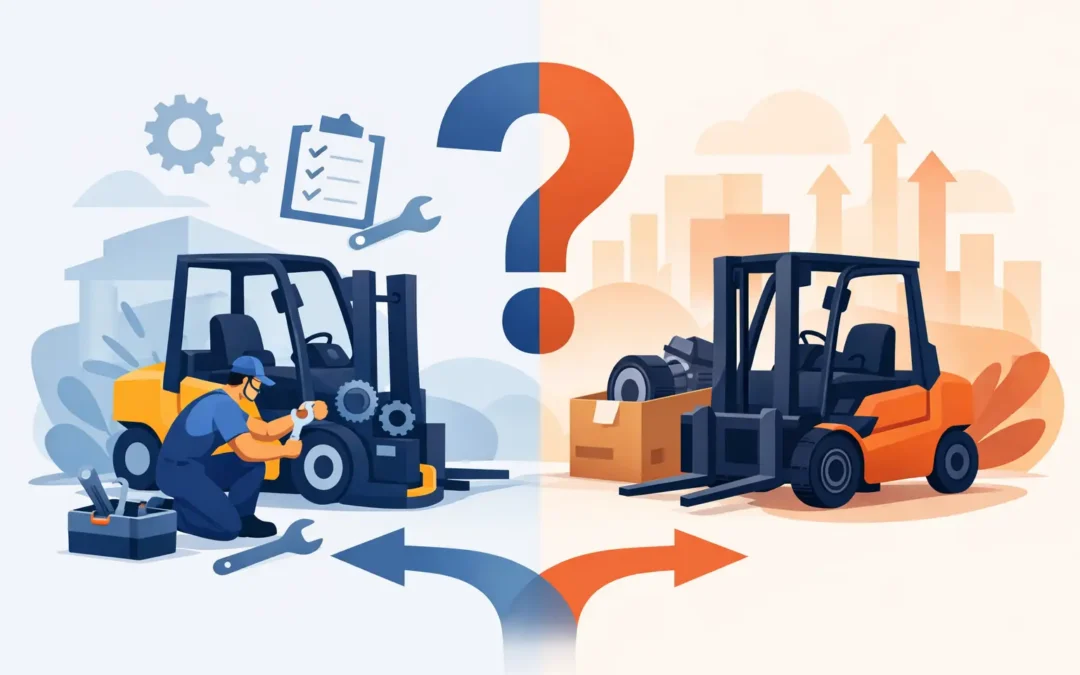
A forklift fails at the worst possible time: during a busy receiving window, before a shipment cutoff, or halfway through a production run. When you need to repair or replace forklift equipment, the right answer is not always the cheapest invoice in front of you. It is the decision that protects safe uptime, labor efficiency, and your operating budget.
A $1,500 repair can be the smart move on a dependable truck with years of useful life left. That same repair can be money wasted if the forklift is becoming a weekly service call, cannot hold a charge, or no longer fits the workload. The key is getting a straight diagnosis before downtime turns into a larger operational problem.
Repair or Replace Forklift Equipment: Start With the Real Cost
The purchase price of a replacement forklift gets attention because it is easy to see. The cost of keeping an unreliable unit in service is usually spread across maintenance invoices, delayed moves, overtime, rental equipment, missed deliveries, and frustrated operators. That is where a repair decision can become expensive.
Start by looking at the total cost of the failure, not just the part that failed. If a lift truck is down for two days, how much work is rerouted? Are operators waiting for equipment? Is another forklift being overworked to cover the gap? Is a scissor lift or boom lift sitting idle because the jobsite cannot move materials where they need to go?
For an occasional, clearly identified problem, repair is often the better call. A failed contactor, worn lift chains, leaking hydraulic hose, damaged wheel, brake issue, or a charging-system fault does not automatically mean the truck is finished. Quality repairs restore a useful asset and cost far less than replacing it.
The decision changes when failures are recurring, major systems are nearing the end of their service life, and the truck is no longer reliable enough for the job. A forklift that is technically repairable is not necessarily economical to repair.
Five Signs Replacement Should Be on the Table
No single number decides whether a forklift should be replaced. Age, hours, maintenance history, operating conditions, and equipment type all matter. Still, these five signs should trigger a serious replacement discussion.
- Repair frequency is climbing. One isolated repair is normal. A pattern of monthly or repeated breakdowns is a warning that other components may soon follow.
- The repair is a major percentage of replacement value. If one repair approaches a meaningful share of what a comparable, reliable unit would cost, pause before approving it. The exact threshold depends on the truck, but the remaining useful life must justify the spend.
- Safety concerns keep returning. Steering problems, brake issues, hydraulic leaks, unstable mast operation, electrical faults, and damaged structural components are not areas to postpone. Safety repairs come first. If the machine cannot be made safe and dependable at a reasonable cost, replacement is the responsible choice.
- Parts are difficult to source. Long lead times and discontinued components turn a minor failure into extended downtime. Older or uncommon equipment can become costly simply because parts availability is poor.
- The forklift no longer matches the operation. A truck may still run but lack the lift height, capacity, battery runtime, attachment capability, turning radius, or indoor performance your facility now needs.
A good service technician will not push replacement just because a repair is complicated. They should show you the failure, explain what caused it, identify what else may be at risk, and give you a realistic view of the equipment’s condition.
Why Electric Forklift Decisions Need a Closer Look
Electric forklifts can deliver excellent service life, but they require accurate diagnosis. A truck that loses power, will not lift, will not charge, or shuts down under load may have a battery issue, charger issue, cable or connector problem, controller fault, sensor problem, or a component affected by heat or moisture. Guessing leads to unnecessary replacement parts and longer downtime.
Battery condition is especially important. A weak battery can make a solid forklift look worn out. Before writing off the truck, check battery age, water level where applicable, cell condition, cable corrosion, connector damage, charging practices, and whether the charger is delivering the correct output. In some cases, replacing the battery or correcting the charging system puts a dependable forklift back into service.
On the other hand, an electric truck with repeated electronic faults, a failing battery, obsolete controls, and frequent hydraulic or mast repairs may be approaching the point where continued repairs do not make business sense. The question is not whether each individual issue can be fixed. It is whether the complete unit can reliably support your shift after the repair.
Ask These Questions Before Approving a Major Repair
Before authorizing a large repair, get clear answers in plain language. What failed? What caused it to fail? Is the repair addressing the root cause or only the immediate symptom? What other components show wear that could create another shutdown soon?
Then compare the expected result with your actual needs. If the repair is completed, how much useful life can you reasonably expect? Will the forklift return to full capacity and normal duty-cycle performance? Are replacement parts readily available for future service? Can your operators count on it during peak periods?
Maintenance records matter here. A forklift with consistent preventive maintenance and one significant failure is very different from a truck with gaps in service history, repeated deferred repairs, and damage from hard use. The first may deserve a major repair. The second may be costing more than it returns.
Also consider whether your workload has changed. A warehouse adding shifts, increasing rack heights, handling heavier pallets, or expanding cold-storage use may need different equipment. Replacing a forklift can be a productivity decision, not just a breakdown decision.
Do Not Let Downtime Make the Decision for You
When equipment is down, urgency is real. But rushed decisions can go both ways. Some operations replace a forklift before a straightforward repair has been properly diagnosed. Others keep approving repairs because a replacement purchase feels harder to approve, even while downtime drains the budget.
The better approach is fast, technician-led evaluation. Get the equipment inspected, identify the actual failure, and ask for a repair estimate that separates immediate needs from recommended future work. If replacement is the smarter move, you should know why in terms of reliability, safety, parts support, and operating cost.
For critical equipment, temporary coverage may also be part of the plan. A rental or backup unit can protect production while you make a sound decision. That cost should be included when comparing repair and replacement, especially if the forklift supports a single point of failure in your operation.
Prevent the Next Repair-or-Replace Decision
The cheapest repair is often the one avoided through regular service. Preventive maintenance catches hydraulic leaks, brake wear, loose connections, battery and charger problems, mast issues, tire damage, and fluid contamination before they create a breakdown in the middle of a shift.
Operators play a role as well. A daily check should not become paperwork nobody reads. It should surface real changes: slower lifting, unusual noise, steering drift, warning lights, battery heat, damaged forks, or charge that does not last through the shift. Reported early, many of these issues can be corrected before they damage larger components.
CSC Forklift Repair focuses on getting a clear answer quickly, especially for electric forklift problems that need more than a parts guess. The goal is simple: repair equipment that still earns its keep, and be honest when replacement is the better business decision.
Your forklift does not need to be perfect to be worth repairing. It needs to be safe, supported, and reliable enough to carry its share of the work. When that is in doubt, get a technician’s diagnosis before the next breakdown makes the choice for you.
Forklift or Lift Down Right Now?
Talk directly to an experienced technician, not a call center. Mobile repair for electric, LP and diesel forklifts, scissor lifts and boom lifts across the Sacramento area.
📞 Call (916) 827-0510