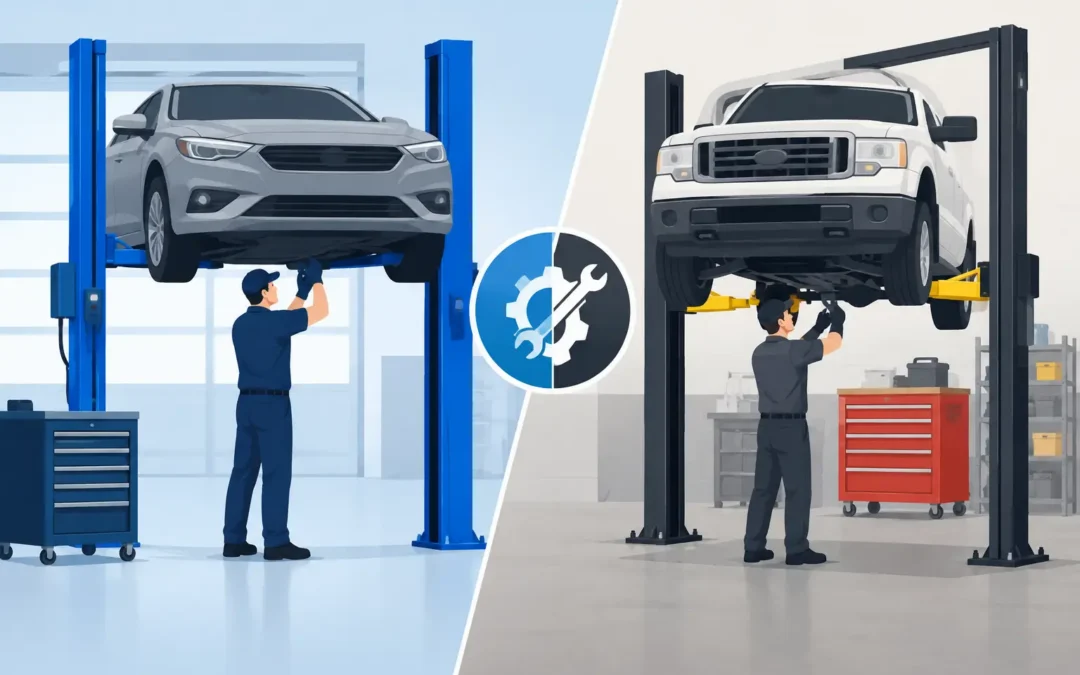
A dead forklift at a loading dock or a boom lift parked mid-job does not care who built it. Your operation cares about one thing: how fast it gets back to work. OEM versus independent lift repair is not simply a question of brand loyalty. It is a decision about downtime, repair cost, parts availability, warranty requirements, and the technician standing in front of the machine.
For some fleets, the dealer is the right call. For many others, an experienced independent lift repair specialist delivers faster service, lower labor costs, and the same practical result: safe equipment back in service. The right choice depends on the machine, the failure, and how much downtime your operation can absorb.
What OEM Lift Repair Typically Provides
OEM repair means service through the original equipment manufacturer or its authorized dealer network. These providers have factory training, access to proprietary diagnostic systems, technical bulletins, and genuine manufacturer parts. That can be valuable, especially when a machine is new, under warranty, or dealing with a complex software or controller issue.
Dealers also have direct access to warranty processes. If a major component is covered, using an authorized provider may be required to protect the claim. For newer electric forklifts, aerial lifts, and specialty equipment, that requirement can make the decision straightforward.
There is a trade-off. OEM service often comes with higher labor rates, higher parts pricing, and less flexibility on repair options. A dealer may also have dispatch layers between your call and the technician. If their schedule is full, a forklift down in your warehouse may wait behind other service calls.
That does not mean dealer service is poor service. It means the OEM model is designed around manufacturer processes, approved parts channels, and larger service territories. Those strengths matter in the right situation. They may not be the fastest or most cost-effective answer for every repair.
Where Independent Lift Repair Has an Edge
An independent service company works across equipment brands and usually operates with more flexibility. Instead of routing a breakdown through a sales desk, service coordinator, and dealership schedule, a good independent provider can get a technician involved quickly. When a lift is blocking production, that direct access matters.
Independent technicians often repair forklifts, scissor lifts, and boom lifts from several manufacturers every week. They see the common failure points: weak batteries, damaged connectors, hydraulic leaks, worn contactors, failed chargers, mast issues, brake problems, and controller faults. That broad field experience can speed up diagnosis, particularly on mixed fleets.
Cost is another major factor. Independent providers generally have lower overhead than a dealership, which can mean fairer labor rates and more options on parts. Depending on the repair, a technician may be able to use OEM parts, high-quality aftermarket parts, rebuilt components, or a practical repair that keeps a sound component in service.
That flexibility is useful when a repair budget is tight. It is not about using the cheapest part available. It is about matching the repair to the machine’s age, duty cycle, safety requirements, and expected remaining service life.
OEM Versus Independent Lift Repair: The Real Decision Points
The better repair option changes from one service call to the next. Operations managers should look past the logo on the truck and ask what the equipment actually needs.
Warranty status
If the forklift or aerial lift is under full manufacturer warranty, start by reviewing the warranty terms. An unauthorized repair or non-approved part can create problems with coverage. For a warrantable drive motor, controller, structural issue, or factory recall, OEM service is often the safer path.
Once the warranty has expired, the equation changes. You are paying for the repair outright, and response time, workmanship, and total cost become the priorities. An independent specialist can often provide a stronger value on out-of-warranty equipment.
Type of failure
Some problems require factory-level support. Proprietary software updates, encrypted controllers, new-model calibration procedures, and certain manufacturer campaigns may call for an OEM technician. A dealer may have tools and information that are not available elsewhere.
Many failures do not require that level of support. A leaking lift cylinder, failed battery cable, damaged hose, worn mast roller, charger issue, brake adjustment, tire replacement, or contactor failure needs a competent technician with the right tools and parts. Waiting days for a dealer simply because they sold the machine may not make operational sense.
Parts availability
OEM parts are often the best choice for critical safety components and parts with strict fitment requirements. They can also be the only realistic choice for proprietary components on newer equipment. The downside is lead time. If a part is backordered, the dealer relationship alone does not put the lift back in service.
A capable independent repair company can check multiple supply channels. In some cases, that means locating an OEM part faster. In others, it means sourcing a proven aftermarket option or rebuilding a component when rebuilding is appropriate. The key is transparency. Your service provider should explain what part is being installed, why it is suitable, and what it means for cost and reliability.
Speed of response
For a single forklift in a small operation, one down machine can stop shipping, receiving, or production. On a jobsite, an inoperable scissor lift can leave a crew waiting with labor costs mounting by the hour. The fastest provider is often the best provider, provided the repair is done correctly.
Ask a direct question before authorizing service: when can a technician arrive? Do not settle for a vague promise that someone will call you back. A repair partner should be able to give you a realistic response window and communicate clearly if parts or additional work are needed.
Long-term fleet support
A dealer can be a strong fit for a uniform fleet of new equipment under factory programs. An independent provider can be especially valuable when your fleet includes multiple brands, older machines, leased units, and equipment purchased used. One experienced service partner can maintain the whole group without forcing every machine into a different dealer network.
For electric forklift fleets, consistency matters. Battery maintenance, charger condition, cable connections, water levels on flooded batteries, and electrical inspections can prevent many urgent calls. A technician who knows your equipment history can spot a developing issue before it becomes a shutdown.
Price Should Never Be the Only Filter
The lowest estimate is not automatically the lowest-cost repair. A cheap repair that fails next week creates another service call, more downtime, and more frustration. The same is true of replacing expensive components before a proper diagnosis confirms they are bad.
Look for a provider that can explain the failure in plain language, present the repair options, and give you a clear labor and parts estimate. Good workmanship is cost control. So is fixing the actual problem instead of replacing parts by guesswork.
Be cautious if a provider cannot tell you whether they are using OEM, aftermarket, or rebuilt components. You should also know whether the repair affects safety systems, warranty coverage, or the machine’s ability to pass inspection. Straight answers matter more than a polished sales pitch.
A Practical Way to Choose
Use OEM service when warranty terms require it, when the repair involves proprietary programming or factory campaigns, or when a critical new-machine component needs manufacturer backing. Use an independent lift repair specialist when you need fast field response, flexible parts options, support for a mixed fleet, and a practical repair price on out-of-warranty equipment.
There is no prize for using one service model every time. The best maintenance managers build relationships with providers who earn their place through response time, technical skill, and honest recommendations. Keep records of recurring failures, repair costs, battery condition, and machine downtime. Those records will show whether a repair partner is truly helping your operation run better.
When equipment is down, get a technician involved before a small electrical fault, hydraulic leak, or worn component turns into a longer outage. CSC Forklift Repair provides direct, technician-led support for electric forklifts and lift equipment, with the focus where it belongs: getting your machine repaired safely, quickly, and at a fair cost.
Forklift or Lift Down Right Now?
Talk directly to an experienced technician, not a call center. Mobile repair for electric, LP and diesel forklifts, scissor lifts and boom lifts across the Sacramento area.
📞 Call (916) 827-0510