A forklift mast that will not hold height, a scissor lift that creeps down, or a boom lift with oil on the ground is not a minor inconvenience. It is lost production, a safety concern, and a repair bill that can grow quickly when the problem is ignored. Hydraulic cylinder repair addresses the parts that create and control lifting force, so the equipment can return to work safely instead of sitting out of service.
For fleet managers and jobsite supervisors, the real question is not whether a cylinder can be repaired. It is whether repair makes business sense, how fast it can be done, and whether the underlying cause will be found before the same failure returns.
When Hydraulic Cylinder Repair Is the Right Call
A hydraulic cylinder converts fluid pressure into the straight-line force that raises a forklift carriage, tilts a mast, extends a boom, or lifts a scissor platform. Inside are seals, a piston, a rod, a barrel, glands, and wear components that must work together under high pressure. A failure in one area can show up as a leak, weak lifting, erratic movement, or a platform that will not stay where it belongs.
Repair is often the practical choice when the cylinder barrel is sound and the rod can be restored or replaced at a reasonable cost. New seals, proper internal inspection, rod work, and correct reassembly can put a serviceable cylinder back into dependable operation for less than a full replacement.
But repair is not automatic. A severely bent rod, a deeply scored barrel, cracked welds, damaged mounting points, or heavy internal corrosion can make replacement the better investment. The right decision depends on the equipment’s age, the cylinder’s availability, the extent of damage, and the cost of downtime. A technician should inspect the whole assembly before promising a quick seal-kit fix.
Signs Your Lift Equipment Has a Cylinder Problem
External oil is the obvious warning sign, but it is not the only one. Hydraulic cylinder issues can look like pump trouble, valve trouble, hose damage, or even an electrical control issue on electric lift equipment. That is why diagnosis matters.
Watch for these four field symptoms:
- Oil collecting around the cylinder rod, gland, or mounting area
- A mast, boom, or platform that drifts down after being raised
- Jerky extension, retraction, lifting, or tilt movement
- Loss of lifting power, slow operation, or a cylinder that will not complete its stroke
A rod seal leak may be visible right away. Internal bypass is different. The cylinder may look dry while worn piston seals allow pressurized oil to pass from one side of the piston to the other. The result is reduced holding ability and poor performance under load.
Do not assume the cylinder is the only problem just because it is wet. A leaking hose fitting above the cylinder can run oil down the assembly and create a false diagnosis. Likewise, contaminated oil can damage new seals if the source of contamination is not corrected. Good hydraulic repair starts with finding the actual failure, not replacing parts based on appearance.
What Causes Cylinder Failures
Most cylinder failures are not random. Contaminated hydraulic oil is a common cause because dirt and metal particles cut seals, scratch rods, and score internal surfaces. A damaged wiper seal lets dirt enter around the rod, especially on outdoor equipment exposed to mud, dust, rain, and debris.
Side loading is another frequent problem. Forklift cylinders can suffer when operators handle off-center loads, run into racks, or work on uneven surfaces. Aerial lift cylinders can be affected by impact damage, misuse, or operation in harsh jobsite conditions. Even a slight rod bend can rapidly damage seals and create recurring leaks.
Heat also shortens seal life. Overheating may point to a larger hydraulic issue such as restricted flow, incorrect fluid, a failing relief valve, or continuous operation beyond the equipment’s intended duty cycle. Replacing seals without addressing overheating can turn a repair into a repeat service call.
What a Proper Hydraulic Cylinder Repair Includes
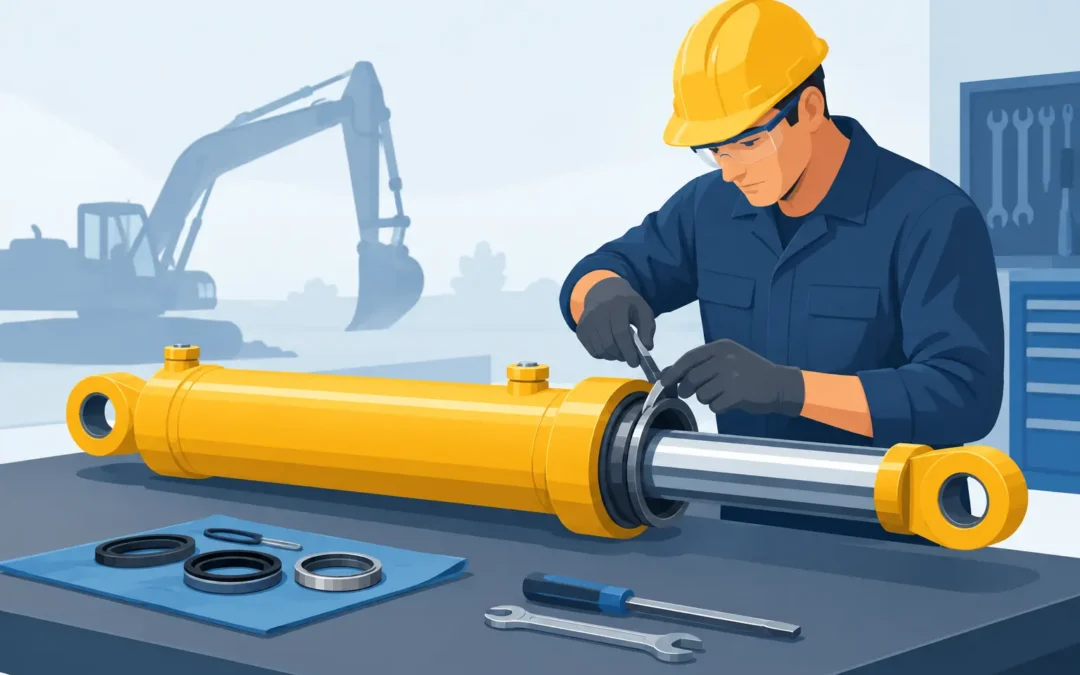
A proper repair is more than changing the seal kit. The cylinder must be removed or accessed safely, depressurized, disassembled, cleaned, and inspected before anyone can determine what parts are needed. On a lift truck or aerial lift, that process also requires attention to blocked loads, lowered attachments, stored energy, and the equipment manufacturer’s service procedures.
The rod should be checked for scoring, pitting, chrome damage, and straightness. A rough or damaged rod can tear through new seals immediately. The barrel needs inspection for internal scoring, corrosion, and deformation. The piston, gland, threads, retaining components, and mounting eyes or pins must also be evaluated for wear.
If the cylinder is repairable, the technician replaces worn seals and wear bands with components matched to the application. The assembly is rebuilt cleanly, installed correctly, and tested for leaks, smooth operation, and holding performance. Depending on the failure, the hydraulic system may also need fluid service, filter replacement, hose inspection, or corrective work on valves and fittings.
That last step is where cheap repairs often fail. Installing seals in a damaged cylinder or putting a repaired cylinder back into contaminated oil may stop the immediate leak but does not protect uptime. The lowest invoice is not always the lowest cost if the truck or lift fails again next week.
Repair on Site or Cylinder Shop Work?
Some hydraulic cylinder repair can be handled in the field, particularly when the fault is accessible and the repair does not require machining, honing, welding, or specialized rod work. Field service reduces transportation delays and can be the fastest path back to operation.
Other jobs require cylinder removal and shop-level work. A rod that needs straightening or rechroming, a barrel that requires honing, or damaged mounting hardware may need more than a mobile repair setup can provide. In those cases, the fastest solution may be removing the cylinder promptly, arranging the required work, and keeping the job moving with clear communication about parts and timing.
There is no one-size-fits-all answer. The important thing is getting an honest assessment early. A technician who understands forklifts, scissor lifts, and boom lifts can tell you whether the issue is a straightforward field repair, a cylinder rebuild, or a replacement decision.
Protect Uptime After the Repair
Hydraulic components give warning before many major failures. A small rod seal leak, a dirty cylinder rod, or a lift that settles slightly under load should be addressed before it turns into a larger outage. Operators should report these conditions immediately instead of topping off fluid and continuing to run the machine.
Daily inspections should include a look at cylinder rods, hoses, fittings, and the ground beneath the equipment. Keep rods clean. Check hydraulic fluid levels and condition. Inspect mounting pins and retainers for looseness or wear. For electric forklifts and aerial lifts, do not overlook the connection between the hydraulic system and electrical controls. A weak battery, damaged wiring, failed solenoid, or control fault can create symptoms that resemble a hydraulic issue.
Scheduled maintenance gives technicians a chance to catch leaks, contamination, and worn components before the equipment becomes unavailable during a busy shift. For heavily used fleets, preventive service is usually cheaper than emergency downtime, rushed rentals, missed deliveries, or labor waiting on a disabled machine.
Fast Diagnosis Matters More Than a Fast Guess
When a lift is down, every minute counts. But fast service only helps when it is paired with competent diagnosis and repair work that holds up. The best repair path is the one that identifies the actual problem, explains the repair versus replacement options clearly, and gets the equipment safely back into operation without unnecessary cost.
CSC Forklift Repair provides technician-led service for forklifts and lift equipment when uptime is on the line. If a cylinder is leaking, drifting, or losing power, get it inspected before a manageable repair becomes a full equipment outage. A quick call now can protect the rest of the shift.
Forklift or Lift Down Right Now?
Talk directly to an experienced technician, not a call center. Mobile repair for electric, LP and diesel forklifts, scissor lifts and boom lifts across the Sacramento area.
📞 Call (916) 827-0510