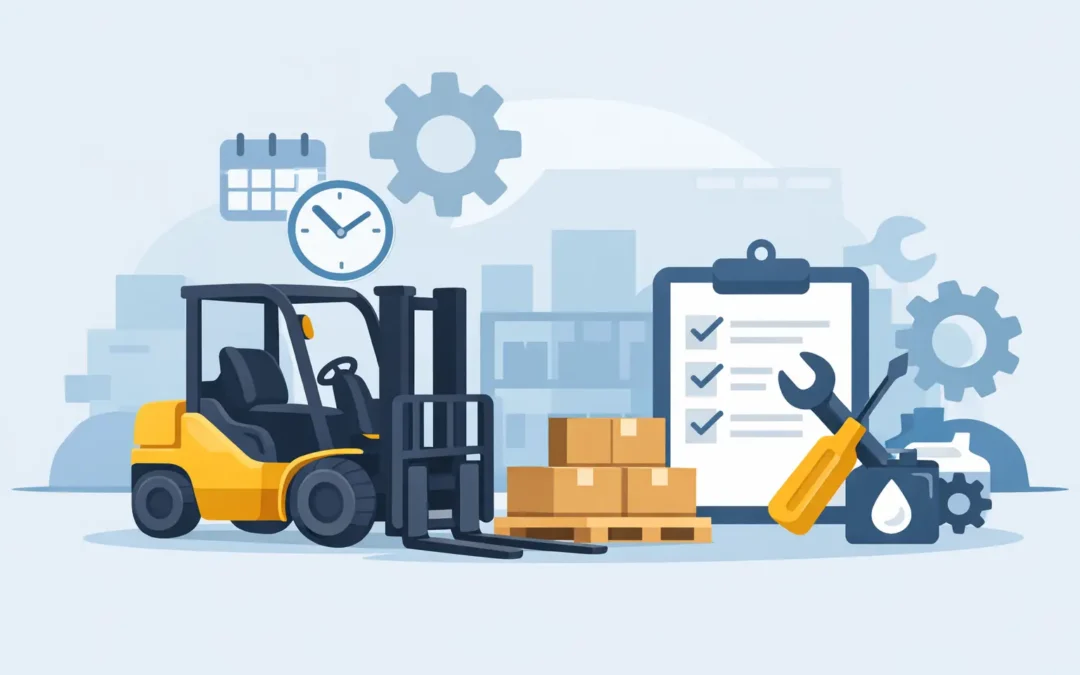
One dead forklift in the middle of a shift can jam up receiving, delay picks, and burn labor fast. That is why a forklift planned maintenance program is not just a service item on a budget sheet. It is a control measure for uptime, repair spend, and safety.
Most operations do not get hurt by one massive failure out of nowhere. They get hurt by small issues that were allowed to grow. A loose connection becomes a no-start call. A worn load wheel turns into product damage. A hydraulic leak gets ignored until the truck is down and the floor is a mess. Planned maintenance is how you catch those problems while the forklift is still working, not after it quits.
What a forklift planned maintenance program actually does
A good forklift planned maintenance program is built to reduce surprise breakdowns and extend equipment life. That sounds obvious, but the difference is in execution. Real planned maintenance is not just changing fluids or checking boxes on a form. It is a scheduled inspection and service process that looks for wear, abuse, battery issues, hydraulic problems, mast concerns, tire condition, brake performance, steering response, and electrical faults before they become expensive calls.
For electric forklifts, this matters even more. Electrical systems can hide problems until performance drops or the truck stops cold. Battery cables, connectors, contactors, lift motor performance, charging habits, and fault codes all need attention from a technician who knows electric equipment. If your provider treats electric forklift service like a sideline, you usually pay for it later in repeat breakdowns.
Planned maintenance also gives you a record. That matters for budgeting, safety, and replacement planning. If one unit is eating tires, throwing repeated electrical faults, or showing hydraulic drift month after month, you need to know that before it becomes a bigger operational issue.
Why operations wait too long to set one up
A lot of companies run forklifts until something breaks because it feels cheaper. On paper, skipping scheduled service can look like savings. In the field, it usually means higher repair bills, more downtime, rushed parts orders, and overtime labor while people work around dead equipment.
There is also a staffing reality. Maintenance teams are stretched thin. In-house techs may be handling conveyors, docks, compressors, building systems, and fleet issues all at once. Forklifts end up getting attention only when operators complain loudly enough. That is not a maintenance strategy. That is triage.
The other problem is access. Some service companies make you work through office layers before you get real technical help. When a truck is down, that delay matters. A maintenance program only works if service is responsive and the technician actually understands the equipment in front of him.
What should be included in a forklift planned maintenance program
The right program depends on your fleet, your environment, and how hard the trucks are used. A single-shift warehouse with clean floors has different needs than a manufacturing plant with debris, heat, ramps, and heavy loads. Still, there are some basics every program should cover.
First, service intervals should match actual usage, not a generic calendar. If a forklift runs two or three shifts, it needs more attention than a lightly used backup unit. Hours matter. So does application.
Second, inspections need to be more than visual. A proper service visit should include functional checks, wear measurements, fluid and leak inspection where applicable, battery and charging review on electric units, and a look at safety items such as horns, lights, alarms, brakes, steering, chains, and forks.
Third, the program should identify trends. One repair is one repair. Repeated steer axle issues, battery abuse, or mast wear tell a bigger story. Good maintenance helps you spot operator habits, charging mistakes, or application mismatch before those issues keep draining your budget.
Finally, the program should be built around scheduling that works with your operation. If service constantly interrupts production, people start avoiding it. The best maintenance plans are consistent and practical. Early mornings, off-shift windows, or staged service by department often work better than trying to pull half the fleet at once.
Forklift planned maintenance program costs versus repair costs
This is where a lot of fleet managers get pressure from above. Preventive maintenance is easy to question because it is planned spending. Emergency breakdowns feel random, even when they are not. But the math usually favors maintenance.
A planned visit is controlled. You can schedule it, budget it, and often keep the truck in service with only minor interruption. A breakdown call is different. Now you are paying for the failure, the service response, the lost productivity, and sometimes the domino effect on the rest of the shift.
There is a trade-off, though. Not every older forklift deserves the same maintenance investment. If a unit is near the end of its useful life and has a long history of major failures, the smartest move may be limited maintenance while you prepare for replacement. That is why your service partner should be honest. Sometimes the best answer is repair. Sometimes it is monitor and manage. Sometimes it is stop putting money into a truck that is done.
Signs your current maintenance plan is not working
If your forklifts still go down often, your maintenance program may be too light, too generic, or poorly executed. Frequent no-starts, repeat battery complaints, uneven tire wear, hydraulic leaks that keep coming back, and the same fault codes showing up over and over are all red flags.
Another warning sign is poor communication. If you are not getting clear notes on what was found, what was corrected, and what needs attention next, then you are not getting much value from the service. Maintenance should help you plan. It should not leave you guessing.
Watch for parts replacement patterns too. If wear items are only being addressed after failure instead of during inspection windows, the program is reacting instead of preventing. That may keep invoice totals looking smaller in the short term, but it usually costs more over time.
How to choose the right service partner
Do not pick a provider based on brochure language. Pick based on response time, technician experience, and whether they know your type of equipment. If you run electric forklifts, make sure the company actually specializes in electric systems. That knowledge gap shows up fast when a truck has intermittent drive issues, charger-related problems, or electrical failures that are hard to duplicate.
You also want direct communication. When a maintenance visit turns up a problem that could cause downtime next week, you need that information quickly and clearly. No runaround. No vague write-up. Just the issue, the risk, and the next step.
Pricing matters, but cheap service that misses problems is expensive service. Fair rates paired with strong workmanship are what move the needle. The point of a maintenance program is fewer breakdowns and better control, not just a lower line item on one invoice.
For many operations, the best fit is a technician-led company that can handle both scheduled maintenance and urgent field repairs. If the same service team that maintains your fleet can also respond fast when something unexpected happens, you lose less time and avoid repeating the whole diagnosis process with a different vendor. That is one reason companies call CSC Forklift Repair when uptime is on the line.
Make the program fit the operation
There is no one-size-fits-all maintenance schedule that works for every forklift fleet. A narrow aisle electric truck in a clean distribution center has different service demands than a sit-down unit moving heavy loads in a rough industrial yard. The right program accounts for operating hours, environment, operator habits, battery handling, and the age of the equipment.
Start with the trucks that matter most. Your highest-use units and your most failure-prone units should get attention first. From there, build a schedule that reflects how your business actually runs. If your service plan looks neat on paper but does not match shop conditions, shift volume, or equipment abuse, it will not hold up.
A forklift planned maintenance program works when it is practical, consistent, and backed by technicians who know what they are looking at. That is how you keep small issues from turning into shutdowns, and that is how you protect the equipment your operation depends on every day.
If your forklifts are making your team work around problems instead of through them, it is time to stop waiting for the next breakdown and put a real plan in place.
Forklift or Lift Down Right Now?
Talk directly to an experienced technician, not a call center. Mobile repair for electric, LP and diesel forklifts, scissor lifts and boom lifts across the Sacramento area.
📞 Call (916) 827-0510