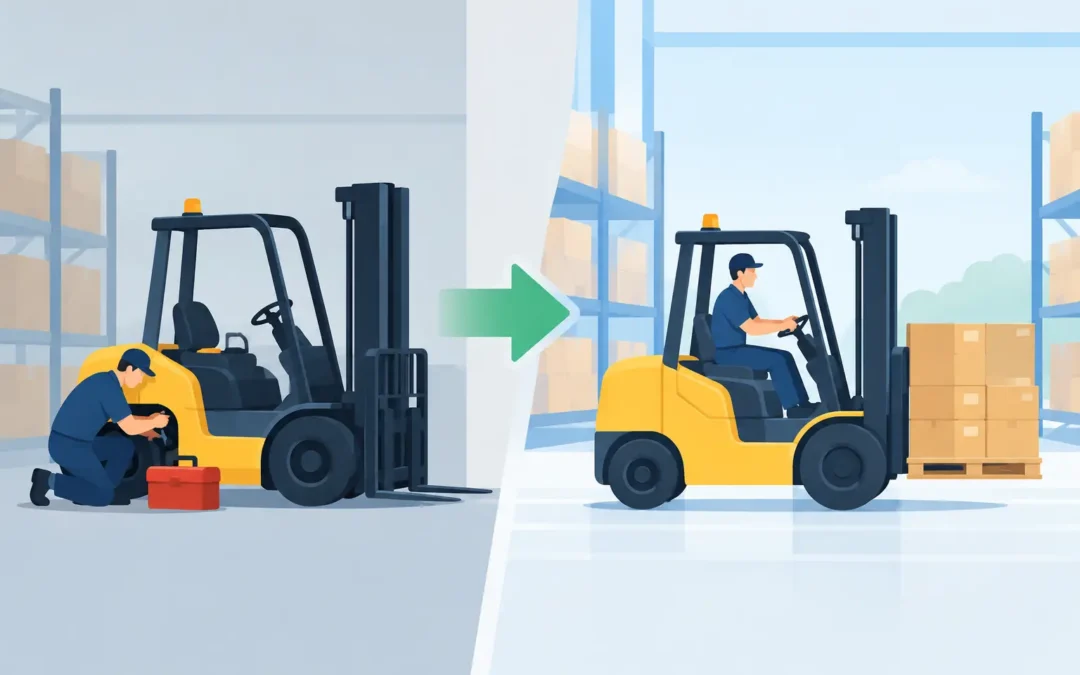
A forklift downtime reduction example is not a spreadsheet exercise when a truck is blocking a shipping lane, a crew is standing by, and orders still have to move. It starts with one practical question: how quickly can the machine be diagnosed, repaired, and returned to safe service?
Consider a distribution center running eight electric forklifts across two shifts. One reach truck begins losing power halfway through the afternoon. The operator reports a battery warning, slow lift speed, and intermittent travel shutdowns. The site has one spare truck, but it is already assigned to receiving. Within an hour, put-away work backs up, labor gets redirected, and outbound orders are at risk.
The old response was to call for service, wait for a callback, and hope the repair could be scheduled soon. The better response is direct technician access, a fast field diagnosis, and a plan that addresses both the immediate failure and the reason it happened.
Forklift Downtime Reduction Example: From Failure to Uptime
In this case, a qualified electric forklift technician arrives with the right diagnostic tools and starts with the basics: battery condition, charger output, cable connections, fault codes, and the truck’s recent service history. The issue is not a failed drive motor. It is heat damage at a high-resistance battery connection, combined with a charger that is not consistently completing its cycle.
That distinction matters. Replacing major components based on symptoms would be expensive and slow. Finding the actual electrical problem gets the truck moving sooner and prevents unnecessary parts costs.
The technician replaces the damaged connector, repairs the cable end, verifies charger performance, clears the fault condition, and load-tests the truck. The reach truck returns to service the same day. That avoids a rental, limits overtime, and keeps the receiving schedule from slipping into the next shift.
The immediate repair reduces downtime. The follow-up work keeps the same problem from returning.
What changed after the repair
The facility did not need a complicated program. It made a few operating changes that directly affected uptime. Operators began reporting reduced battery runtime and warning lights at the start of the shift instead of waiting for a shutdown. Maintenance added battery connector inspections to its scheduled checks. The charger area was also inspected for damaged leads, poor ventilation, and charging practices that were shortening battery life.
Over the next several months, the site saw fewer no-start calls and fewer mid-shift electrical failures. More importantly, its maintenance team had a clear service contact that could speak to the equipment issue directly instead of routing the problem through a generic dispatch process.
That is what a useful downtime reduction effort looks like: fast repair when the truck is down, followed by targeted prevention where the failure began.
Where Forklift Downtime Usually Starts
Most forklift downtime does not begin with a dramatic breakdown. It starts with a warning that gets ignored because the truck can still run. A slow hydraulic function, a weak battery, a steering issue, a flashing fault code, or a charger that seems inconsistent can all become a full stop at the worst possible time.
Electric forklifts deserve special attention because their problems can be misunderstood. A truck that loses power may have a battery issue, a charger issue, a connection problem, a controller fault, or a safety circuit interruption. Throwing parts at the machine wastes time. Proper diagnosis is the fastest path to a lower repair bill and a reliable repair.
For internal combustion forklifts, common downtime triggers include cooling problems, fuel delivery issues, ignition faults, worn tires, hydraulic leaks, and brake wear. Scissor lifts and boom lifts bring their own concerns, including batteries, limit switches, control systems, hydraulic components, and structural or safety-related inspections.
The common thread is simple: small defects become expensive when equipment stays in service without being checked.
Build a Response Plan Before the Next Breakdown
A good maintenance plan does not mean taking every forklift out of service for long inspections. It means matching service intervals to how the fleet is actually used. A truck operating one light shift in a clean warehouse has different needs than a reach truck running two shifts in a busy distribution center or a rough-terrain forklift working outside.
Start by tracking repeat failures. If the same unit has repeated battery complaints, hydraulic leaks, or fault-code events, do not treat each call as unrelated. Look for the root cause. It may be an aging component, operator damage, poor charging habits, missed inspections, or a repair that addressed the symptom but not the source.
It also helps to separate urgent work from planned work. A truck that will not travel is urgent. A worn load wheel, weak horn, minor leak, or damaged seat belt may not stop production immediately, but it should be scheduled before it becomes a safety issue or a larger repair. Waiting until every problem becomes urgent is one of the fastest ways to lose control of maintenance costs.
A practical plan should cover four areas:
- Daily operator checks that focus on brakes, steering, tires, forks, hydraulics, warning lights, battery condition, and visible damage.
- Scheduled preventive maintenance based on operating hours, duty cycle, and manufacturer requirements.
- Clear reporting so operators know who to contact and what information to provide when a problem appears.
- Fast outside service for repairs that require diagnostics, specialized tools, parts sourcing, or safety verification.
The goal is not paperwork. The goal is to catch problems while they are still quick to fix.
Measure the Cost of a Down Truck Correctly
A repair invoice is only part of the cost. When a forklift goes down, the real expense can include idle labor, delayed loading, missed production targets, overtime, rental equipment, and rushed decisions. If a critical truck fails during a peak period, the operational cost can exceed the repair cost quickly.
That does not mean every repair should be approved without question. Cost control still matters. The right service partner should explain what failed, what is required to return the unit safely to service, and what can be planned for later. A clear estimate and an accurate diagnosis are better than a cheap temporary fix that creates another breakdown next week.
There is also a replacement-versus-repair decision. If a truck has frequent major failures, poor parts availability, significant battery degradation, or repair costs that keep climbing, replacement may be the smarter move. But many machines are retired too early because a correct diagnosis was never made. It depends on the truck’s age, hours, condition, application, and service history.
Why Technician Access Makes a Difference
When equipment is down, operations managers do not need a sales pitch. They need to speak with someone who understands the machine. Direct access to an experienced technician speeds up the first decision: whether the truck needs immediate field service, whether an operator can safely perform a basic check, or whether the unit should be removed from service until it is inspected.
That first conversation can prevent wasted time. Provide the make, model, serial number, fault code, symptoms, battery type, and any recent repair history. If the issue is on an electric forklift, mention whether the charger is working, how long the truck runs after charging, and whether the problem changes under load. Those details help a technician arrive prepared.
CSC Forklift Repair is built around that response model: faster service, experienced technicians, and fair rates for forklifts and lift equipment that cannot sit idle. The objective is straightforward – get the right person on the problem and get your operation moving again.
The best time to reduce downtime is before the next truck stops in the aisle. Track the warning signs, schedule the work that can wait, and keep a qualified technician one call away for the work that cannot.
Forklift or Lift Down Right Now?
Talk directly to an experienced technician, not a call center. Mobile repair for electric, LP and diesel forklifts, scissor lifts and boom lifts across the Sacramento area.
📞 Call (916) 827-0510