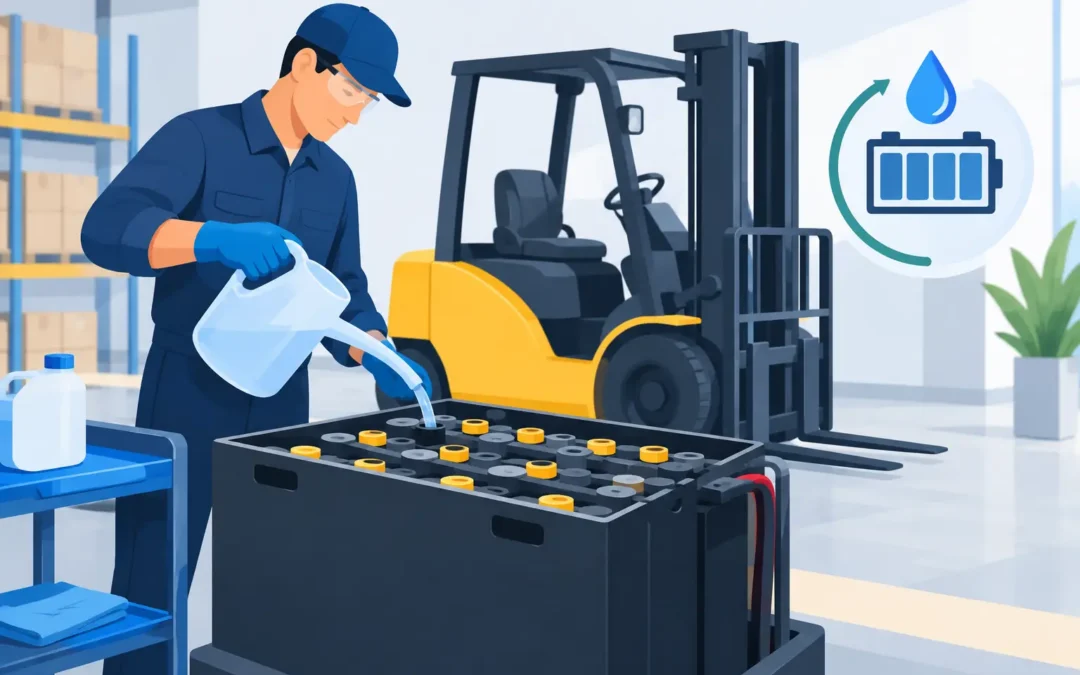
A forklift that loses runtime halfway through a shift is not always a battery replacement problem. On electric trucks with flooded lead-acid batteries, missed watering is often the cause. This forklift battery watering guide covers the work that protects battery capacity, prevents acid overflow, and helps keep your equipment on the floor instead of parked for repairs.
Watering is simple only when the process is controlled. Add water at the wrong time, use the wrong water, or fill cells too high, and a routine maintenance task can turn into corrosion, damaged components, and avoidable downtime.
What Watering Does for a Forklift Battery
A flooded lead-acid forklift battery uses a water-and-sulfuric-acid electrolyte. During charging, water in that electrolyte breaks down and escapes as gas. The acid remains behind. As water levels fall, the plates can become exposed, reducing capacity and accelerating permanent damage.
The goal is not to fill a battery as full as possible. The goal is to maintain the correct electrolyte level so the plates stay covered while leaving room for electrolyte expansion during charging. Overfilled cells can push acid out through the vents. That acid attacks the battery case, cable ends, tray, and truck compartment.
This guidance applies to flooded lead-acid batteries. Do not open or add water to sealed, maintenance-free, AGM, gel, or lithium-ion batteries. Those battery types have different service requirements. When there is any doubt about what is installed in the truck, check the battery label or have a qualified technician identify it before anyone removes a vent cap.
Forklift Battery Watering Guide: The Right Time
For normal watering, add distilled water after the battery has completed a full charge and has cooled enough to handle safely. Charging causes electrolyte to rise. If water is added before charging to the normal fill level, the expanded electrolyte may overflow during the charge cycle.
There is one exception: if the electrolyte level is below the tops of the plates before charging, add just enough distilled water to cover the plates. Do not fill to the final level at that point. Charge the battery completely, let it cool, then finish filling each cell to the proper level.
A battery should be fully charged before final watering whenever possible. Topping up a partially charged battery makes it harder to judge the actual level and increases the risk of overflow. It also hides a bigger problem when a battery is being opportunity charged, undercharged, or used beyond its available capacity each shift.
For most fleets, check electrolyte levels weekly and water as needed. High-use operations may need checks more often, especially where trucks run multiple shifts, ambient temperatures are high, or charging practices are inconsistent. A set inspection schedule works better than waiting for a driver to report short runtime.
Use Distilled Water Only
Tap water is cheap, but it carries minerals and contaminants that can damage a battery over time. Those contaminants raise self-discharge, reduce capacity, and shorten battery life. Use clean distilled water intended for battery service.
Do not add acid during routine maintenance. Water is what is lost during normal charging. Acid should only be added under specific conditions and by someone who understands battery chemistry, usually after a spill or other confirmed electrolyte loss. Adding acid because a battery seems weak can make the problem worse.
If your facility waters batteries often, a battery watering gun or single-point watering system can improve consistency. These systems shut off at the proper level and reduce spills, but they still require inspection. A damaged float, blocked tube, or rushed operator can leave a cell underfilled or overfilled.
How to Water a Flooded Forklift Battery Safely
Start with the truck parked in a designated charging area. The area should be ventilated, free from flames and sparks, and equipped for acid spill response. Charging batteries release hydrogen gas. A spark near a charging battery is not a minor risk.
Wear proper personal protective equipment: safety glasses or a face shield, acid-resistant gloves, and protective clothing. Remove metal jewelry. Rings, watches, and bracelets can create a short circuit if they contact battery terminals or conductive components.
After the battery is fully charged and cool enough for service, inspect the top of the battery before opening any cells. If there is dirt, moisture, or acid residue, clean it first using an approved battery cleaner or a baking soda and water solution applied carefully to the exterior only. Keep cleaning solution out of the cells.
Remove or open the vent caps according to the battery design. Look into each cell and compare the electrolyte level. On batteries with a fill well or level indicator, fill to that indicator. On batteries without one, the electrolyte should typically sit just below the bottom of the vent well, not at the top of the cell. Follow the battery manufacturer’s specified level when available.
Fill slowly with distilled water. A steady, controlled flow prevents splashing and gives the electrolyte time to settle. Once each cell reaches the correct level, reinstall the caps securely, wipe down any residue, and inspect the battery terminals and connectors before returning the truck to service.
Do not lean tools or hardware on top of the battery. Do not smoke nearby. Do not force vent caps or connectors that are damaged. Those are small mistakes with expensive consequences.
Signs Your Watering Routine Is Failing
A healthy battery will need water at a reasonably consistent rate. Sudden changes deserve attention. If one or two cells repeatedly need much more water than the others, if electrolyte is bubbling out during charging, or if the battery is losing runtime faster than usual, do not treat it as a simple watering issue.
Watch for these signs during inspections:
- Exposed plates or very low electrolyte levels before charging
- Acid residue on the battery top, tray, cables, or truck compartment
- Swollen battery case, cracked cells, melted connectors, or hot cables
- Uneven cell levels, especially one cell that behaves differently than the rest
- Short run times after a full charge or a charger that will not complete its cycle
- Strong sulfur or rotten-egg odor, excessive heat, or aggressive gassing during charging
Low water can damage plates. Overwatering can spill acid. But charging problems, poor cable connections, sulfation, and failing cells can produce similar symptoms. The fix depends on the cause. Adding more water to a failing battery will not restore capacity.
Common Mistakes That Cost Runtime
The most common mistake is filling before charging. It feels efficient, but it often leads to electrolyte overflow once the battery reaches full charge. Another common mistake is using tap water because it is available at the sink. Mineral buildup is gradual, which means the cost may not show up until capacity has already dropped.
Skipping equalization is another problem for batteries that require it. An equalize charge is a controlled overcharge cycle that helps balance cells and reduce acid stratification. The right frequency depends on the battery, charger, and duty cycle. Too little equalization can hurt performance; too much can cause excess water loss and heat. Follow the battery and charger manufacturer’s requirements rather than running equalize cycles on guesswork.
Finally, do not use watering as a substitute for inspection. A battery that is dirty, loose at the terminals, running hot, or taking too long to charge needs service. Maintenance should catch those conditions before they turn into a no-start truck during a busy shift.
Build a Schedule Around Actual Use
A written battery log gives maintenance teams useful information without adding much labor. Record the date, battery ID, water added, visible condition, and any abnormal heat, residue, or charging behavior. Over time, the log shows which batteries are consuming excessive water and which trucks may have charging or electrical issues.
For a smaller fleet, one trained employee can handle weekly inspections. For larger operations, assign responsibility by shift and keep distilled water, PPE, cleaning supplies, and spill materials in the charging area. The person doing the work should know when to stop and call for help rather than trying to nurse a damaged battery through another shift.
If a forklift battery is overheating, overflowing, repeatedly running dry, or losing capacity after proper charging and watering, get it checked before the truck becomes dead weight. CSC Forklift Repair can help diagnose electric forklift battery and charging issues quickly, so a maintenance problem does not become a missed shipment or stalled job.
Forklift or Lift Down Right Now?
Talk directly to an experienced technician, not a call center. Mobile repair for electric, LP and diesel forklifts, scissor lifts and boom lifts across the Sacramento area.
📞 Call (916) 827-0510