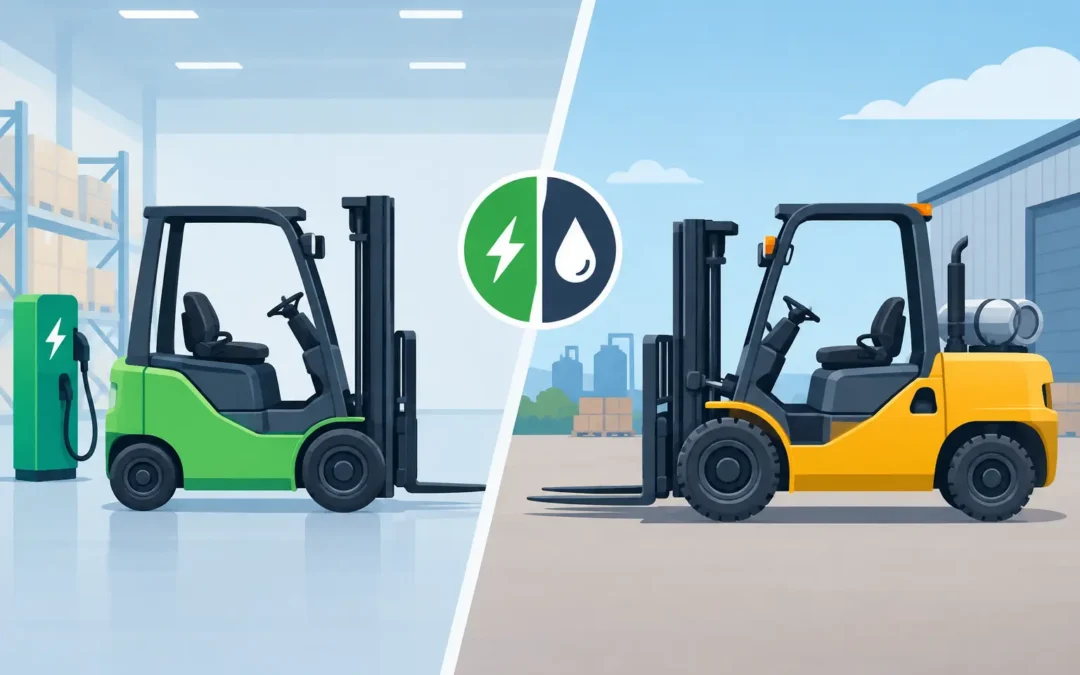
A forklift that is down at the dock, in the aisle, or on a jobsite does not care whether it runs on batteries or diesel. It is still stopping work. But electric forklift service versus diesel is not a simple debate about which machine costs less to repair. The right choice comes down to your operating environment, hours of use, load demands, technician support, and how much downtime your team can absorb.
For many warehouses and manufacturing facilities, electric forklifts have become the better long-term fit. For outdoor yards, heavy loads, and extended high-demand shifts, diesel may still earn its place. The key is knowing what each fleet needs before a service issue turns into a bigger operating problem.
Electric Forklift Service Versus Diesel: The Real Difference
Electric and diesel forklifts fail differently. That changes the way they are maintained, diagnosed, and returned to service.
A diesel forklift depends on an internal combustion engine, fuel system, cooling system, exhaust components, transmission, and hydraulic system. More moving parts generally mean more routine mechanical wear. Service calls can involve filters, belts, hoses, injectors, fuel delivery, engine sensors, cooling problems, starting issues, and emissions-related components on newer machines.
An electric forklift removes the engine and fuel system but replaces them with a different set of critical systems: batteries, chargers, connectors, contactors, controllers, motors, wiring, and onboard diagnostics. Electric units often have fewer routine mechanical service items, but they are not maintenance-free. A weak battery, failed charger, damaged cable, corroded connection, or controller fault can put a truck out of service just as fast as an engine problem.
The biggest mistake is treating every forklift technician as interchangeable. Electric truck diagnostics require a technician who understands high-voltage systems, battery condition, charging behavior, fault codes, and electronic controls. Sending the wrong person can turn a quick diagnosis into hours of guessing.
Maintenance Costs: Lower Is Not the Same as Zero
Electric forklifts usually cost less to maintain over their working life, especially in clean indoor operations. There are no oil changes, engine tune-ups, fuel filters, or exhaust system repairs. That reduces routine labor and consumable costs.
Still, battery care is where electric fleets either save money or lose it. Lead-acid batteries need correct watering, cleaning, charging, equalization, and handling. Letting batteries run too low, skipping watering, or using the wrong charging practices shortens battery life and reduces run time. A battery replacement is not a minor expense, so daily operator habits matter.
Lithium-ion fleets simplify much of that work. They charge faster, support opportunity charging, and do not need watering. The upfront price is higher, but operations running multiple shifts may recover that cost through better uptime, less battery handling, and fewer battery-related service calls. The answer depends on utilization, not just purchase price.
Diesel maintenance is more predictable for teams that already operate trucks, loaders, or other engine-powered equipment. Most maintenance departments understand engines and hydraulics. But the expenses keep coming: fluids, filters, fuel-system work, cooling service, and repairs tied to heat, vibration, and contamination.
A diesel truck that works hard outdoors can be a reliable asset for years. It simply needs a realistic maintenance budget. Skipping preventive service rarely saves money. It usually trades a scheduled repair for an emergency breakdown at the worst possible time.
Uptime Depends on Your Work Cycle
When a forklift runs one shift indoors, electric equipment is often hard to beat. Operators get a quiet machine with no tailpipe emissions, and the facility avoids fuel storage and indoor exhaust concerns. If the truck can charge overnight and complete its shift comfortably, the operation stays simple.
The calculation changes when the truck runs continuously. A lead-acid electric forklift may need a battery change or planned charging period to cover multiple shifts. That requires chargers, battery-changing equipment, space, trained staff, and a process that does not create safety problems or delays.
Diesel can be refueled quickly and sent back out, which remains a major advantage in remote yards and heavy-duty applications. If the truck is moving heavy materials across rough ground for long periods, diesel power may be the practical choice. It also performs well where charging infrastructure is limited or unreliable.
That does not automatically make diesel the uptime winner. A diesel machine with recurring overheating, hard-starting, or fuel-system trouble can lose more time than an electric truck on a well-managed charging plan. Look at actual operating hours, travel distance, load weight, duty cycle, and available support. Do not decide based on a spec sheet alone.
Environment and Application Matter More Than Preference
Electric forklifts are built for indoor warehouses, food and beverage operations, manufacturing floors, distribution centers, and other spaces where air quality and noise matter. They also work well in many outdoor applications on smooth, dry surfaces. Modern electric trucks have strong performance, but their suitability still depends on the surface, grade, weather, and load requirements.
Diesel forklifts are most at home outdoors. Lumber yards, steel yards, construction sites, ports, recycling operations, and uneven terrain can demand the power, ground clearance, and refueling speed that diesel provides. Exhaust, noise, and heat make them a poor choice for enclosed spaces unless ventilation and local requirements are properly addressed.
There is also a middle ground. Some operations need electric forklifts inside and combustion equipment outside. A mixed fleet can be the right answer when one machine type cannot cover every job without compromising productivity or safety.
Common Service Issues to Watch For
Electric forklift problems often start small. Operators may notice reduced run time, slow lifting, intermittent power loss, charging failures, warning lights, or a truck that will not key on. Those signs should not be ignored. A loose connector or battery issue can create heat, damage components, and leave a truck stranded during a shift.
Diesel warning signs include hard starts, smoke, loss of power, overheating, fluid leaks, rough running, or unusual exhaust behavior. Hydraulic problems affect both electric and diesel trucks, so watch for slow lift speeds, drifting mast functions, leaking cylinders, and noisy pumps.
The fastest repair starts with useful information. When calling for service, have the forklift make, model, serial number, fault code if available, and a clear description of what happened. Let the technician know whether the machine is blocking a dock door, sitting in a high-traffic aisle, or needed for a scheduled shipment. That helps prioritize the call and arrive prepared.
Preventive Maintenance Protects the Budget
Emergency service is necessary when equipment stops. Preventive maintenance is how you reduce the number of those calls. A good service schedule checks brakes, steering, tires, hydraulics, chains, forks, mast components, safety switches, and operator controls. For electric units, it should also include battery and charger inspection. For diesel units, it should cover engine fluids, filters, cooling, fuel delivery, and exhaust-related systems.
Daily inspections are equally important. Operators are the first line of defense because they see the machine before and during every shift. A short inspection can catch a worn tire, leaking hose, damaged fork, charging issue, or brake concern before it becomes a downtime event.
Do not wait for a forklift to fail its annual inspection or stop in the middle of a rush. Small repairs are usually cheaper, easier to schedule, and safer to complete than major breakdown work.
Which Forklift Is Right for Your Operation?
Choose electric when your work is primarily indoors, air quality matters, noise needs to stay low, and your charging plan supports the number of shifts you run. Electric is also a strong choice when lower routine maintenance and long-term operating costs are priorities.
Choose diesel when you need sustained outdoor performance, quick refueling, strong performance on rough surfaces, or dependable power for heavy-duty cycles. It is often the practical answer for demanding yard work where a charger is not close by.
Before replacing a truck or changing fleet types, review your actual workload. Track how long each forklift runs, when it sits, how often it lifts heavy loads, and what repairs are costing you now. The machine that looks cheaper upfront is not always the machine that keeps freight moving.
If an electric or diesel forklift is already down, the priority is not winning the comparison. It is getting an accurate diagnosis and a repair plan that makes business sense. CSC Forklift Repair helps operations get direct access to experienced technicians, clear answers, and service focused on getting equipment back to work. A timely service call today can prevent a much more expensive stoppage tomorrow.
Forklift or Lift Down Right Now?
Talk directly to an experienced technician, not a call center. Mobile repair for electric, LP and diesel forklifts, scissor lifts and boom lifts across the Sacramento area.
📞 Call (916) 827-0510