A reach truck stops lifting halfway through a busy receiving shift. The operator reports an intermittent fault, the display flashes a code, and the truck will travel but will not raise a pallet. This electric forklift repair case study shows what a good field diagnosis looks like when downtime is already affecting labor, dock flow, and delivery schedules.
This is a representative service scenario based on common electric forklift problems. The exact failure can vary by make, model, battery type, and work environment. The repair process, however, follows the same rule: test the machine before replacing expensive parts.
The Breakdown: Lift Function Fails Under Load
The equipment was an electric reach truck used for full-shift warehouse work. It had been running normally early in the day, then began losing lift function after several hours of use. The operator could steer and travel, but the hydraulic lift circuit would cut out when lifting a loaded pallet.
The first assumption on many jobs is a weak battery. That is reasonable, but it is not enough. Electric forklifts depend on a chain of components working together: the battery, connectors, cables, contactors, controller, hydraulic motor, pump, sensors, and wiring. A fault anywhere in that chain can look like a battery problem.
The warehouse had two immediate concerns. First, it needed the truck back for the next shift. Second, management did not want to authorize a controller or battery replacement without proof. Those are both fair concerns. Major electric forklift components are not cheap, and guessing can turn one repair call into an unnecessary parts bill.
Electric Forklift Repair Case Study: The Diagnostic Process
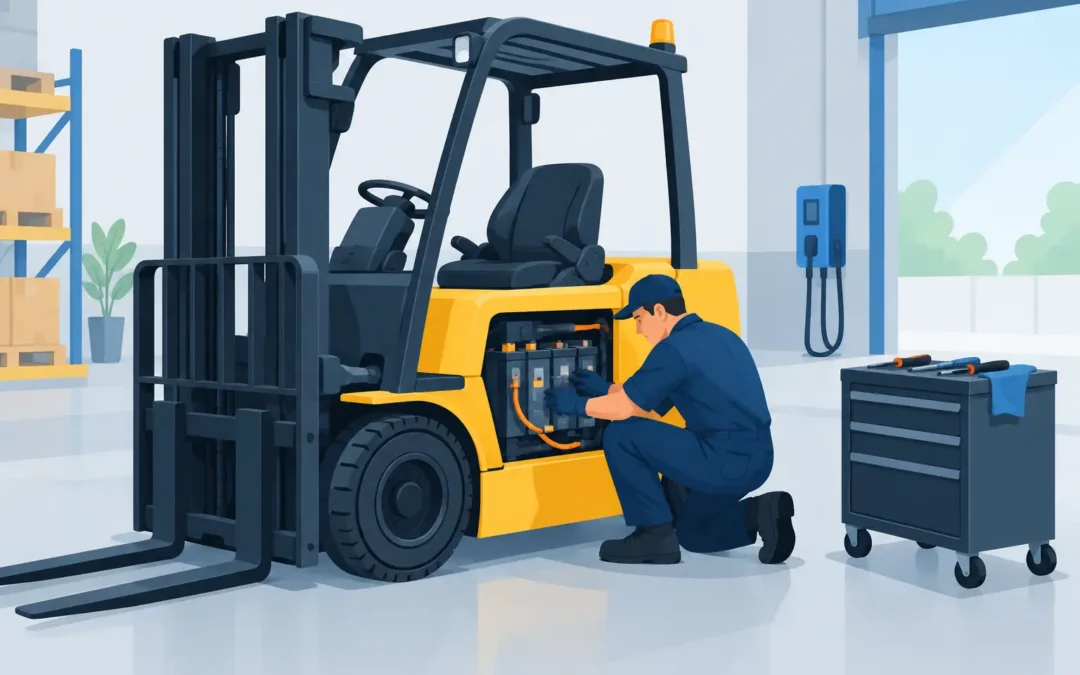
A proper repair starts with the operator’s complaint, then verifies it under real conditions. The technician checked the truck’s fault history, inspected the battery compartment and connectors, and tested voltage at rest and during demand.
The battery had acceptable charge and showed no obvious cell failure. The battery connector, however, had heat discoloration around one terminal. That finding mattered, but it was not the final answer. A damaged connection can create voltage drop, yet the technician still needed to confirm whether the connection was causing the lift failure or was simply a symptom of another electrical issue.
Next came a visual and functional inspection of the high-current lift circuit. The hydraulic motor connection was secure. The lift contactor showed signs of arcing and heat at the main terminals. When the lift command was activated with a load present, voltage dropped sharply across the contactor. The contactor was passing enough power for occasional light operation, but not enough current to reliably run the hydraulic motor under demand.
That was the root cause: a worn lift contactor with burned contacts creating excessive resistance. The truck was not losing lift because the battery was dead or the controller had failed. It was starving the hydraulic motor of power at the point of highest demand.
This distinction saved time and money. Replacing a battery or controller would not have fixed the failed contactor. It could also have delayed the repair while the warehouse waited for larger, more costly parts.
Why the Failure Was Intermittent
Intermittent electrical failures frustrate operators because the truck may seem fine for part of the shift. In this case, heat made the problem worse. As current moved through the damaged contactor, resistance created additional heat. As the contacts heated up, voltage loss increased. The lift motor then received less power, especially when lifting a load.
That is why the truck could travel and steer but struggled to lift. Travel and steering may place different demands on the electrical system. A forklift can appear operational while one critical function is close to failure.
The Repair and Return to Service
The technician replaced the failed lift contactor, cleaned and repaired the heat-affected battery connector terminal, and inspected related cables for damage. After installation, the truck was tested through repeated lift cycles with a working load. Voltage drop was checked again, and the lift function remained stable.
The repair was straightforward once the real failure was identified. The important part was not just changing a contactor. It was confirming that the contactor was the cause, checking the connector damage, and verifying the truck under load before returning it to the operator.
A repair that only clears a code or makes the truck move in the service bay is not enough. Warehouse equipment must be tested in the conditions that caused the complaint. If the problem happens under load, the repair needs a loaded functional check.
What This Repair Prevented
A failing contactor can eventually stop the truck completely. It can also overheat cables and connectors, create repeat faults, or place added stress on the battery and controller. Catching the issue before a full no-start condition helped avoid a more disruptive breakdown.
The operation also avoided a common cost trap: replacing the most expensive component first. Electric forklift repair requires a technician who understands voltage drop, current flow, fault codes, and the difference between a bad component and a bad connection.
For an operations manager, the practical takeaway is simple. A forklift that acts up only when lifting, traveling uphill, or working late in the shift should not be ignored. Those patterns often point to an electrical connection, contactor, battery issue, or component that fails only under load.
Signs You Need Electric Forklift Service Now
Call for service when an electric forklift has repeat fault codes, slow or weak lift, intermittent no-start conditions, hot battery connectors, visible cable damage, or a burning electrical smell. Those are not problems to work around until the next scheduled maintenance visit.
Operators should report what happened immediately before the failure. Did the truck stop after charging? Was it lifting a heavy load? Did the display show a code? Did the issue occur after several hours of work? Those details shorten diagnosis and help a technician focus on the right system.
It also helps to avoid repeated attempts to force a failing truck through the shift. Cycling the key, bypassing alarms, or continuing to run equipment with overheating electrical connections can turn a manageable repair into damaged wiring, a failed controller, or an unsafe condition.
The Maintenance Lesson: Inspect High-Current Connections
Electric forklifts do not need oil changes, but they do need disciplined electrical maintenance. Battery cables, connectors, contactors, and terminals carry serious current every day. Vibration, corrosion, loose hardware, improper charging practices, and normal contact wear all take a toll.
Scheduled inspections should include checking battery connectors for heat damage, inspecting cable insulation, cleaning terminals where appropriate, tightening connections to manufacturer specifications, and reviewing stored fault codes before they become active breakdowns. The right schedule depends on fleet use. A single-shift truck in a clean warehouse does not wear the same way as a multi-shift truck in a cold storage or high-dust environment.
CSC Forklift Repair approaches electric equipment with that same field-first mindset: find the actual failure, explain the repair clearly, and get the truck back to work without padding the job with unnecessary parts.
When a forklift loses lift, starts throwing electrical codes, or will not charge correctly, the fastest path is a direct diagnosis from an experienced technician. A quick call before the next shift can protect your equipment, your repair budget, and your operation.
Forklift or Lift Down Right Now?
Talk directly to an experienced technician, not a call center. Mobile repair for electric, LP and diesel forklifts, scissor lifts and boom lifts across the Sacramento area.
📞 Call (916) 827-0510