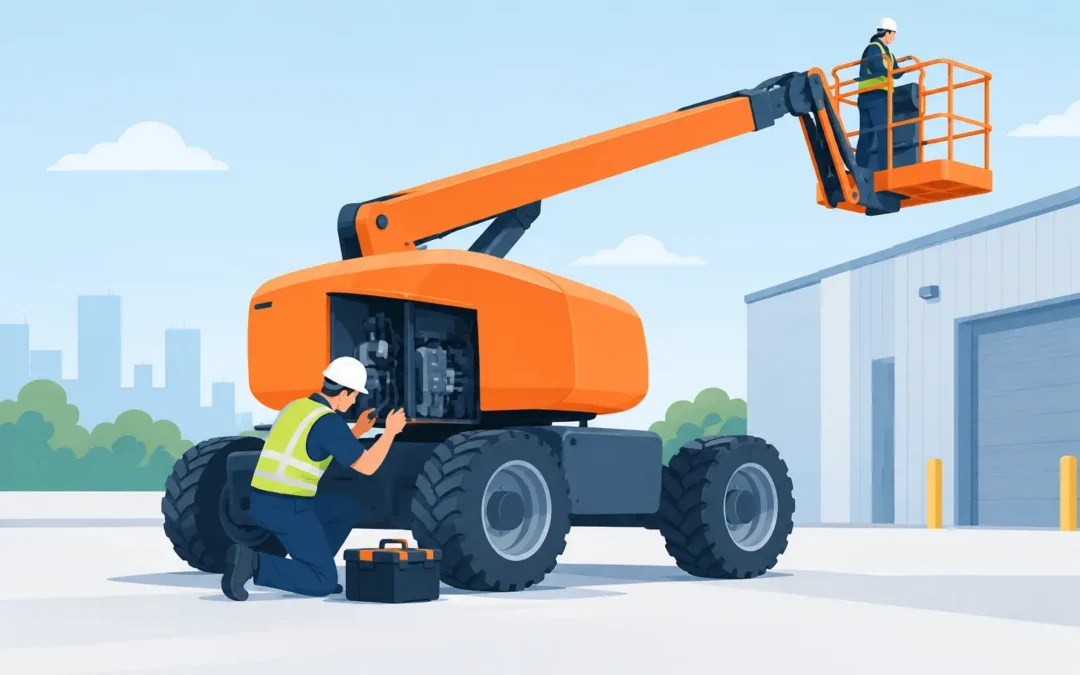
A boom lift parked with its platform down can hold up an entire crew. Materials stop moving, exterior work gets delayed, and labor costs keep running while the machine sits. Fast boom lift technician support matters because the problem is rarely just the lift itself. It is the lost work behind it.
The right response is not a vague promise to get someone scheduled. It is direct access to a qualified technician who can ask the right questions, identify the likely fault, and arrive prepared to repair the equipment. That is how downtime gets reduced instead of extended.
What Fast Boom Lift Technician Support Should Look Like
When a boom lift will not start, will not drive, will not elevate, or suddenly throws a fault code, your operator needs a clear next step. A capable service team begins with the machine symptoms, model information, battery or fuel type, and current jobsite conditions. Those details help narrow the issue before the truck rolls.
Direct technician access is valuable here. A dispatcher can schedule a call, but an experienced lift technician can quickly determine whether the problem sounds like a battery issue, charger failure, limit switch fault, hydraulic leak, control problem, wiring damage, or a safety interlock that has taken the machine out of operation.
That initial conversation does not replace an inspection. It does help prevent wasted time. If the technician knows the lift is an electric articulating boom with low voltage and an intermittent drive fault, they can bring the proper diagnostic equipment and common repair parts. If a diesel telescopic boom is losing hydraulic function, the approach will be different.
Fast service also means clear communication after the inspection. You should know what failed, what must be repaired before the lift can return to service, what the repair will cost, and whether a temporary solution is safe or even possible. No one needs a vague recommendation followed by an open-ended invoice.
Common Failures That Need a Boom Lift Technician
Some boom lift problems look simple from the ground but have several possible causes. A lift that will not move may have a weak battery pack, a failed charger, a damaged control cable, a brake issue, or an active safety fault. Replacing parts without testing can turn a manageable repair into an expensive guessing game.
Electric boom lifts need particular attention. Corroded battery connections, damaged battery cables, improper water levels in flooded batteries, weak cells, charger faults, and poor charging practices can all create intermittent operating problems. Voltage may appear acceptable with no load, then drop hard when the machine tries to drive or elevate.
Hydraulic issues are another frequent source of downtime. Low fluid, leaking hoses, damaged fittings, worn seals, contaminated oil, and valve problems can affect lift speed, steering, or boom movement. A visible leak should never be ignored. Beyond the repair cost, hydraulic fluid can create a slip hazard and may point to a larger component failure.
Control and safety systems also deserve a trained diagnosis. Modern aerial lifts use switches, sensors, modules, emergency-stop circuits, tilt alarms, overload systems, and ground-to-platform controls to protect operators. Bypassing a safety device to finish a shift is not a repair. It can put people at risk and create a much bigger problem for the company.
The Cost of Waiting Is Usually More Than the Repair
Equipment managers are right to watch repair spending. Not every issue requires an emergency field call, especially when the machine is not scheduled for immediate use. But waiting is a poor bargain when the lift is assigned to active work, holding up a deadline, or forcing crews to improvise around unavailable access equipment.
The real cost includes idle labor, missed production targets, delayed subcontractors, rental expenses, rescheduled deliveries, and possible overtime to recover the schedule. A repair that looks costly on paper may be the lower-cost decision once the operational impact is counted.
There is a trade-off. If a boom lift has repeated major failures, significant structural damage, or a repair estimate that approaches its practical value, the conversation may shift from repair to replacement planning. A good technician will be honest about that. The goal is not to sell work that does not make financial sense. The goal is to keep dependable equipment in service and help you make a sound decision when it is time to retire a problem machine.
What to Have Ready Before You Call
A faster repair starts with better information. Have the boom lift make, model, serial number, and hour meter reading available if possible. Tell the technician what the machine was doing when it failed, whether any warning lights or fault codes appeared, and whether the issue is constant or intermittent.
For electric units, report whether the batteries were fully charged, whether the charger is operating, and whether the lift has been sitting unused. For engine-powered booms, note fuel level, starting behavior, visible leaks, smoke, unusual noises, and recent service history. Photos or a short video of the display, leak, or failed function can also help identify the problem before arrival.
Make sure the lift is accessible and the work area is safe for service. If the unit is stuck elevated, stopped on a slope, or located in a restricted area, say so immediately. Recovery and repair planning may require additional precautions.
Repair the Failure, Then Prevent the Repeat Call
An emergency repair gets the immediate problem handled. Preventive maintenance reduces the odds of seeing the same truck again for an avoidable issue. That is especially true for lifts working daily in warehouses, manufacturing plants, distribution yards, and active construction sites.
Regular inspections can catch loose battery terminals, worn cables, leaking hoses, damaged harnesses, low fluid levels, tire damage, charging problems, and control issues before they become a shutdown. Scheduled service also gives your team a documented record of equipment condition, which helps with budgeting and fleet decisions.
Operator checks matter too. The people using the boom lift are often the first to notice slow operation, a charger that is acting differently, a drifting function, a hydraulic smell, or a warning light that appears only sometimes. Reporting those signs early gives maintenance teams more options. Waiting until the lift will not move gives them fewer.
Get a Technician Involved Before Downtime Spreads
A boom lift failure does not need to become a week-long disruption. The best service response combines accurate troubleshooting, practical field repair, safety awareness, and straight answers about cost and next steps. That is the standard industrial teams should expect.
CSC Forklift Repair provides technician-led support for electric lift equipment, scissor lifts, and boom lifts with the urgency working crews need. When a machine is down, speak directly with a technician, explain what the lift is doing, and get the repair process moving. A quick call made at the first sign of trouble can keep one failed machine from slowing down the whole job.
Forklift or Lift Down Right Now?
Talk directly to an experienced technician, not a call center. Mobile repair for electric, LP and diesel forklifts, scissor lifts and boom lifts across the Sacramento area.
📞 Call (916) 827-0510