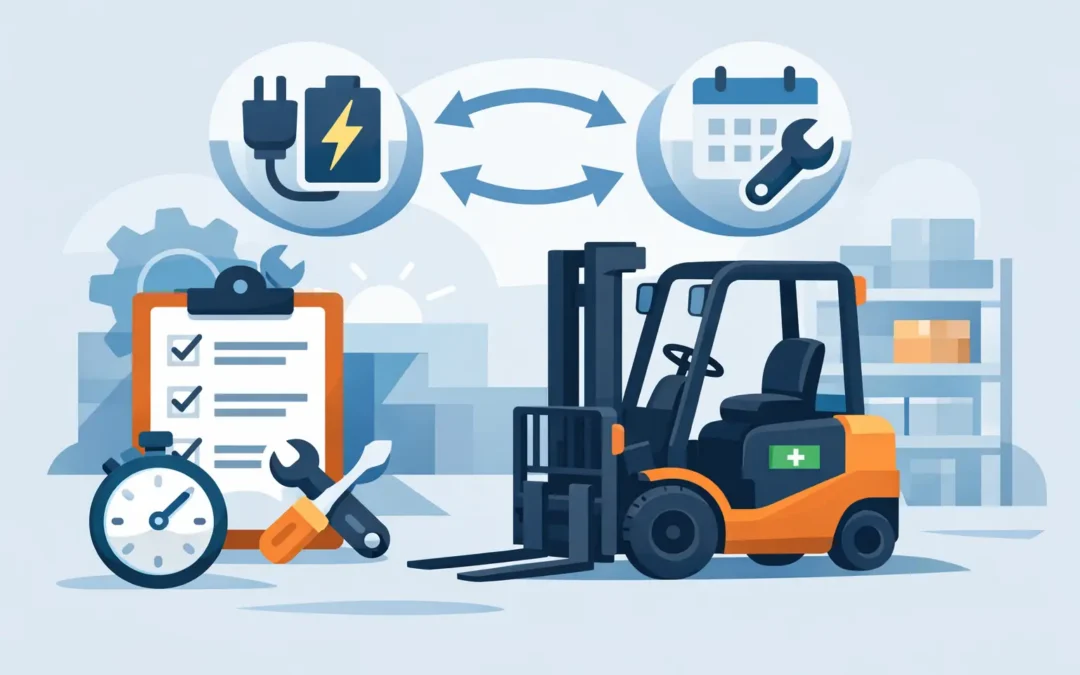
A dead electric forklift in the middle of a shift is rarely a surprise. It is usually the result of missed inspections, neglected battery care, or a small electrical issue that was allowed to grow. The best electric forklift service intervals are based on actual operating hours, battery type, workload, and facility conditions – not a calendar reminder that gets ignored when the warehouse is busy.
For most fleets, a structured daily inspection, routine service every 250 to 500 hours, and a deeper inspection at 1,000 hours is a solid starting point. But forklifts running two shifts, moving heavy loads, working in freezers, or operating around dust and debris need attention more often. Preventive maintenance costs less than an emergency repair call, a missed shipment, or a safety incident.
Best Electric Forklift Service Intervals by Operating Hours
Manufacturer recommendations always come first. The service manual for your specific make and model sets the baseline, especially for warranty coverage and required safety inspections. A qualified technician should then adjust that schedule to match the work your truck is actually doing.
A practical maintenance plan usually breaks down like this.
Every shift: operator inspection
Operators should inspect the forklift before each shift. This is not a paperwork exercise. It is the fastest way to catch a damaged cable, leaking hydraulic line, worn tire, loose fork, or weak battery connection before it puts the truck out of service.
The inspection should cover brakes, steering, horn, lights, backup alarm, lift and tilt functions, forks, chains, tires, hydraulics, battery condition, charger connections, and visible wiring. Operators should also listen for unusual noises and report error codes immediately. If a forklift changes how it drives, lifts slowly, loses charge too quickly, or shows an intermittent fault, pull it from service until it is checked.
Every 250 hours: basic preventive maintenance
For a single-shift forklift, 250 hours may be roughly every two to three months. This interval is a good time for a technician to perform a focused inspection and address wear before it turns into downtime.
Service commonly includes checking brake adjustment and wear, inspecting steer axle components, checking lift chains and rollers, inspecting hydraulic hoses and fittings, testing safety systems, examining tire condition, and reviewing battery cables, connectors, and contactors. The technician should also scan for stored fault codes. Electric forklifts often tell you there is a problem before they stop running, but only if someone reads the information.
Every 500 hours: scheduled service
At 500 hours, the inspection needs to go deeper. For many operations, this is the core electric forklift service interval. It is frequent enough to identify developing issues, yet practical for fleets that cannot afford to over-service equipment.
A 500-hour service should include the 250-hour checks plus detailed inspection of the drive motors, lift motor, brushes where applicable, electrical connections, wiring harnesses, contactors, relays, controllers, and charging system. Hydraulic oil levels should be checked, and filters should be replaced according to the manufacturer schedule and operating environment.
This is also the right time to evaluate battery performance. A forklift that needs charging sooner than usual may have a battery problem, a charger issue, poor cable connections, excessive electrical draw, or an operator practice problem. Replacing parts without testing the full system wastes money.
Every 1,000 hours: comprehensive inspection
A 1,000-hour service is where a maintenance provider should inspect the truck as a system, not just replace routine items. This typically happens once or twice a year depending on usage.
Expect a detailed review of mast wear, chain condition and adjustment, carriage rollers, load backrest, pins and bushings, steering linkage, brakes, wheel bearings, drive unit components, hydraulic system condition, electrical connections, and safety controls. A technician should test the battery under load and inspect the charger output as well.
For forklifts with high operating hours, this service may uncover parts that should be scheduled for replacement during planned downtime. That is far better than waiting for a chain, bearing, contactor, or cable to fail during a critical shift.
Battery Service Cannot Wait for the Annual Visit
The battery is the most expensive wear item on many electric forklifts. Treat it like an afterthought, and the forklift will become slow, unreliable, and expensive to operate.
Lead-acid batteries need regular watering, proper charging, clean terminals, and periodic equalization when recommended by the battery manufacturer. Water levels should generally be checked after charging, not before, because electrolyte expands during the charge cycle. Overfilling can cause acid overflow. Letting plates become exposed can permanently damage the battery.
Battery watering frequency depends on use and battery design. In a busy operation, it may need attention weekly. In lighter service, it may be every few weeks. The right answer comes from inspecting the battery, tracking water use, and following the battery manufacturer’s instructions.
Lithium-ion batteries require less routine physical maintenance, but they are not maintenance-free. Charging behavior, software faults, cooling systems, connectors, and battery management system alerts still require attention. A lithium truck with a charging or communication fault needs proper diagnosis, not guesswork.
Keep battery compartments clean and dry. Corrosion at connectors creates heat and voltage drop. Loose cables can cause intermittent no-start complaints, fault codes, and damage to expensive electrical components.
When to Shorten Your Service Schedule
Hour-based schedules are useful, but harsh conditions change the equation. A forklift that runs in a clean, climate-controlled warehouse on one shift does not wear like a truck working around metal dust, food debris, moisture, uneven floors, or extreme temperatures.
Shorten the interval between services if your fleet operates multiple shifts, handles near-capacity loads, regularly travels long distances, works in cold storage, has frequent operators, or experiences repeated impacts with racks and dock plates. Facilities with poor floor conditions should also pay closer attention to wheels, suspension-related components, steering parts, mast rollers, and battery retention hardware.
High-use fleets often benefit from 250-hour service as their standard interval, with technician visits scheduled around operating hours rather than fixed dates. Low-hour equipment should still be professionally inspected at least annually. Seals age, corrosion develops, batteries degrade, and safety issues can appear even when a truck is not heavily used.
Watch These Signs Between Scheduled Services
Do not wait for the next planned maintenance visit if the forklift is showing clear warning signs. Slow lift speed, jerky hydraulic movement, reduced runtime, charger faults, burning smells, repeated error codes, steering play, brake changes, or unusual motor noise all deserve quick attention.
Electrical problems are especially costly when ignored. A loose connection can damage a contactor. A weak battery can overwork the charger. A failing drive motor bearing can become a motor replacement. Fast diagnosis protects both the equipment and the repair budget.
Operators should have a simple process for reporting defects, and supervisors should make sure those reports reach a technician. If issues disappear from a daily checklist with no follow-up, the inspection program is not protecting the fleet.
Build a Schedule Around Uptime, Not Just Compliance
The goal of preventive maintenance is not to check a box. It is to keep forklifts moving safely through every shift with fewer emergency calls and fewer surprises. Track each truck’s hours, repairs, battery performance, fault codes, and downtime. That record shows which units need a tighter service interval and which recurring failures need a real fix.
For most operations, daily operator checks, 250-hour inspections for demanding use, 500-hour scheduled service, and a 1,000-hour comprehensive inspection create a dependable foundation. The right interval is the one that catches problems before your operation pays for them.
If a truck is already showing electrical faults, poor runtime, lift issues, or charging problems, do not wait for the next service date. Speak directly with a qualified electric forklift technician and get the cause identified before a small repair becomes lost production.
Forklift or Lift Down Right Now?
Talk directly to an experienced technician, not a call center. Mobile repair for electric, LP and diesel forklifts, scissor lifts and boom lifts across the Sacramento area.
📞 Call (916) 827-0510