
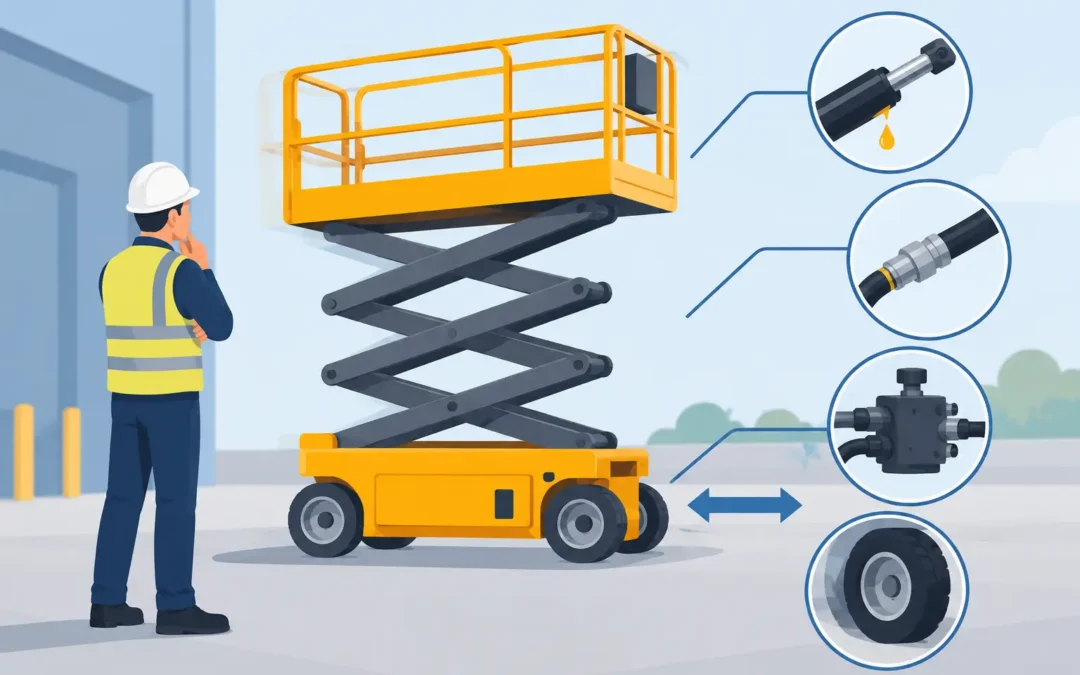
A scissor lift that will not hold its height is more than an inconvenience. It stops work, creates a safety concern, and can turn a small hydraulic repair into expensive downtime if the machine keeps running. If you are asking what causes scissor lift drift, the answer usually comes down to hydraulic oil bypassing somewhere it should not – but the exact failure point matters.
Drift can look different from one machine to the next. A platform may slowly settle with the controls off, lower faster with a load aboard, sink only at certain heights, or drop after the emergency stop is pressed. Those symptoms help a qualified technician narrow the problem down quickly. The wrong approach is topping off fluid, adjusting parts at random, or putting operators back on a lift that cannot reliably hold position.
What Causes Scissor Lift Drift?
A scissor lift stays elevated because hydraulic pressure is trapped in the lift circuit. When pressure leaks internally or externally, the cylinders retract and the platform comes down. The oil does not always leave a visible puddle. In many drift failures, it slips past worn internal seals or through a valve that is not sealing fully.
The most common causes are leaking lift cylinders, contaminated or low hydraulic oil, a faulty holding valve, a worn control valve, damaged hoses or fittings, and loading or setup problems. Electrical faults can also contribute on electro-hydraulic lifts when a valve coil stays energized or receives an incorrect signal.
The time it takes to drift is useful information. A platform that settles a few inches over several minutes has a different likely cause than one that drops noticeably in seconds. Either condition deserves attention, especially if the equipment is used around people, racks, product, or active jobsite traffic.
Internal Cylinder Leakage
Lift cylinders are a frequent source of scissor lift drift. Inside each cylinder, seals separate the pressurized side of the piston from the return side. When piston seals wear, harden, tear, or become damaged by contaminated fluid, oil can bypass internally. The cylinder then retracts even though there may be no oil visible outside the machine.
Internal leakage is often missed because the cylinder looks dry. A technician may perform a pressure test, isolate the cylinder circuit, and inspect whether the cylinder holds under a controlled load. This is why replacing a hose or adding fluid without diagnosis often fails to correct the problem.
External cylinder leaks matter too. A wet rod, damaged gland seal, scored cylinder rod, or oil collecting around the base of the cylinder points to fluid loss. Besides causing drift, external leaks reduce available fluid, attract dirt, and can lead to accelerated wear across the hydraulic system.
Why seals fail
Normal use eventually wears seals, but hard use speeds up the process. Side loading, overloaded platforms, repeated operation on uneven ground, corrosion on the cylinder rod, and dirty oil all take their toll. A lift used daily in a warehouse may show a different wear pattern than a rental unit that spends its life on dusty construction sites.
Cylinder repair is not always just a seal-kit job. If the rod is pitted or bent, or if the barrel is scored, new seals may fail early. The right repair depends on the cylinder condition and the cost of rebuilding versus replacing it.
Leaking Check Valves and Holding Valves
Holding valves, check valves, and counterbalance valves are designed to keep pressurized oil where it belongs. If debris gets caught on a valve seat, a spring weakens, an O-ring fails, or the valve wears internally, oil can return to the tank or move between circuits. The lift settles because the valve is no longer holding pressure.
This type of failure can be intermittent. The lift may hold fine in the morning and drift after repeated cycles, when hydraulic oil is warmer, or only with a heavier load. That is not a reason to keep using it. It is a reason to have the valve circuit tested before the issue becomes a sudden operational failure.
Valve problems should not be guessed at. Many scissor lifts use model-specific hydraulic arrangements and factory pressure settings. Incorrect adjustment can create a new safety problem, damage components, or mask the original fault.
Hydraulic Fluid Problems
Low hydraulic fluid can make lift operation erratic, especially when the platform is raised high and the reservoir level changes. It is more likely to cause slow, jerky, or incomplete lifting than true static drift, but it can be part of the same problem if fluid is leaving through a leak.
Contaminated fluid is a bigger concern. Water, dirt, metal particles, and deteriorated hose material can damage seals and prevent valves from sealing correctly. Dark fluid alone does not prove contamination, but milky oil, burnt odor, visible debris, or recurring filter issues all warrant inspection.
Do not mix hydraulic oils unless the machine manufacturer approves the fluid type. The wrong viscosity or incompatible additive package can affect valve performance and seal life. Use the specified fluid, replace filters on schedule, and find the source of contamination instead of simply changing oil and hoping the drift disappears.
Control Valve or Electrical Command Issues
On an electric scissor lift, the hydraulic power unit relies on solenoids and control valves to direct oil. If a lowering valve does not close fully, the lift can settle. A sticky spool, damaged coil, corroded connector, wiring fault, or failed controller output may keep that valve partially commanded when it should be closed.
A useful clue is whether drift changes when the key switch is off or the battery disconnect is opened. If the lift still drifts with all electrical power removed, the problem is more likely hydraulic leakage through a cylinder or valve. If the behavior changes with power, electrical diagnosis becomes more important. That is a clue, not a final diagnosis.
Technicians should check voltage at the valve coil, coil resistance, wiring condition, and mechanical valve operation. Replacing a coil can be quick and affordable when it is the problem. Replacing parts without testing is how repair costs climb without restoring reliability.
Load, Ground, and Machine Condition Matter
Not every complaint described as drift is a hydraulic fault. A scissor lift can appear to settle if the ground shifts, tires compress, stabilizers move, or the machine is positioned on a surface that is not level or firm. Outdoor units are particularly vulnerable on soft ground, fill dirt, asphalt in high heat, and uneven slabs.
Overloading can also expose a marginal hydraulic issue. Stay within the rated platform capacity, including workers, tools, materials, and accessories. Capacity limits are not suggestions, and a lift may have different limits for drive, platform extension, and elevated operation.
Inspect the scissor stack, pivot pins, bushings, and wear pads as well. Mechanical wear usually causes looseness, noise, or uneven movement rather than true hydraulic settling, but a complete inspection keeps the repair focused on the actual condition of the machine.
What Operators Should Do When a Lift Drifts
Take the lift out of service if it drops unexpectedly, drifts excessively, or cannot consistently maintain working height. Tag it clearly so another operator does not put it back into use. Record the machine make, model, serial number, approximate load, platform height, how fast it moved, and whether there was visible oil loss.
Do not work under an elevated scissor lift unless it is properly supported using the manufacturer-approved maintenance prop or mechanical safety device. Hydraulic pressure is never an acceptable substitute for a support stand. Do not block, cap, adjust, or bypass hydraulic components to get through a shift.
A fast diagnosis can often prevent a long outage. An experienced lift technician can isolate the hydraulic circuit, inspect cylinders and valves, test electrical commands, and identify whether the repair is a seal issue, a valve issue, a hose issue, or a deeper power-unit problem. CSC Forklift Repair focuses on getting lift equipment diagnosed correctly and back to work without wasting time on guesswork.
If a scissor lift is drifting, treat the symptom as the machine telling you pressure is going somewhere it should not. Pull it from service, document what it is doing, and get the fault checked before a slow settle turns into a costly stoppage or a preventable safety incident.