
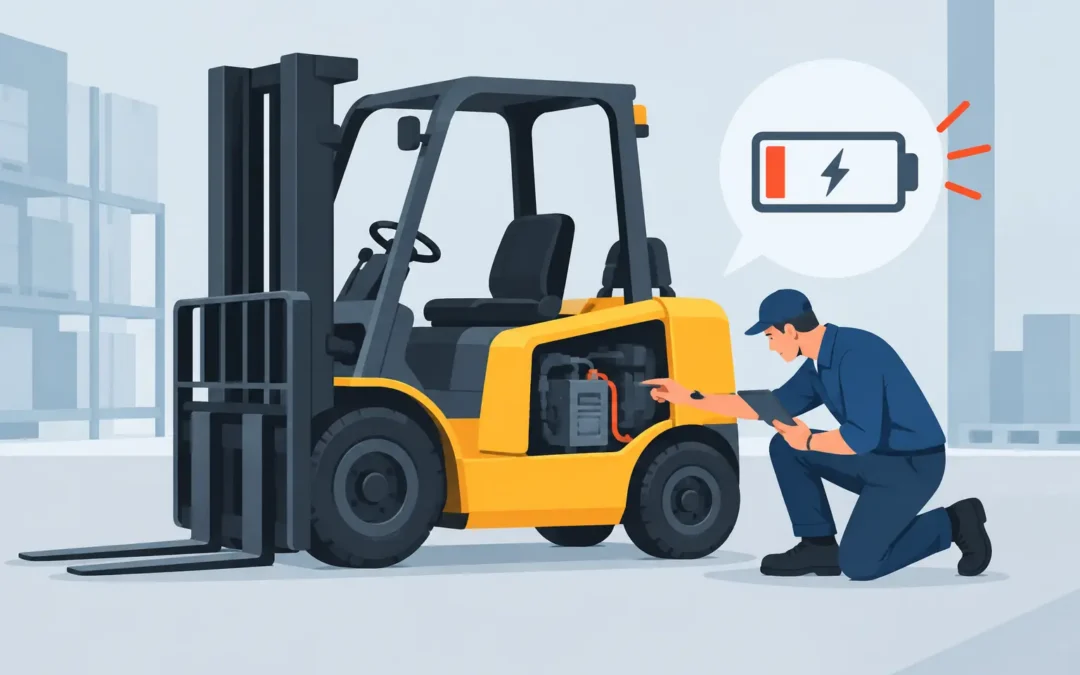
A forklift that starts normally but bogs down at the rack, loses speed on an incline, or quits halfway through a shift is not a minor inconvenience. It is lost moves, delayed trucks, frustrated operators, and a safety concern. If you are asking, why does forklift lose power, the answer usually comes down to one of four areas: the energy source, the electrical system, airflow or fuel delivery, or a mechanical load the truck cannot overcome.
The symptom matters. A truck that loses power only under load points to a different problem than one that cuts out randomly, moves slowly all day, or will not lift at full capacity. The fastest repair starts with an accurate description from the operator and a technician who knows what to test first.
Why Does a Forklift Lose Power Under Load?
Power loss under load is one of the most common complaints in warehouse and jobsite fleets. The forklift may drive acceptably empty, then struggle when carrying a pallet, climbing a ramp, or lifting near capacity. That does not automatically mean the forklift is overloaded, although the load chart should always be checked first.
On an electric forklift, weak batteries, voltage drop, poor cable connections, and controller faults are frequent causes. A battery can show a reasonable charge level at rest yet collapse when the truck demands high amperage. Corroded terminals, loose connectors, damaged battery cables, or heat at a connection can create the same result. The truck may feel weak, flash an error code, or shut down to protect the electrical system.
On propane, gasoline, or diesel forklifts, power loss under load often points to restricted fuel flow, poor combustion, or an engine problem. A clogged fuel filter, restricted propane vaporizer, failing fuel pump, dirty air filter, worn spark plugs, or ignition issue can keep the engine from producing enough power when demand increases. Diesel units may also suffer from fuel contamination, restricted filters, injector problems, or emissions-system faults.
Hydraulic demand can expose a weak engine or weak electrical system. If the forklift loses drive speed every time the mast is raised, tilted, or side-shifted, the hydraulic system may be pulling the engine or traction circuit down harder than it should. Low hydraulic oil, a restricted filter, a failing pump, binding mast components, or a relief-valve issue can all contribute.
Electric Forklift Power Loss: Start With the Battery
Electric forklifts are efficient, quiet, and dependable, but they need a healthy battery and clean electrical path to perform. Do not judge battery condition by the charger indicator alone. Battery capacity is what matters during actual work.
A tired battery may let the truck run for a short time, then lose travel speed and lifting performance as voltage falls. The problem becomes more obvious late in the shift, during heavier picks, or in cold conditions. Batteries that are frequently undercharged, over-discharged, improperly watered, or left sitting discharged lose capacity faster.
Check for battery and cable heat after operation. Excessive heat at terminals, connectors, contactors, or cables is a warning sign of resistance. Resistance wastes power and can damage expensive components. On lead-acid batteries, inspect electrolyte levels, cell condition, corrosion, and the battery connector. On lithium-powered equipment, a battery management system fault, charging issue, temperature limit, or communication problem may reduce available power.
The charger also deserves attention. A charger that fails to complete a proper charge cycle can leave the battery short of usable capacity even when operators believe the truck was charged overnight. Charging errors, incorrect charger settings, damaged plugs, and poor facility power can all be part of the problem.
Controllers, Contactors, and Safety Inputs
If the battery tests well, the electrical control system needs to be checked. Electric forklifts rely on controllers, contactors, fuses, wiring, sensors, and safety interlocks to regulate travel and hydraulic functions. A failing contactor can create intermittent power loss. A damaged harness can lose connection when the truck turns or the mast moves. A controller may limit output after detecting overcurrent, overheating, or a sensor fault.
Seat switches, brake switches, direction switches, emergency disconnects, and accelerator sensors can also cause reduced performance or sudden shutdowns. Error codes are useful, but they are not a complete diagnosis. A code identifies where to begin testing, not necessarily the part to replace.
Internal Combustion Forklifts: Fuel, Air, and Ignition
For propane, gasoline, and diesel forklifts, start with the basics before assuming a major engine failure. Fuel quality, filters, and air supply cause plenty of avoidable downtime.
A propane forklift may lose power because the tank valve is not fully open, the tank is low, the fuel line is restricted, or the vaporizer/regulator is failing. Frost on the regulator or fuel system can signal a flow issue, especially during continuous hard use. A contaminated propane supply or a worn lockoff can create similar symptoms.
Gasoline and diesel units need clean fuel and unrestricted flow. Water in fuel, a clogged filter, a weak lift pump, collapsed fuel hose, or debris in the tank can make an engine stumble under load. A restricted air filter limits combustion air and often causes black smoke, weak acceleration, or poor lifting performance. Diesel engines may enter reduced-power mode when sensors, turbo components, exhaust aftertreatment systems, or fuel pressure readings fall outside specification.
Ignition problems are common on gasoline and propane trucks. Worn plugs, weak coils, cracked wires, poor grounds, or distributor-related issues can allow the engine to idle but misfire as load increases. A forklift engine that pops, hesitates, smells strongly of fuel, or runs rough needs attention before it damages the catalytic system or strands the truck.
Mechanical Problems That Feel Like Power Loss
Not every slow forklift has an engine, battery, or controller problem. Dragging brakes, seized wheel bearings, low tire pressure, drivetrain wear, and transmission issues can make a healthy power source feel weak. A truck working on damaged cushion tires or underinflated pneumatic tires also uses more energy and loses stability.
Mast and hydraulic problems can be mistaken for loss of engine power. Dry or damaged mast rollers, bent channels, binding chains, overloaded attachments, or a hydraulic pump issue increase the effort required to lift and tilt. If the truck drives normally but lift functions are slow, noisy, or weak, focus on the hydraulic system rather than the travel system.
Do not ignore the operating environment. Cold batteries deliver less capacity. Extreme heat can trigger protection modes. Steep ramps, rough surfaces, frequent stop-and-go travel, and loads near rated capacity expose problems that may not show up during a quick test drive.
What Your Operator Should Report Before Service
A clear symptom report shortens diagnosis time and helps avoid unnecessary parts replacement. Ask the operator whether power loss happens during travel, lifting, turning, braking, or all functions. Note whether it occurs only under load, only after the truck warms up, or only at certain times of day.
Also record warning lights, fault codes, unusual noises, smoke, fuel smells, hot connectors, battery charge status, and recent repairs. If the problem started right after a battery change, service visit, impact, washdown, or fuel delivery, say so. Those details matter.
Do not keep running a forklift that stalls in traffic lanes, loses braking response, overheats, sparks at the battery connection, or cannot reliably lift its rated load. Park it safely, lower the forks, shut it down, and tag it out. Trying to finish the shift can turn a straightforward repair into a damaged controller, failed battery, or unsafe incident.
Get the Right Test, Not a Guess
Power loss is rarely fixed well by swapping parts until the symptom disappears. Proper diagnosis means load-testing the battery, checking voltage drop, reviewing fault history, testing fuel pressure or propane flow, inspecting air and hydraulic systems, and confirming the truck is not fighting a mechanical drag.
That approach costs less than repeated guesswork and gets equipment back to work faster. CSC Forklift Repair provides technician-led service for electric forklifts and other lift equipment when downtime is already affecting the operation. A forklift that is losing power is telling you something. Get it checked before the next heavy load turns a weak symptom into a full shutdown.