
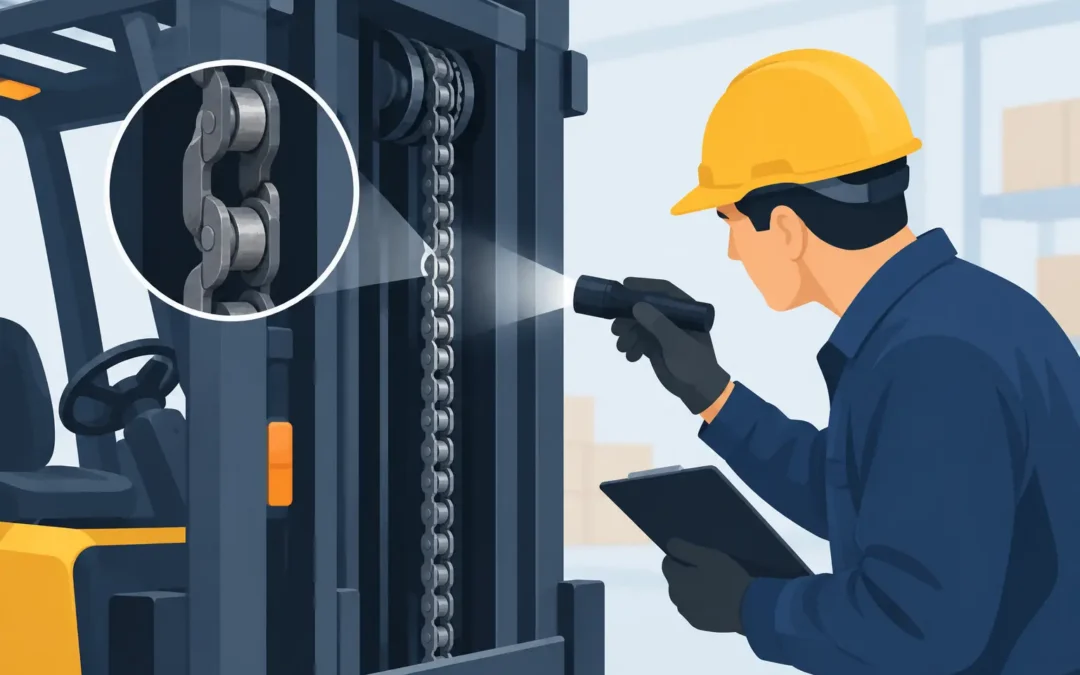
A forklift chain can look acceptable right up until it does not. A stiff link, worn pin, damaged anchor, or stretched section can turn a routine lift into a dropped-load hazard and an unplanned repair. Knowing how to inspect forklift chains gives your operators and maintenance team a chance to catch those problems before they stop the shift.
Forklift chains carry the carriage and load through every lift cycle. They are not a part to check only after the mast starts jerking or the forks sit unevenly. A quick pre-use look should happen daily, while a trained technician should perform the detailed measurements and removal decisions during scheduled maintenance.
Start With a Safe, Clean Inspection Setup
Park the truck on level ground, lower the forks fully, set the parking brake, and shut the unit down before a hands-on inspection. If the inspection requires work around raised mast components, follow your lockout and support procedures. Never rely on hydraulic pressure alone to hold a raised carriage, and never place hands between a chain and sheave.
Dirt and old grease can hide cracks, corrosion, and damaged link plates. Wipe the accessible chain surfaces with a clean rag before looking closely. Do not use a harsh method that damages the chain or forces contamination into pins and bushings. The goal is visibility, not a cosmetic cleanup.
For electric forklifts, do not let a clean, quiet machine create false confidence. Electric lift trucks may run smoothly even when mast chain wear is developing. The chain, sheaves, anchors, rollers, and hydraulic lift system all need their own checks.
How to Inspect Forklift Chains During a Pre-Use Check
Begin with a full visual inspection from the carriage attachment points to the chain anchors. Look at both chains on a two-chain mast. They should appear evenly routed, similarly lubricated, and under similar tension. One chain that hangs differently, looks drier, or has visibly different link spacing deserves attention.
Watch for obvious damage: bent or twisted link plates, cracked plates, gouges, deep rust, missing retaining hardware, and pins that appear to be walking out of position. A chain with side wear can indicate misalignment at a sheave, anchor, or carriage. Do not assume the chain itself is the only issue.
Run a gloved hand lightly along the accessible length only after the truck is secured and the chain is stationary. You are feeling for roughness, binding, sharp edges, or a link that does not articulate like the others. If a link is frozen, stiff, or damaged, take the truck out of service until it can be evaluated.
Check lubrication as well. Forklift lift chains need the lubricant specified by the manufacturer to reach the pin and bushing areas. A chain that is dry can wear quickly. A chain covered in heavy, dirty buildup is not healthy either, because abrasive contamination accelerates pin and plate wear. Lubricate correctly after cleaning and inspection, not as a way to cover up a problem.
While cycling the mast, stand clear and watch the chain travel. Raise and lower the carriage without a load when conditions allow. Listen for clicking, popping, scraping, or a repeated snap as a link passes over a sheave. Look for chatter, uneven movement, or a carriage that rises unevenly. Stop immediately if the chain jumps, binds, or rides improperly on a sheave.
Measure Chain Stretch, Do Not Guess
Elongation is one of the most critical forklift chain checks. Chains do not usually stretch because the steel itself pulls longer. Wear at the pins and bushings increases the pitch between links. That added clearance changes how the chain engages the sheaves and reduces its safe service life.
A qualified technician measures a specified number of chain pitches under the correct tension, then compares that measurement with the chain manufacturer and forklift manufacturer limits. Measuring over several pitches is more accurate than measuring one link. It also helps expose localized wear, which can be missed by a quick overall measurement.
Do not rely on a visual estimate of chain stretch. Two chains can look nearly identical while one has exceeded the allowable limit. As a general rule, replacement limits are often expressed as a percentage of elongation, but the exact limit depends on the chain design and truck manufacturer. Use the service manual and the chain manufacturer’s criteria for that forklift.
Measure both lift chains. If one chain is worn beyond limits or has a condition requiring replacement, the matched chain often needs replacement as well. Replacing only one may create uneven lift characteristics and leaves an aged component carrying the same duty cycle. The correct repair depends on the mast design, chain condition, and manufacturer guidance.
Inspect the Parts That Wear the Chain
A new chain will not solve a bad sheave or damaged anchor. Inspect the whole lifting path.
Look closely at sheaves for worn grooves, chips, cracked flanges, seized bearings, and uneven contact marks. The chain should sit correctly in the sheave groove, not climb a flange or ride high because the groove is worn. Turn sheaves only when the equipment is secured and the procedure allows it. Rough rotation or side play points to a bearing or mounting issue.
At the carriage and mast anchors, check pins, bolts, retainers, and threaded adjustments. Hardware should be present, secure, and free of bending or obvious wear. Chain anchors that are misadjusted can leave one side carrying more load than the other. Forks or a carriage that sit out of level may be a chain adjustment issue, but it can also indicate mast damage, roller wear, or a bent carriage. That is a technician diagnosis, not an operator adjustment.
Also inspect the mast rails and rollers. Misaligned rollers, damaged rails, and side-shifting carriage components can put abnormal side load on the chains. If the problem keeps returning after lubrication or adjustment, look beyond the chain.
Know When to Remove the Forklift From Service
The decision is simple when there is a visible crack, broken component, displaced pin, severely corroded chain, or a chain that jumps or binds. Tag the forklift out of service. Do not run a test load to see whether it will hold. A loaded test can turn a repair issue into an injury or property-damage event.
Take the truck out of service when you find any of these conditions:
- Cracked, bent, twisted, or heavily corroded chain plates
- Stiff, seized, damaged, or visibly distorted links
- Elongation beyond the manufacturer’s allowable limit
- Missing, loose, or damaged chain anchor hardware
- Worn or damaged sheaves that do not support the chain correctly
- Uneven carriage travel, unusual chain noise, or improper chain tracking
OSHA requires industrial trucks to be examined before they are placed in service, and defects affecting safe operation must be corrected. Your daily operator check is the first line of defense. It is not a substitute for periodic inspection by someone who can measure chain wear, assess mast alignment, and make a documented repair decision.
Set an Inspection Schedule That Matches the Work
A forklift that makes occasional light lifts does not wear chains at the same rate as a truck running two shifts in a dusty distribution center. High lift cycles, heavy loads, cold storage, corrosive environments, outdoor use, and poor lubrication all increase inspection needs.
At minimum, build chain checks into every pre-shift inspection and every planned maintenance visit. Track hours, lift cycles if available, operating conditions, measurements, lubrication, and repairs. That record matters when a chain begins wearing faster than expected. It helps identify whether the cause is workload, contamination, a damaged sheave, poor adjustment, or an operator-reported issue that was never fully addressed.
Do not delay service because the forklift is still moving freight. Chain problems rarely get cheaper with more use. A planned repair can be scheduled around your operation. A mast failure decides the schedule for you.
If your team finds wear, stretch, uneven lifting, or chain noise, keep the truck out of service and get a qualified forklift technician involved. CSC Forklift Repair can inspect the complete mast system, identify the cause, and make the repair before a small chain issue becomes costly downtime.