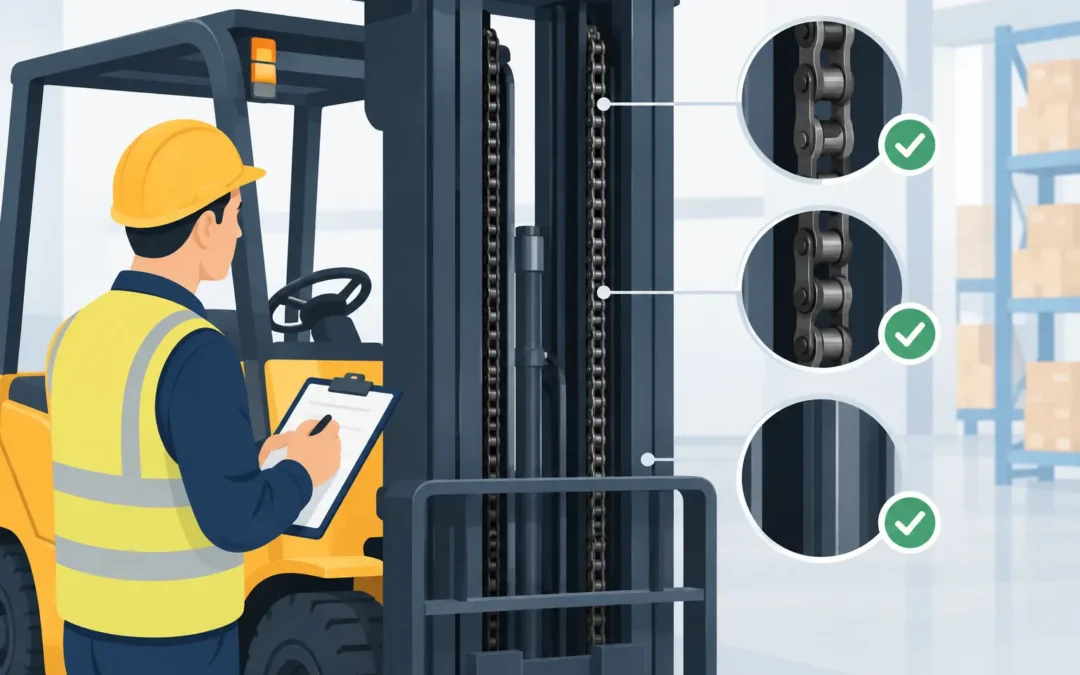
A mast chain can look fine from the ground and still be close to failure. When it stretches, corrodes, cracks, or binds, the risk is not just another repair ticket. You can lose lifting capacity, damage the mast, drop a load, and put operators in danger. A disciplined forklift mast chain inspection catches those problems before they shut down a dock, production line, or jobsite.
For busy operations, the goal is simple: find obvious problems during daily checks, document what you see, and get a qualified technician involved before a chain failure turns into a major downtime event.
Why Mast Chains Need Close Attention
Forklift lift chains carry the load every time the carriage moves. They work under high tension, repeated cycling, side loading, vibration, and exposure to dust, water, chemicals, and temperature changes. On electric forklifts, frequent stop-start operation and high utilization can add thousands of lift cycles quickly.
Unlike a tire or a fork, chain wear is easy to miss. The chain may be hidden within the mast channels, covered in old lubricant, or viewed only during a rushed pre-shift inspection. A worn chain can also cause symptoms that look like another problem, such as uneven lifting, carriage drift, unusual mast noise, or rough operation.
Do not treat chains as a replace-it-when-it-breaks component. A broken or failed chain can damage the carriage, forks, hoses, rollers, and mast sections in seconds. The cost of planned service is usually far lower than the cost of an emergency repair, damaged product, or lost shift.
What a Forklift Mast Chain Inspection Should Include
A proper inspection starts with the forklift parked on level ground, the load removed, the forks lowered, and the machine secured. Never place hands, tools, or any part of your body between mast components unless the mast and carriage have been properly blocked and secured according to manufacturer procedures.
Check for Corrosion, Cracks, and Physical Damage
Look along the full accessible length of each chain, including the sections that pass over sheaves and connect to the carriage. Surface discoloration may be harmless in some cases, but active rust, pitting, flaking, or corrosion around pins and plates needs attention. Corrosion can reduce chain strength and prevent smooth articulation.
Watch for cracked plates, bent links, damaged pins, gouges, or shiny spots caused by rubbing. A chain that contacts mast steel, hydraulic lines, guards, or another chain is not operating correctly. That contact may point to a worn sheave, loose anchor, damaged roller, bent mast component, or improper chain adjustment.
If you see a crack, broken link, severe corrosion, or obvious distortion, take the forklift out of service. Do not keep using it until a technician determines the cause and completes repairs.
Look for Dry, Stiff, or Binding Links
Each chain link needs to articulate freely as it moves over the sheaves. Dirt buildup and inadequate lubrication can cause stiff joints, accelerated wear, and uneven loading. Old grease can be just as misleading as no lubricant if it traps abrasive dust and hides damaged areas.
Use the lubricant specified by the forklift manufacturer. Do not substitute heavy grease simply because it stays on the chain. The wrong product can collect debris and make inspection harder. If chains are repeatedly running dry, ask the service technician to inspect the lubrication routine and the working environment, not just apply more lubricant.
A chain that snaps, pops, drags, or moves unevenly while lifting is a service issue. Stop operation if the mast movement is rough or the carriage rises unevenly.
Inspect Chain Tension and Equal Adjustment
On forklifts with paired lift chains, both chains must carry the load evenly. One chain can stretch more than the other, or an adjustment can move over time. Unequal tension can make the carriage sit out of level, place excess load on one side of the mast, and speed up wear on chains, sheaves, and rollers.
With the carriage lowered and the truck secured, look for obvious slack differences between chains. During operation, watch whether the carriage rises level and whether both sides of the mast move together. A tilted carriage, uneven fork height, or noticeable slack on one side should be inspected by a qualified technician.
Do not try to correct chain tension by guesswork. Chain adjustment affects mast geometry and load handling. A technician should follow the equipment manufacturer’s procedure and verify the result through the full lift range.
Measure for Chain Stretch
Stretch is one of the most critical parts of forklift mast chain inspection. As pins and bushings wear, the chain pitch increases. The chain has not actually become stronger or more flexible. It has worn internally, and that wear changes how the chain engages with sheaves and anchor points.
A trained technician measures a specified number of links under the proper conditions and compares the result with the manufacturer’s allowable limit. Many lift chain manufacturers use wear limits around 3 percent elongation, but the forklift and chain manufacturer specifications control. Do not rely on a universal number when making a replacement decision.
Stretch measurement is not usually a quick operator check. It requires access, correct measuring technique, and a clear understanding of the chain type. Include it in scheduled preventive maintenance, especially on high-hour trucks, multi-shift fleets, cold storage equipment, and forklifts used around washdown or corrosive materials.
Check Sheaves, Anchors, and Mast Components
The chain is only one part of the lifting system. A good inspection also checks the parts that support and guide it. Worn sheaves can develop sharp edges, loose bearings, or damaged grooves that chew up a chain. Chain anchors can loosen, crack, or become misadjusted. Worn mast rollers can allow movement that causes chains to rub or load unevenly.
Listen for squealing, grinding, clicking, or a rhythmic clunk during lifting and lowering. Inspect for metal shavings, unusual wear marks, loose hardware, and hydraulic leaks around the mast. These are not always chain problems, but they can lead to chain damage if ignored.
If the chain has failed or shows abnormal wear, replacing the chain alone may not solve the problem. The technician needs to identify why it wore out. Otherwise, the new chain may wear prematurely too.
Daily Checks Versus Scheduled Service
Operators should perform a visual mast and chain check as part of the pre-shift inspection. They are looking for obvious damage, severe rust, missing lubrication, uneven chains, loose hardware, unusual noise, and rough mast movement. The operator should record defects and remove the forklift from service when a safety concern is present.
Scheduled maintenance goes further. A service technician can clean and inspect chain components, measure elongation, inspect sheaves and anchors, check adjustment, verify mast roller condition, and identify wear that is not visible during a walk-around. The right interval depends on operating hours, load weight, lift frequency, environment, and manufacturer requirements.
A clean warehouse with light, occasional use may need a different schedule than a busy distribution center running three shifts. The same applies to equipment used outdoors, around salt, fertilizer, chemicals, food processing washdowns, or heavy dust. Harsh environments demand more frequent inspection because corrosion and contamination accelerate wear.
Signs You Should Call for Service Now
Do not wait for the next maintenance interval if the forklift shows a clear change in mast operation. Take the truck out of service and arrange an inspection when you see any of these conditions:
- A cracked, broken, bent, heavily corroded, or visibly damaged chain
- Uneven carriage height, slack on one chain, or forks that no longer sit level
- Popping, grinding, binding, or jerky movement during lifting or lowering
- Chain links rubbing the mast, sheaves, hoses, or other components
- A chain that appears dry, seized, stretched, or contaminated with heavy debris
The faster you address these symptoms, the more likely the repair stays limited to the actual problem. Keep running a forklift with a mast issue, and a chain repair can become a mast rebuild, damaged load incident, or avoidable safety investigation.
Keep Records That Help You Make Decisions
Inspection records are not paperwork for paperwork’s sake. They help maintenance teams spot repeat failures, compare wear across similar trucks, plan parts purchases, and justify taking a problem forklift out of rotation. Record the truck number, date, operating hours, observed condition, measurements, repairs made, and technician recommendations.
If one forklift repeatedly needs chain adjustment or shows early stretch, compare its loads, operators, routes, attachments, and operating environment with the rest of the fleet. The issue may be overload, side pulling, poor lubrication, an attachment setup, or mast component wear. Finding the cause protects the rest of the fleet as well.
When a mast chain looks questionable, treat it like the safety-critical component it is. Stop the truck, protect the operator, and have an experienced forklift technician inspect the full lifting system before that small concern becomes a costly shutdown.
Forklift or Lift Down Right Now?
Talk directly to an experienced technician, not a call center. Mobile repair for electric, LP and diesel forklifts, scissor lifts and boom lifts across the Sacramento area.
📞 Call (916) 827-0510