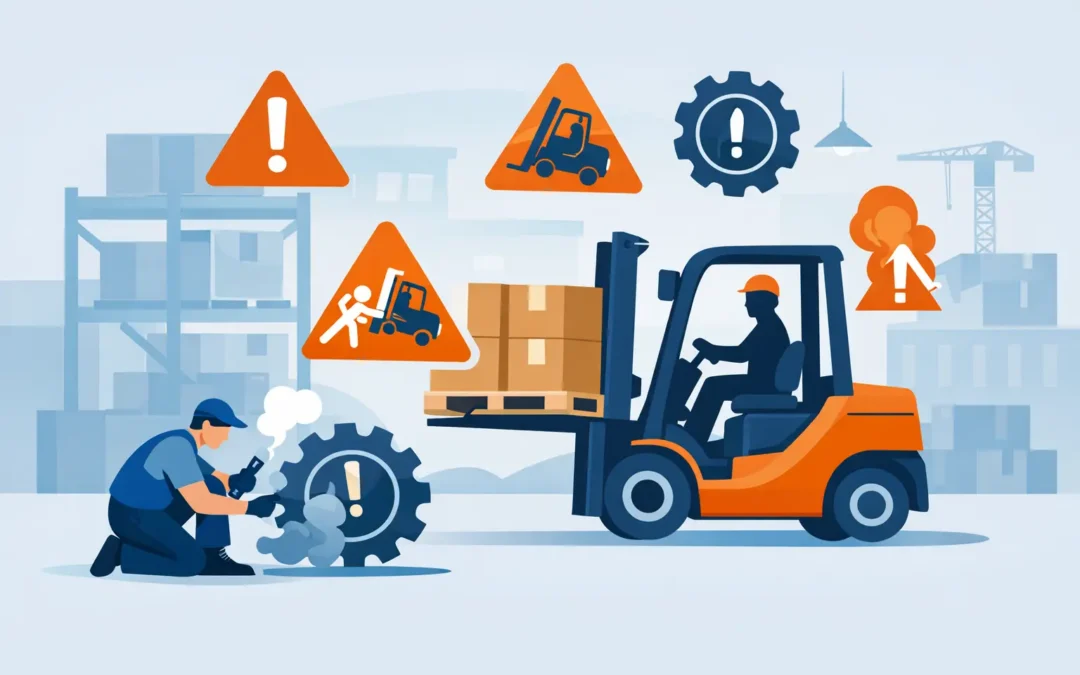
A forklift rarely quits at a convenient time. It starts giving clues during a busy shift: a new hydraulic whine, slower lift speed, an error light that clears after a restart, or steering that feels slightly different. Knowing how to spot forklift warning signs early gives your team a chance to fix a small issue before it turns into downtime, product damage, or a safety incident.
The rule is simple: if a forklift is behaving differently than it did yesterday, it deserves attention. Do not assume an operator can work around it until the next service interval. A quick inspection and the right repair call are usually cheaper than a disabled truck in an aisle.
How to Spot Forklift Warning Signs Before Failure
Operators see the equipment every day, which makes them the first line of defense. Maintenance teams and fleet managers need a clear reporting process, but operators need to know what changes matter. They should report symptoms promptly, even when the truck is still running.
The most serious warning signs involve braking, steering, lifting, stability, alarms, and visible damage. Those issues can take a truck out of service immediately depending on the severity. Other signs, such as reduced travel speed or a minor fluid leak, may not stop the truck on the spot, but they should still be diagnosed before the problem grows.
Unusual sounds are never just background noise
A forklift is not silent, but experienced operators know its normal sounds. Grinding while steering can point to worn steering components, low hydraulic fluid, or a problem in the power steering system. Squealing may indicate a slipping belt on an internal-combustion unit, worn brakes, or an issue with a drive component.
On electric forklifts, listen for clicking from contactors, a high-pitched motor noise, or an unusual hum from the hydraulic pump. A single click that turns into no travel or no lift can be an early electrical or battery connection problem. Do not wait until the truck is stranded with a load in the air.
Slow, jerky, or weak lifting needs attention
A mast that lifts slowly, drops unexpectedly, hesitates, or moves in a jerky motion is a clear warning sign. Hydraulic leaks, contaminated fluid, a failing pump, worn cylinders, damaged chains, or control valve problems can all affect lift performance.
Watch for a load that drifts down while controls are in neutral. Also watch the forks during a full lift and lower cycle. Uneven movement, mast chatter, or a fork carriage that does not stay level can create a serious handling risk. Take the truck out of service if lifting control is unpredictable or a load cannot be held safely.
Steering or braking changes are stop-work issues
If the steering wheel has excessive play, binds, pulls, or requires more effort than normal, do not ignore it. The cause could be as simple as a low fluid level or as serious as a damaged steer axle component. Either way, poor steering is not an inconvenience. It is a collision risk in a warehouse, loading area, or crowded jobsite.
Brakes deserve the same urgency. Soft brake pedals, delayed stopping, pulling to one side, grinding, or reduced parking-brake holding power all require immediate evaluation. A forklift that cannot stop consistently should not remain in service just because it can still move.
Warning Lights, Codes, and Alarms Mean Something
A warning light is not a suggestion to restart the forklift and continue working. It is the machine reporting that a monitored system is outside its normal operating range. Some alerts are minor, while others protect the truck from damage or prevent an unsafe operating condition.
Record the exact code, light, or alarm pattern before shutting the truck down. Include the forklift make, model, serial number, battery voltage or fuel type, and what the truck was doing when the alert appeared. That information helps a technician narrow down the cause before arriving.
For electric forklifts, battery and controller warnings deserve special attention. A low battery charge is expected. Rapid discharge, charging interruptions, excessive battery heat, corrosion at connectors, or a truck that loses power under load are not. Battery condition, cable connections, charger performance, and electronic controls all need to work together. Replacing parts without proper diagnosis can waste time and money.
Look for Leaks, Wear, and Physical Damage
A quick walk-around at the start of every shift catches problems that dashboards cannot. Check the ground beneath the truck for hydraulic oil, brake fluid, coolant, or fuel. Even a small hydraulic leak can worsen quickly, reduce lift performance, and leave a slick surface where people are walking.
Inspect hoses, fittings, cylinders, chains, forks, tires, and the mast. Bent forks, cracked welds, damaged fork heels, stretched lift chains, or missing retaining hardware are not cosmetic issues. They affect how the forklift carries and controls a load.
Pay close attention to tires. Chunked cushion tires, badly worn pneumatic tread, sidewall cuts, or low tire pressure can reduce stability and increase stopping distance. Tire condition matters even more when a truck regularly handles loads near its capacity or operates on uneven surfaces.
Use a short, consistent check before operation:
- Look under the forklift for fresh leaks and loose parts.
- Inspect forks, chains, mast rollers, hoses, guards, and tires.
- Test horn, lights, backup alarm, seat belt, brakes, steering, and controls.
- Check for warning lights, error codes, and changes in lift or travel response.
A documented daily inspection is not paperwork for its own sake. It gives your operation a record of when a symptom first appeared and helps prevent one shift from passing a problem to the next.
Pay Attention to Electric Forklift Problems
Electric forklifts have fewer engine-related maintenance needs, but they are not maintenance-free. Their warning signs can be subtle because electrical faults may come and go before a complete failure occurs.
A truck that starts normally but loses power during acceleration may have battery, cable, connector, controller, or motor issues. Heat at battery terminals, discoloration, melted insulation, or acid residue should be addressed immediately. Do not let untrained employees repair battery connections or work around exposed electrical components.
Charging problems also cost uptime. If the charger will not start, stops early, runs unusually hot, or repeatedly triggers a fault, the issue could be the charger, the battery, the receptacle, or the forklift itself. Swapping components at random is not a repair strategy. Proper testing identifies the failed part and prevents repeat calls.
When to Stop the Forklift Immediately
There is a difference between scheduling a repair and removing equipment from service. If the forklift has unreliable brakes or steering, a hydraulic leak that affects lifting, damaged forks or chains, a stability concern, a fuel leak, smoke, burning odor, exposed wiring, or a safety device that does not work, park it in a safe area and tag it out.
Do not ask an operator to make one more run. That decision can turn a manageable repair into an injury, a damaged rack system, or a dropped load. The cost of downtime matters, but the cost of operating unsafe equipment is higher.
Build a Reporting Process That Gets Results
The best inspection program fails if operators believe reporting a problem will get them blamed for it. Make the process direct: report the symptom, note when it happens, tag the truck if safety is involved, and get a technician involved quickly.
Ask operators to describe the condition instead of trying to diagnose it. Slow lift, flashing code, steering pull, battery heat, or brake noise are useful reports. A technician can determine whether the cause is hydraulic, mechanical, electrical, or operator-related.
For fleets that depend heavily on electric lift equipment, a responsive service partner makes a real operational difference. CSC Forklift Repair can help identify the fault, make the repair, and keep a small warning sign from becoming a full shutdown. When a forklift starts acting differently, get it checked while the repair is still on your schedule.
Forklift or Lift Down Right Now?
Talk directly to an experienced technician, not a call center. Mobile repair for electric, LP and diesel forklifts, scissor lifts and boom lifts across the Sacramento area.
📞 Call (916) 827-0510