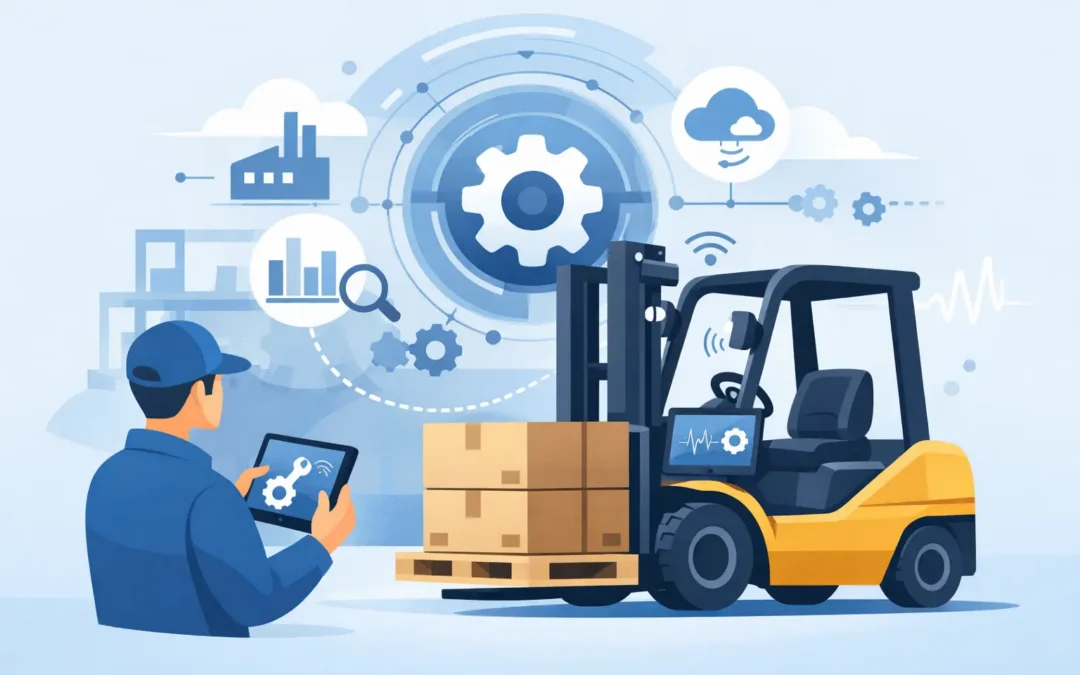
A forklift that stops in the middle of a loading run does more than create a repair bill. It puts operators on standby, delays shipments, ties up supervisors, and can force a whole shift to work around one dead unit. Predictive maintenance for forklifts is how operations teams find the warning signs before the truck becomes an emergency service call.
This is not about adding paperwork for the sake of paperwork. It is about using inspection results, operating data, and technician experience to repair a failing component while the forklift can still be scheduled out of service. Done right, it protects uptime, controls repair costs, and helps keep operators safe.
What Predictive Maintenance for Forklifts Really Means
Preventive maintenance follows a calendar or hour-meter schedule. Change fluids, inspect brakes, service batteries, and check wear items at defined intervals. That work remains necessary.
Predictive maintenance adds condition-based decisions. Instead of waiting for the next scheduled service or for a complete failure, you watch for evidence that a part is trending in the wrong direction. A battery that is taking longer to charge, a drive tire wearing unevenly, a hydraulic lift that feels slower than usual, or a fault code that returns every few days are all warnings worth investigating.
The goal is not to replace every part early. That wastes money. The goal is to identify the components most likely to fail soon, then plan the repair at the least disruptive time.
For a small fleet, this may be as straightforward as consistent daily checks, hour-meter tracking, and a maintenance supervisor who records recurring issues. A larger warehouse fleet may use telematics, battery monitoring, and service histories to flag trucks that need attention. The tools can differ. The discipline cannot.
The Failure Signals That Deserve Attention
Operators are usually the first people to notice a change in forklift performance. Their input matters, especially when it is captured before the next shift starts. A report that a truck “feels weak” is not a diagnosis, but it is a useful lead when paired with battery readings, fault codes, or a technician inspection.
Electric forklift battery and charging problems
Electric forklifts often give clear warnings before they quit. Reduced run time, slow lifting near the end of a shift, excessive battery heat, corrosion around connectors, repeated charger faults, and uneven cell readings can all point to a battery or charging issue.
Do not assume every low-power complaint means the battery needs replacement. A poor connection, damaged cable, charger problem, watering issue, or battery that is not being charged correctly can produce similar symptoms. A qualified technician should test the battery, charger, connectors, and truck under load before recommending an expensive replacement.
Battery condition is especially important because a weak battery can create secondary problems. Operators may run the battery too low, charging cycles may become irregular, and electrical components can work harder than they should. A planned battery service is cheaper than losing a truck during peak production.
Tires, steering, and braking
Tires tell a story. Chunking, flat spots, uneven wear, cracks, and frequent loss of traction are not just tire issues. They may indicate wheel alignment problems, worn steering components, overloading, rough travel surfaces, or poor operator habits.
Brake response and steering play need the same attention. If an operator needs more distance to stop, hears grinding, or finds the steering loose or inconsistent, pull the truck from demanding service until it is checked. These are safety systems, not items to monitor until the next convenient repair window.
Hydraulic leaks and slow lift functions
A small hydraulic leak rarely stays small. Leaking hoses, wet fittings, damaged cylinders, low fluid, or contaminated oil can lead to slow lifting, drifting forks, heat buildup, and unexpected loss of lifting performance.
Track where leaks recur and how often fluid is added. If the same truck needs fluid repeatedly, the issue is not solved by topping it off. Fixing the source early can prevent a hose failure, damaged seals, or a truck being stranded with a raised load.
Electrical faults and intermittent failures
Intermittent electrical problems are some of the most frustrating forklift issues because the truck may work perfectly when a technician arrives. That is why fault-code history, operator notes, and accurate timing matter.
Record what happened, which function stopped working, whether the problem occurred during charging or operation, and whether the truck restarted. On electric forklifts, loose connections, worn contactors, damaged wiring, moisture intrusion, controller issues, and poor battery connections can all cause intermittent faults. Replacing parts without testing may get the truck moving temporarily, but it can also waste time and money.
Build a Program Your Team Will Actually Use
A predictive program fails when it is too complicated for the people expected to run it. Start with a process that fits the fleet, the number of shifts, and the cost of downtime.
First, require pre-shift inspections and make sure operators know that reporting a problem is expected, not punished. Check the basics: forks, chains, tires, hydraulic leaks, steering, brakes, horn, lights, safety devices, battery connections, and visible damage. A checklist only works when someone reviews exceptions and acts on them.
Next, keep a usable service history for each truck. Include unit number, hours, fault codes, repairs, parts replaced, battery concerns, tire condition, and repeat complaints. Patterns become visible quickly when service records are complete. If one forklift has three contactor repairs in six months, or one charger keeps throwing faults, that equipment needs a deeper diagnosis.
Then set practical trigger points. Examples include a measurable drop in battery run time, recurring fault codes, repeated fluid additions, brake complaints, unusual tire wear, or a repair that repeats after a short period. These triggers should create a work order or technician review, not sit in a spreadsheet.
Finally, schedule repairs around your operation. A truck showing an early warning may be able to stay in limited service until an off-shift appointment. A truck with a braking, steering, hydraulic, or safety-device concern should not. The right decision depends on the component, the severity of the symptom, and the work the truck is doing.
Use Data Without Ignoring Technician Experience
Telematics and monitoring systems can be valuable, particularly for high-use fleets. They can show impacts, operating hours, charging behavior, utilization, fault events, and overdue service. That information helps managers prioritize work based on actual equipment condition instead of guesswork.
But data does not replace a technician. A dashboard cannot always tell whether a connector is heat-damaged, whether a mast roller is beginning to bind, or whether an operator complaint points to a control issue. The best approach combines truck data with hands-on inspection and a technician who understands the equipment.
This matters even more with electric lift equipment. Electrical symptoms can overlap, and the fastest repair is not always the obvious repair. Proper testing avoids swapping expensive components based on a code alone.
When Predictive Maintenance Pays Off
Predictive maintenance has the strongest return when a forklift is critical to production, used across multiple shifts, difficult to replace, or expensive to rent on short notice. It is also valuable when a fleet has recurring failures that are disrupting operations.
For a lightly used backup truck, detailed telematics may not make financial sense. Basic inspections, scheduled preventive service, and good records may be enough. For a busy warehouse fleet, the cost of one unplanned failure can easily justify closer tracking and earlier intervention.
Measure results in operational terms: fewer emergency calls, fewer interrupted shifts, fewer repeat repairs, longer battery life, less rental spend, and better ability to schedule service. If your process does not improve one of those outcomes, adjust it.
Do Not Wait for a Complete Failure
The best time to call for service is when the forklift is still giving you a choice. A recurring fault, weak battery, hydraulic seep, damaged tire, or steering concern is cheaper to address before it turns into a no-start condition or safety issue.
CSC Forklift Repair helps commercial fleets diagnose problems quickly, especially on electric forklifts, so maintenance decisions are based on the condition of the truck, not assumptions. When a unit starts showing warning signs, get a technician involved early and keep the breakdown from setting the schedule for you.
Forklift or Lift Down Right Now?
Talk directly to an experienced technician, not a call center. Mobile repair for electric, LP and diesel forklifts, scissor lifts and boom lifts across the Sacramento area.
📞 Call (916) 827-0510