
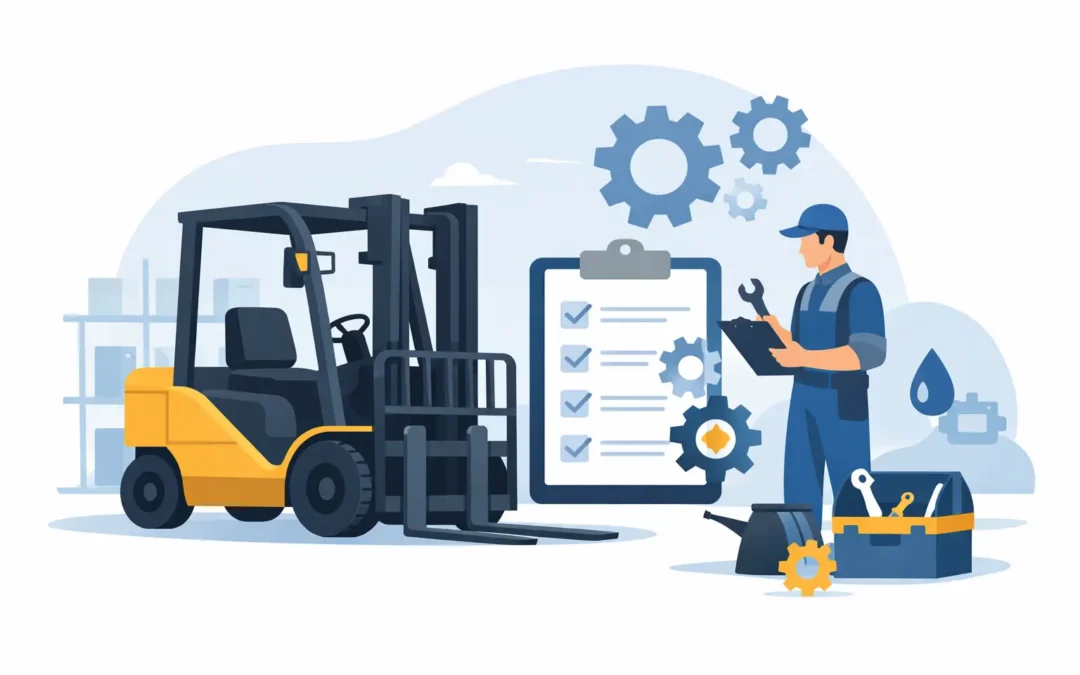
A forklift that starts every shift, lifts cleanly, and stops when it should is easy to take for granted. Then one hose leaks, one battery gets ignored, or one brake issue turns into lost production. If you are asking what does forklift maintenance include, the real answer is simple: everything required to keep the truck safe, dependable, and on the floor instead of parked for repairs.
For most operations, forklift maintenance is not just an oil change or a quick look at the tires. It is a mix of daily inspections, scheduled service, wear-part replacement, safety checks, fluid or battery care, and repairs based on how the truck is actually used. A forklift running one shift indoors on smooth concrete will not need the same attention as a truck working long hours, carrying heavy loads, or moving in rough yard conditions.
What does forklift maintenance include in real-world service?
In practice, forklift maintenance includes preventive service and problem-based repairs. Preventive service is the routine work done before a breakdown happens. That means checking critical systems, replacing parts that wear out, adjusting components, and catching small issues while they are still affordable. Problem-based repair is what happens when an operator reports a fault, a warning light comes on, or the truck starts acting differently.
A proper maintenance program usually covers the brakes, steering, mast, chains, forks, tires, hydraulic system, power source, electrical system, safety devices, and general condition of the truck. On electric forklifts, battery condition, cables, connectors, and electronic controls matter even more. On internal combustion units, the engine, cooling system, fuel system, and emissions-related components need regular attention too.
The point is uptime. Maintenance is there to reduce failures during production, avoid safety violations, and prevent a minor issue from turning into a major repair bill.
Daily forklift checks matter more than most teams think
The first layer of maintenance happens before the truck even goes to work. Operators should be checking the forklift at the start of each shift. This is not busywork. It is the fastest way to catch damage, leaks, low charge, worn tires, or control problems before they create a bigger problem halfway through the day.
A daily inspection usually includes looking at the forks for cracks or bending, checking mast operation, testing the horn, backup alarm, lights, and brakes, and confirming the steering feels normal. Operators should also look for hydraulic leaks, tire damage, loose chains, worn load wheels if applicable, and anything unusual in the battery compartment or engine area.
These checks do not replace scheduled maintenance, but they do give your service technician a head start. If an operator reports that the truck is slow to lift, pulling to one side, or showing a fault code, that early warning can save hours of downtime later.
Safety systems are always part of the job
Forklift maintenance includes every component tied to safe operation. That means brakes, parking brake function, steering response, seat belt condition, overhead guard integrity, warning lights, alarms, and load-handling stability. If any of those systems are weak or inconsistent, the truck is not just less efficient. It is a liability.
This is where a lot of operations get caught. A forklift may still run, but that does not mean it should stay in service. A soft brake pedal, worn steer tire, or mast issue can still put operators, product, and racks at risk.
The mechanical systems that need routine service
Most forklift service calls trace back to a handful of systems that take constant wear. The mast and carriage assembly need regular inspection because chains stretch, rollers wear, and lift functions go out of adjustment. If the mast is not moving smoothly or the chains are uneven, that is not something to ignore.
The hydraulic system is another major category. Maintenance here includes checking hoses, fittings, cylinders, seals, and fluid condition. Leaks are common, but even without visible fluid loss, contaminated hydraulic oil or weak pressure can hurt lift performance and strain components.
Tires also tell a story. Cushion tires worn flat, chunked pneumatic tires, or uneven wear patterns usually point to more than just age. They can indicate alignment issues, rough operating surfaces, overloading, or operator habits that are hard on the equipment. Replacing tires at the right time helps with stability, traction, and operator control.
Brakes and steering deserve the same attention. If either system starts to feel inconsistent, it affects every movement the truck makes. Small changes in stopping distance or steering response are often early signs that maintenance is overdue.
What electric forklift maintenance includes
Electric forklifts have fewer engine-related service items, but that does not make them low-attention machines. In many fleets, electric units demand more disciplined maintenance because the battery and electrical system are central to everything the truck does.
Battery care is a big part of the work. That includes checking water levels on lead-acid batteries, cleaning corrosion from terminals, inspecting cables and connectors, monitoring charging habits, and testing battery performance under load. Poor battery maintenance can cause low runtime, overheating, charging problems, and damage to expensive electrical components.
Beyond the battery, technicians also inspect the drive motors, lift motors, contactors, controllers, wiring, fuses, and onboard diagnostics. Electric forklifts often give advance warning through fault codes, but those codes still need proper diagnosis. Throwing parts at an electrical issue usually wastes time and money.
For operations running electric fleets, specialist service matters. A technician who understands electric lift equipment can usually isolate the real issue faster, especially when the problem involves intermittent faults, charging complaints, or performance loss that is not obvious on a quick visual check.
Service intervals depend on usage, not guesswork
A forklift’s maintenance schedule should be based on hours, workload, environment, and truck type. Some trucks need attention every 200 hours, others at 250 or 500-hour intervals depending on manufacturer guidance and actual operating conditions. A truck in a clean warehouse may go longer between major service events than one exposed to dust, moisture, ramps, docks, or outdoor debris.
This is where one-size-fits-all maintenance plans fall apart. If your forklifts are running hard, double-shifting, or carrying demanding loads, they need closer attention. Waiting for a generic calendar date instead of tracking service hours often leads to preventable failures.
What a scheduled maintenance visit usually covers
A scheduled maintenance visit is more than a visual once-over. A qualified technician will typically inspect wear items, lubricate moving parts, check fluid levels or battery condition, test operation under load, review fault history if available, and look for developing issues that are not yet causing a shutdown.
Depending on the unit, that service may include changing filters, replacing hydraulic fluid, adjusting chains, checking mast rollers, testing brakes, inspecting the cooling system, reviewing charger output, tightening electrical connections, and checking the condition of hoses, belts, and tires. On internal combustion forklifts, spark plugs, air filters, fuel system components, and engine oil service are also part of the picture.
Good maintenance is not about doing the same checklist every time. It is about knowing what tends to fail on that truck, in that environment, under that workload.
The cost question every fleet manager asks
Some companies delay maintenance because the truck is still moving and the service call feels optional. Usually that decision gets expensive fast. A worn chain is cheaper than mast damage. Battery maintenance is cheaper than replacing a battery early. Catching a hydraulic leak early is cheaper than contaminating the whole system and losing a truck for a full day or more.
There is also the labor cost nobody likes to count. When one forklift goes down, people wait, loads stack up, trailers sit longer, and another truck gets pushed harder to cover the gap. The repair cost is only part of the damage.
That is why many operations would rather keep service regular and predictable than gamble on emergency breakdowns. Faster response helps when something fails, but preventing the failure is still the cheapest move.
When forklift maintenance becomes repair
Maintenance and repair overlap. A technician may come out for routine service and find brake wear, a leaking cylinder, chain stretch, or a charger issue that needs immediate correction. That is normal. Good maintenance uncovers real repair needs before they turn into a safety incident or a dead truck on the floor.
What matters is response. If the technician finds a problem, you need a clear explanation, fair pricing, and a path to get the unit back in service without a long runaround. That is where a specialist service company earns its keep. CSC Forklift Repair focuses on exactly that – faster service, better workmanship, and pricing that makes sense when downtime is already costing you money.
What does forklift maintenance include for your operation?
The short answer is this: whatever your forklift needs to stay safe, productive, and ready for the next shift. That includes daily checks, scheduled inspections, wear-part replacement, battery or fluid service, safety testing, and real diagnostics when something starts going wrong. The exact list depends on the type of forklift, the hours on the unit, and the environment it works in.
If your trucks are slowing down, showing faults, leaking, charging poorly, or just going too long between service calls, that is usually the sign. Maintenance is not a paperwork item. It is part of keeping the operation moving. The smartest time to fix a forklift problem is before your team is standing around waiting on it.