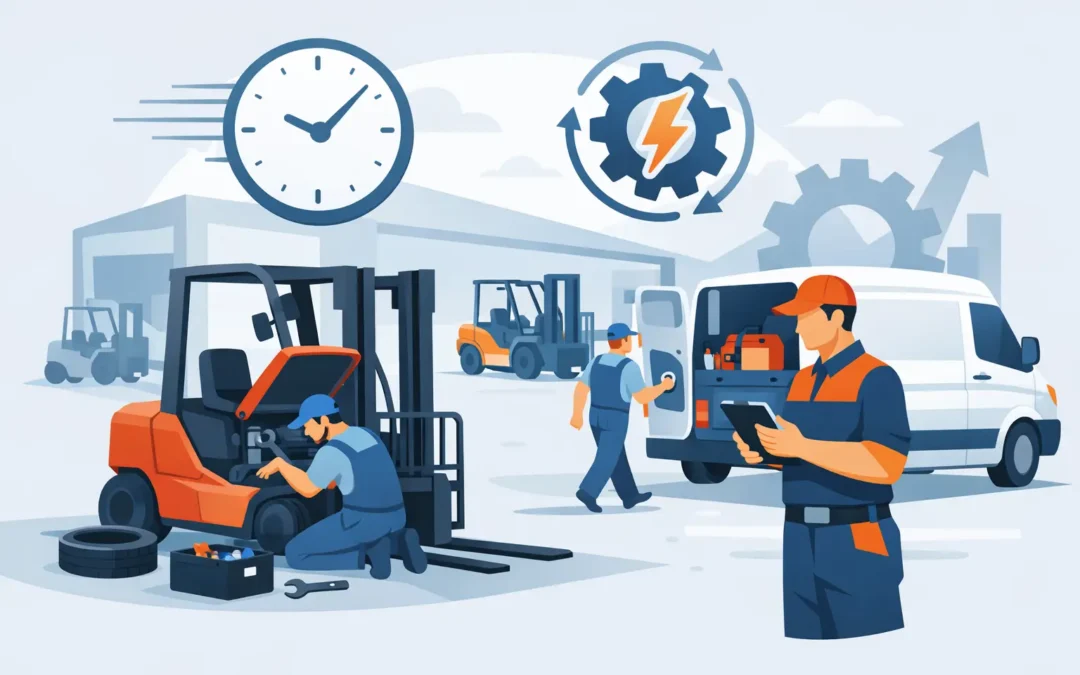
A forklift goes down at the worst possible time. A truck is waiting at the dock, a production run is behind, or a crew is standing around because one machine just shut the whole job down. That is exactly why same day forklift repair matters. When response is slow, the repair bill is only part of the cost. Lost labor, missed shipments, safety risks, and schedule delays add up fast.
For most operations, the real issue is not whether a forklift can be fixed. It is how fast a qualified technician can get there, diagnose the problem, and make a solid repair without wasting half the day. If you run a warehouse, plant, yard, or jobsite, speed matters. So does accuracy. A rushed guess that leads to a second breakdown is not a win.
What same day forklift repair should actually mean
A lot of companies use fast-response language. Not all of them back it up. Same day forklift repair should mean you can reach someone quickly, explain the issue, and get a technician dispatched without going through layers of office screening. It should also mean the tech arrives prepared to diagnose the machine in the field, not just take a look and promise to come back later.
That does not mean every breakdown is fully resolved in one visit. It depends on the failure. A blown fuse, battery cable issue, hydraulic leak, contactor problem, dead charger connection, or control fault may be handled that day if the right parts and tools are on hand. A mast issue, major hydraulic cylinder failure, controller replacement, or drive motor problem may require additional parts or shop-level work. The key is getting a real diagnosis fast so you know where you stand.
For an equipment manager, that difference matters. False urgency wastes money. Real urgency gets the machine back into service or helps you make a fast backup plan.
Why fast forklift repair saves more than the service call
When a forklift is down, labor does not stop costing you. Operators wait. Pallets stack up. Shipping windows tighten. Supervisors start shifting people and equipment around to cover one machine that should be working. In a busy facility, one failure can create problems across receiving, storage, picking, and outbound.
The same is true on a construction site or outdoor yard. If a lift truck or electric pallet unit drops out, material flow slows down immediately. Crews lose time. Deadlines move. Rental replacement costs may start looking better than waiting days for service, even if that option blows the budget.
Same day service helps control the full cost of downtime, not just the repair line item. Quick diagnosis also helps you avoid the common trap of replacing parts based on guesswork. Good field service should identify the actual fault, explain the repair clearly, and give you a fair sense of whether the machine is worth fixing now or whether a larger maintenance issue is building.
The breakdowns that need same day forklift repair most
Some forklift issues can wait until the end of shift. Others should not. If the truck will not travel, will not lift, loses hydraulic function, throws electrical faults, or dies under load, you usually need immediate service. The same goes for intermittent electrical failures that keep shutting the truck down, charger problems that leave electric forklifts unusable, and steering or brake issues that create a safety concern.
Electric forklifts deserve special attention here. They are efficient and dependable when maintained properly, but electrical and control problems are often misdiagnosed by general service providers. A bad connection, failed contactor, battery issue, damaged harness, faulty sensor, or controller fault can look like a major failure when it is not. Or the opposite can happen – a serious issue gets treated like a quick reset and comes back again.
That is where specialist experience makes a difference. A technician who works on electric lift equipment every day can usually narrow the issue faster, test the right systems first, and avoid the expensive parts-swapping game.
What to expect from a good same day forklift repair call
The process should be simple. You call, describe the truck and the problem, and get connected with someone who understands equipment, not just scheduling software. Model, serial number, fuel type or battery system, fault codes, and the exact symptoms all help. So does a clear answer to one question: is the unit completely down, or still operating with limited function?
From there, a strong service provider should give you a realistic response window and arrive ready to work. On site, the technician should inspect the problem, confirm the cause, and explain the repair in plain terms. If the fix can be completed immediately, it should be. If parts are needed, you should know what failed, what is required next, and whether temporary operating restrictions apply.
This sounds basic, but many service calls get dragged out because communication is weak. Industrial customers do not need vague updates. They need answers they can act on.
Why technician access matters
One of the biggest delays in emergency repair is not travel time. It is the handoff between the customer, dispatcher, office staff, and service tech. Every extra step creates more room for bad information, slower response, and the wrong parts showing up.
Direct technician access changes that. When you can speak with someone who understands forklift systems right away, the diagnosis starts before the truck is even dispatched. That speeds up the visit and improves the odds of a same-day fix. It also helps when the equipment is electric, because those issues often require sharper troubleshooting from the start.
For busy operations, this matters as much as price. Cheap service that burns half a day and still does not solve the problem is not cheap.
Same day forklift repair versus temporary workarounds
Plenty of facilities try to stretch around a breakdown. They borrow another truck from a different department, rearrange labor, rent a unit, or push operators onto equipment that is already overbooked. Sometimes that is necessary. Sometimes it is the only way to keep freight moving.
But workarounds have a cost. Extra travel time inside the warehouse, rushed loading, overloaded available trucks, and operators using equipment not assigned to their area all raise risk. If the failed truck has a fixable issue, same-day service is often the more practical and less expensive choice.
The trade-off depends on your fleet size and workload. A large operation with spare units can absorb a short outage better than a smaller company with one or two critical trucks. That is exactly why responsive field service matters so much to small and mid-sized businesses. They usually do not have backup capacity sitting around.
How to improve the odds of a same-day fix
You cannot prevent every breakdown, but you can make emergency service faster. Keep your equipment information accessible. Have the make, model, serial number, and battery or fuel details ready. Train operators to report symptoms clearly instead of just saying the truck stopped working. If fault codes display, write them down or take a photo.
It also helps to address minor issues before they become major ones. Intermittent lift problems, weak acceleration, visible hydraulic leaks, battery connection heat, unusual noise, and charger inconsistencies are early warnings. Waiting until the unit is completely dead usually turns a manageable repair into a more expensive outage.
If your operation runs electric forklifts, use a service team that knows electric systems well. That is not a small distinction. Electric trucks can be extremely reliable, but when they fail, the troubleshooting path is different. Experience counts.
Choosing the right repair partner when time is tight
When equipment is down, you are not shopping for a brochure. You are looking for fast action, correct diagnosis, and fair rates. The right service partner should be easy to reach, honest about response time, and capable of handling field repairs without drama.
Look for practical signs. Can you get a real person quickly? Do they ask the right technical questions? Do they have experience with the type of equipment you run, especially electric forklifts, scissor lifts, and boom lifts? Do they explain what failed and what it will take to fix it? Those are the things that keep downtime under control.
CSC Forklift Repair is built around that kind of response – faster service, better workmanship, and more affordable pricing for businesses that cannot afford to wait around while equipment sits dead.
When a forklift breaks down, the best move is usually the simplest one. Get a qualified technician involved early, get the problem diagnosed correctly, and get the machine back to work before one outage turns into a full-day mess.
Forklift or Lift Down Right Now?
Talk directly to an experienced technician, not a call center. Mobile repair for electric, LP and diesel forklifts, scissor lifts and boom lifts across the Sacramento area.
📞 Call (916) 827-0510