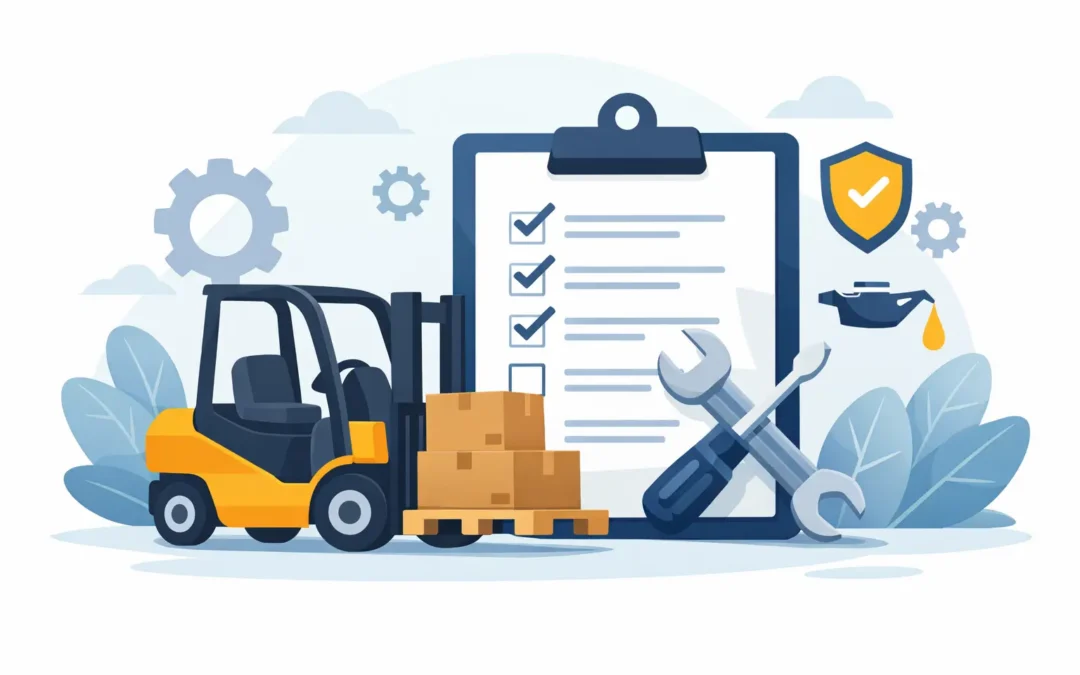
A forklift that quits mid-shift does more than slow the job down. It backs up picking, shipping, production, and labor. A solid forklift preventive maintenance checklist helps you catch small problems before they turn into expensive repairs, safety issues, or a dead truck blocking an aisle.
If you manage a few lifts or a full fleet, the goal is simple – keep equipment in service, keep operators safe, and avoid surprise downtime. That means treating preventive maintenance as a working system, not a paper form that gets filled out after the fact.
What a forklift preventive maintenance checklist should actually do
A good checklist is not just a compliance document. It should help your team spot developing failures early enough to plan repairs around operations instead of reacting to breakdowns. That matters even more with electric forklifts, where battery condition, connectors, cables, and control systems can create performance issues that are easy to miss until the truck starts losing run time or throws faults.
The best checklist also separates operator checks from technician service. Operators should catch obvious daily issues. A trained service tech should handle deeper inspections, measurements, adjustments, and repairs. When those roles get blurred, things get skipped.
Daily forklift checklist items
Your operators are the first line of defense. The daily inspection should happen before the truck goes into service, not after the first complaint. It needs to be fast enough to get done and specific enough to matter.
Start with the basics. Look for fluid leaks, visible damage, loose hardware, worn tires, and anything out of place around the mast, forks, chains, overhead guard, and load backrest. If a fork is bent, a chain looks dry, or a hydraulic hose shows cracking, that truck needs attention before it handles another pallet.
Check steering, brakes, horn, lights, backup alarm, and seat belt. These are simple items, but they are also the ones that get ignored until an OSHA problem or near miss forces the issue. A truck that moves product all day with weak brakes is not saving time. It is building risk.
For electric units, operators should pay attention to battery charge level, connector condition, cable damage, and any signs of heat around the battery compartment. Slow lift speed, weak acceleration, or shorter run time than normal usually means something has changed. Sometimes it is battery age. Sometimes it is charger performance. Sometimes it is a larger electrical issue that needs proper diagnosis.
For internal combustion forklifts, daily checks should include fuel system condition, exhaust concerns, engine noise, and fluid levels. Rough starting, smoke, or overheating should not be treated as normal wear.
Weekly and monthly forklift preventive maintenance checklist tasks
Daily checks catch the obvious. Scheduled service catches the expensive stuff before failure.
On a weekly or monthly basis, depending on truck hours and application, the checklist should go deeper into wear points and system performance. That includes tire condition and wear pattern, mast lubrication, chain tension, fork integrity, hydraulic hose condition, cylinder leaks, brake wear, steering response, and all safety devices.
Battery maintenance deserves its own attention on electric forklifts. Water levels, terminal condition, cable integrity, charging habits, equalization schedule, and battery compartment cleanliness all affect uptime. A neglected battery does not just shorten run time. It can damage connectors, create heat, reduce component life, and lead to repeated service calls that could have been avoided.
This is also the right interval to inspect contactors, fuses, wiring, and electronic controls for signs of heat, corrosion, or loose connections. Electrical faults often start small. A little resistance at a connection can turn into major downtime later.
If your trucks work in cold storage, dusty plants, outdoor yards, or high-cycle warehouses, monthly service may need to happen more often. A checklist should reflect real operating conditions, not generic calendar timing.
Key systems every forklift checklist should cover
A complete forklift preventive maintenance checklist needs to cover the systems that fail most often and cost the most when ignored.
Tires and wheels
Tire wear changes truck stability, braking, and operator control. Cushion tires wear differently than pneumatic tires, and usage matters. Indoor concrete, dock plates, yard debris, and heavy loads all affect wear rate. Uneven wear can also point to alignment, steering, or load handling issues.
Forks and mast
Fork heel wear, cracks, bent tips, and uneven fork height are not minor issues. They affect load stability and safety. The mast should be checked for smooth movement, proper lubrication, chain wear, and signs of binding or drift.
Hydraulic system
Leaks, hose damage, weak lifting power, slow tilt, and unusual noise all deserve attention. Hydraulic issues rarely fix themselves. They usually get worse under load and show up when the truck is needed most.
Brakes and steering
Soft braking, pulling, noise, excess pedal travel, or loose steering are all red flags. These items directly affect safe operation and should never be pushed off to the next shutdown if the truck is in regular use.
Battery and electrical components
For electric forklifts, this area is where specialist service matters. Battery condition, charging system health, controllers, motors, wiring, and connectors all work together. Replacing parts without proper diagnosis can waste money fast.
Why checklists fail in the real world
Most maintenance programs do not fail because the checklist is missing. They fail because nobody uses it the same way twice.
One common problem is pencil-whipping inspections. Boxes get checked, but no one really looks at the truck. Another is poor communication between operators and maintenance teams. The operator notices a problem, keeps running the truck, and the issue never gets scheduled until the lift is down hard.
The other problem is treating all forklifts the same. A lightly used backup truck does not need the same service interval as a high-hour electric unit running two shifts in a warehouse. Maintenance should be based on hours, environment, and application, not guesswork.
When to bring in a service technician
A checklist helps you catch problems. It does not replace repair experience.
If you are seeing repeated battery drain, fault codes, hydraulic performance issues, brake concerns, steering play, charger problems, or intermittent electrical failures, it is time to get a technician involved. Fast diagnosis matters because ongoing use can turn a simple fix into multiple damaged components.
That is especially true with electric forklifts. They are efficient and dependable when maintained correctly, but they are less forgiving when electrical issues are ignored or guessed at. You need a tech who knows the equipment, not someone learning on your downtime.
For operations that cannot afford delays, direct technician access makes a real difference. CSC Forklift Repair is built around that reality – faster response, experienced field service, and practical repairs that get equipment back to work without wasting time.
How to build a checklist that fits your fleet
Start with manufacturer requirements, then adjust based on real conditions. Track truck hours, common failure points, and the type of work each unit handles. If one truck is always moving heavy loads across dock transitions, it will not wear like a unit used for light warehouse picks.
Keep the form simple enough for operators to complete honestly. Then back it up with scheduled service from qualified technicians who know what to inspect beyond the surface. The paperwork matters, but the real value is in catching wear early, planning repairs, and avoiding emergency calls that hit your budget harder.
It also helps to document repeat issues by truck number. If the same lift keeps eating tires, losing charge, or developing hydraulic leaks, there is usually a root cause. Good maintenance is not just fixing symptoms. It is stopping repeat failures.
The payoff of a better forklift preventive maintenance checklist
A working checklist gives you more than cleaner records. It gives you fewer shutdowns, safer operation, more predictable repair costs, and longer equipment life. It also makes it easier to decide when a truck needs repair, when it needs deeper inspection, and when replacement is starting to make more sense than continued patchwork.
There is no perfect schedule that fits every forklift. Usage, environment, operator habits, and equipment type all matter. But there is a clear difference between fleets that inspect with purpose and fleets that wait for breakdowns.
If your trucks are critical to daily production, maintenance is not overhead. It is protection against lost time you will never get back.
Forklift or Lift Down Right Now?
Talk directly to an experienced technician, not a call center. Mobile repair for electric, LP and diesel forklifts, scissor lifts and boom lifts across the Sacramento area.
📞 Call (916) 827-0510