A forklift with bad tires does not fail gracefully. It starts with rough steering, extra vibration, longer stopping distance, and operators compensating for a machine that no longer feels right. Then productivity slips, pallets get harder to place, and safety risk goes up. A reliable forklift tire replacement service fixes that before a tire problem turns into equipment damage, product loss, or a preventable accident.
For most operations, tire replacement is not a cosmetic issue or something to push to next month. Forklift tires affect stability, load handling, floor traction, mast control, and operator confidence. On electric forklifts especially, where precise movement matters in tight aisles and busy warehouses, worn tires can make a good truck feel like a bad one. If your fleet is working every day, tire condition directly affects uptime.
What a forklift tire replacement service should actually solve
The job is not just pulling off old rubber and pressing on new tires. A good service call should solve the operating problem behind the tire wear and get the truck back into dependable service quickly. That means checking the tire type, wear pattern, application, axle position, and the condition of the wheel and mounting surfaces.
If a tire wore out early, there is usually a reason. Sometimes it is normal wear from long hours on concrete. Sometimes it is aggressive turning, overloaded use, poor floor conditions, misapplication, or a truck being run on the wrong tire compound. Replacing the tire without addressing those factors just starts the clock on the next avoidable failure.
This is where experience matters. A technician who works on forklifts every day can usually tell the difference between expected wear and a larger problem. That saves time, and it saves money. You do not want to pay for another set of tires sooner than necessary.
Signs you need forklift tire replacement service now
Some tire issues are obvious. Others show up in the way the truck behaves. If your operators are complaining that a forklift feels unstable, harder to steer, or rougher than usual, do not ignore it.
Watch for chunking, cracking, flat spots, excessive smoothness, visible separation, or tread wear beyond the recommended limit. On cushion tires, reduced tire diameter can lower ground clearance and change the way the forklift handles loads. On pneumatic tires, sidewall damage and repeated air loss are clear warning signs. If the truck starts leaving marks, slipping under load, or riding unevenly, tire condition should be checked right away.
There is also the budget side of it. Running tires past their useful life often creates more expensive problems. Worn tires can increase stress on steer components, impact wheel bearings, and contribute to operator damage when trucks bounce harder over joints and debris. Delaying service can feel cheaper in the moment, but it rarely stays that way.
Choosing the right tire is part of the repair
Not every forklift should get the same replacement tire. The correct choice depends on the truck, the surface, the environment, the load, and the duty cycle. That is why a real forklift tire replacement service should include guidance, not just installation.
Cushion tires are common in warehouses with smooth indoor floors. They are stable, durable, and well suited for tight turning. But they are not the answer for every application. If the truck is working outdoors, crossing rough surfaces, or moving between yard and warehouse, pneumatic or solid pneumatic tires may be the better fit.
There is always a trade-off. Cushion tires usually support indoor productivity well, but they do not forgive rough terrain. Pneumatic options handle uneven ground better, but they may not be ideal for every indoor application. Tire compound also matters. A softer compound may help traction in some environments, while a harder one may wear longer. The right answer depends on how the truck actually works, not what is easiest to install.
Why fast service matters more than most companies think
When a forklift is down for tires, the impact spreads fast. One truck out of service can force load delays, reroute labor, slow shipping, and put more stress on the rest of the fleet. If you are already running lean, that downtime is expensive.
That is why response time matters. You should not have to chase callbacks, wait days for an estimate, or explain your problem to three different people before getting a technician scheduled. The best service experience is simple – you call, you explain the issue, and someone who understands forklifts gets the repair moving.
Speed does not mean cutting corners. It means showing up prepared, identifying the right tire setup, and handling the replacement efficiently so the machine can return to work. For operations managers and maintenance teams, that is the difference between a manageable interruption and a bad day that keeps getting worse.
What to expect during forklift tire replacement service
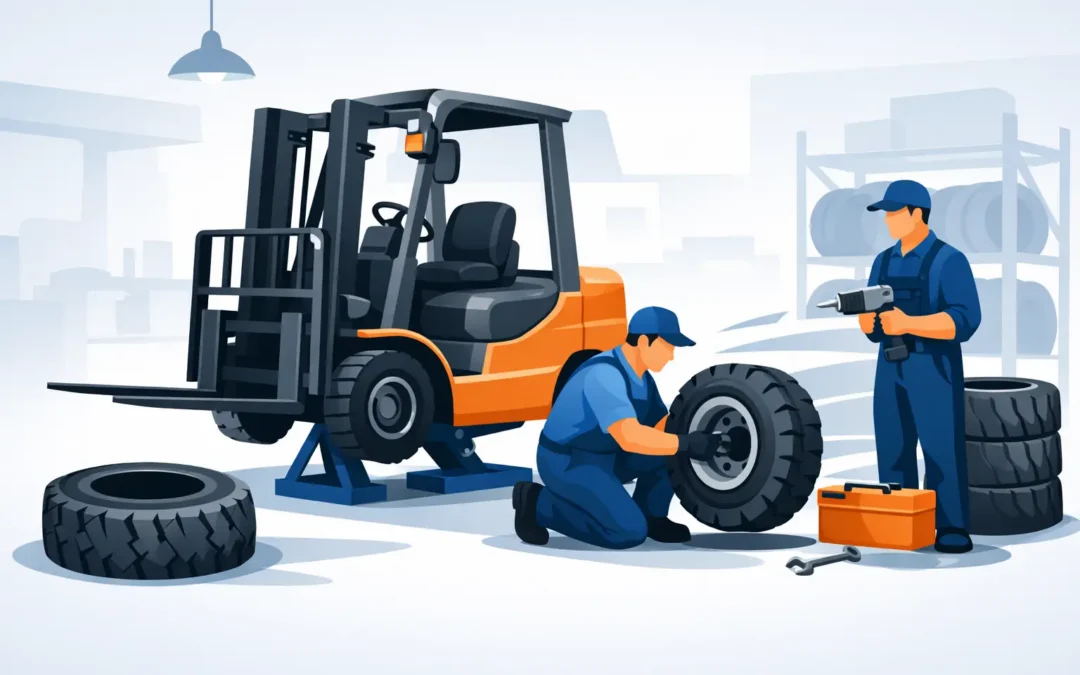
A professional tire replacement call should be straightforward. The technician confirms the truck model, tire type, and application, inspects current wear, checks for related issues, and installs the correct replacement tires using the proper equipment and procedures.
Depending on the truck and tire type, the process may involve press-on cushion tire removal and installation or replacement of pneumatic assemblies. In either case, proper fit matters. So does balancing practical concerns like matching tire specs to your operating environment and making sure the truck is safe to return to service immediately after the work is done.
This is not a place for guesswork. Incorrect tire sizing, poor installation, or mixing the wrong tire types can affect capacity, stability, and wear life. If your facility depends on consistent forklift performance, the job needs to be done right the first time.
Forklift tire wear is often tied to bigger maintenance issues
Tires wear out, but they also tell a story. Uneven wear on one side may point to alignment or steering issues. Rapid wear on drive tires can suggest spinning, operator habits, or floor contamination. Repeated failures may be connected to brake drag, load practices, or application mismatch.
This is one reason many companies prefer working with a forklift repair specialist instead of a general service provider. A technician who understands electric forklifts, steering systems, brakes, and drive performance can spot related issues during the tire job. That can prevent a repeat call next week for a problem that should have been caught today.
For electric units, this matters even more. Battery weight distribution, drive response, and indoor usage patterns all affect tire performance. If your operation relies heavily on electric forklifts, service should come from a team that knows how those machines behave in real working conditions.
How to avoid premature tire replacement
No tire lasts forever, but some fleets burn through tires much faster than they should. The biggest reasons are usually avoidable. Sharp turns under load, poor floor conditions, excessive speed, curb impacts, and running the wrong tire for the application all shorten tire life.
Regular inspections help. So does paying attention to operator feedback. If a truck starts handling differently, that is often the first sign something is changing at the tire level. Replacing tires on time is good maintenance. Replacing them after they damage handling, safety, and productivity is expensive maintenance.
It also helps to work with a service partner who can track patterns across your fleet. If the same position on the same truck type keeps wearing out too quickly, there is probably a reason. Fixing that reason improves uptime and lowers long-term cost.
Choosing a service partner, not just a tire installer
If you need forklift tire replacement service, price matters. So do speed and workmanship. The cheapest call is not always the lowest cost if the wrong tires are installed, the truck is down too long, or related problems are missed.
Look for a company that responds quickly, understands forklift applications, and can speak plainly about what your truck needs and what can wait. That is especially important when the issue is affecting multiple units or when your operation cannot afford scheduling games.
CSC Forklift Repair is built for that kind of work – fast field response, experienced technicians, and practical repair decisions that keep your equipment moving without inflating the bill. That matters when every hour of downtime hits production.
If your forklift tires are worn, cracked, chunking, or making the truck harder to control, do not wait for a bigger failure to force the call. Get the right service, get the right tires, and get the truck back to work before a simple wear issue turns into a safety problem.
Forklift or Lift Down Right Now?
Talk directly to an experienced technician, not a call center. Mobile repair for electric, LP and diesel forklifts, scissor lifts and boom lifts across the Sacramento area.
📞 Call (916) 827-0510