
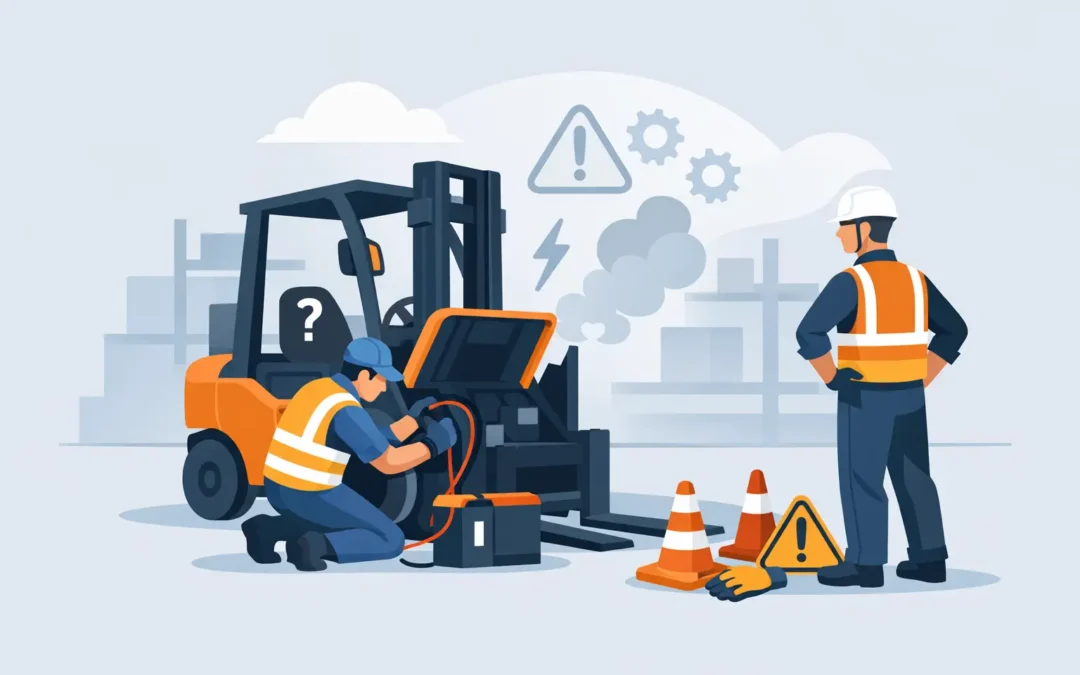
A forklift that will not start can stop an entire shift before the first pallet moves. When you need to know how to fix forklift starting issues, do not start swapping parts or bypassing safety circuits. A quick, methodical check can identify a simple operator issue, a weak battery, or a fault that needs a technician before it turns into a bigger repair.
The first question is simple: what happens when the key is turned or the start button is pressed? No lights, clicking, cranking without starting, and a powered unit that will not travel all point to different problems. That distinction saves time, protects the truck, and keeps people safe around the equipment.
Start With the Safe, Obvious Checks
Park the forklift on level ground, lower the forks, set the parking brake, and keep the area clear. Do not work on a raised carriage or attempt to start a truck with someone standing near the mast, drive tires, or battery compartment. If you need to inspect wiring, disconnect battery power or follow the manufacturer’s lockout procedure.
Before looking for a failed component, verify the basics. Confirm the correct key is being used, the emergency stop is released, the directional control is in neutral, and the parking brake and seat switch conditions are met. Many modern forklifts will not start, or will not enable travel, until every safety interlock sees the correct condition.
On electric forklifts, make sure the battery connector is fully seated and not damaged. On internal combustion units, confirm there is fuel or propane available and that the fuel supply valve is open. These checks sound basic because they are basic, but they are also common causes of avoidable downtime.
How to Fix Forklift Starting Issues by Symptom
No lights, no click, no response
When the dash is dead and there is no click from a relay or starter, begin at the power source. On an electric forklift, inspect the battery connector, cables, and visible terminals for looseness, corrosion, heat damage, or broken insulation. A connector that looks plugged in may still have a poor connection at the contacts.
Check battery charge with the truck’s gauge, but do not assume the gauge tells the whole story. A battery can show a charge at rest and drop out under load. If the battery has been run deeply discharged, improperly watered, or left in an incomplete charging cycle, it may not have enough voltage to power the control system.
For LPG, gasoline, or diesel forklifts, inspect the battery terminals and ground cable first. A loose ground can create the same no-response condition as a dead battery. Look for swollen battery cases, leaking electrolyte, heavily corroded terminals, or cables that become hot during a start attempt. Stop there if you find damage. Those are repair issues, not a reason to keep trying the key.
One click or repeated clicking
A click usually means the start command is reaching at least part of the electrical system. The problem may be a weak battery, high resistance in a cable or ground connection, a failing solenoid, or a starter that is drawing too much current.
Check connections before condemning the starter. Tighten only when power is isolated, and do not short terminals with tools. If cables and terminals are clean and secure but the forklift still clicks, voltage-drop testing is the right next step. That requires a meter, a load, and someone who understands the circuit. Guessing here often leads to replacing a starter when the actual problem is a bad cable or ground strap.
The engine cranks but will not start
An engine that cranks normally has a different set of likely causes. On an LPG forklift, verify there is propane in the cylinder, the cylinder is mounted correctly, and the service valve is open. Frost around a regulator, a damaged hose, or the smell of propane calls for immediate caution. Shut the unit down, close the fuel valve if safe to do so, keep ignition sources away, and have the fuel system inspected.
On gasoline or diesel forklifts, the issue may involve fuel delivery, contamination, ignition, glow plugs, air intake, or an engine sensor. A clogged fuel filter, water in fuel, or a low-fuel condition can all produce a crank-no-start complaint. Do not use starting fluid unless the equipment manufacturer specifically permits it. It can damage engines and create a serious safety hazard, especially on diesel equipment with intake heaters.
The forklift powers on but will not drive
This is often described as a starting problem, but the truck may actually be powered up and locked out by a control or safety circuit. Check the emergency stop, seat switch, seat belt switch if equipped, parking brake, direction selector, battery latch, and fault display. A flashing warning light or error code matters. Record the code before cycling power, since it gives a technician a much better starting point.
Electric forklifts commonly use controllers, contactors, sensors, and interlocks to prevent unsafe movement. A fault may be as simple as a misadjusted seat switch or as involved as a controller, encoder, or harness problem. Repeatedly cycling the key will not fix it, and bypassing an interlock can create an injury risk and damage the machine.
Electric Forklift Checks That Save Time
Electric forklifts need a different troubleshooting mindset than engine-powered trucks. The battery is not just a starter source. It powers travel, lift, steering, and the control system. A weak battery, poor connector, failed charger, or corroded cable can cause symptoms that look like a controller failure.
Check whether the charger completed its cycle and whether the battery was properly connected during charging. Inspect the charger plug and battery connector for discoloration, melted plastic, or bent contacts. Heat damage means resistance, and resistance means lost power and possible fire risk.
If your fleet uses flooded lead-acid batteries, check electrolyte levels only after charging and only with proper protective equipment. Low water levels can shorten battery life and reduce run time. Do not overfill cells, and never add acid as routine maintenance. Lithium-ion battery systems require a different approach. Do not open their compartments or attempt unauthorized repairs. A warning indicator, charging fault, or damaged battery case needs qualified service immediately.
Do Not Bypass a Safety Switch to Get Through the Shift
A forklift that will only start when someone jumps a relay, bypasses a seat switch, or holds a wire in place is not fixed. It is unsafe and likely to fail again at the worst possible time. Safety circuits exist to prevent unexpected movement, uncontrolled operation, and operator injury.
The same rule applies to repeatedly boosting a battery. A jump-start may get an internal combustion forklift moving once, but it does not explain why the battery went dead. It could be an aging battery, charging-system fault, parasitic draw, poor connection, or operator practice issue. Find the cause before the next breakdown.
When to Call for Forklift Repair
Call for service when there is a fuel leak, damaged battery or connector, melted wiring, repeated fuse failure, a persistent error code, or a no-start condition after the basic checks. Also call when the forklift starts intermittently. Intermittent faults are rarely harmless. They often point to a connection, sensor, relay, or control issue that will become a full shutdown.
When you place the call, have the forklift make, model, serial number, power type, and exact symptom ready. Tell the technician whether the unit has lights, clicks, cranks, displays a fault code, or loses power under load. That information helps bring the right parts and tools on the first trip.
CSC Forklift Repair provides direct technician-led service for electric forklifts and other lift equipment when downtime cannot wait. The goal is straightforward: diagnose the real fault, make the repair correctly, and get your operation moving without paying for unnecessary parts or wasted time.
A forklift that will not start is not always a major failure, but it is always an operational problem. Check the safe basics, pay attention to the exact symptom, and stop troubleshooting when the repair involves fuel, high-current electrical components, battery damage, or safety circuits. Fast action is good. Safe, correct action keeps the next shift from dealing with the same breakdown.